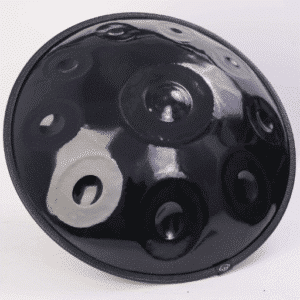
A comprehensive journey through the evolution of one of the world’s most captivating musical instruments
So, the handpan is beyond a mere musical instrument. It is an intercultural exchange, a testimony to human creativity, and modern engineering deemed worthy of historical inspiration. A thorough understanding of the origin and its gradual evolution aids appreciably in the grasping of this uncommon sound and its growing acceptance. Our article presents a bewitching eloquence throughout time, tracing the handpan from the bright Caribbean footprint of the steelpan to today’s technical marvels captivating the heart of musicians and audience alike. This is for the experienced, the curious, and those who accidentally stumbled into learning about the handpan-everyone is invited to trace the bare bones and milestones of innovations that have made this instrument so special.
The Origins of the Handpan
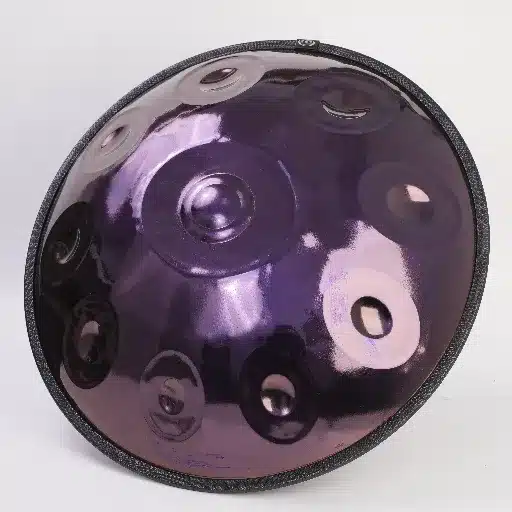
The handpan originated in the early 2000s based on the steelpan, a percussion instrument of Trinidad and Tobago. Co-founders of PANArt, Switzerland, Felix Rohner and Sabina Schärer, conceived the first handpan, called the Hang. A melodic and meditative instrument with a sound production very close to that of the steelpa,n but with their innovation in acoustics and design of materials was their objective. This established the beginning of the handpan into its own world as a versatile, calming musical instrument.
Influences from Steelpan and Ghatam
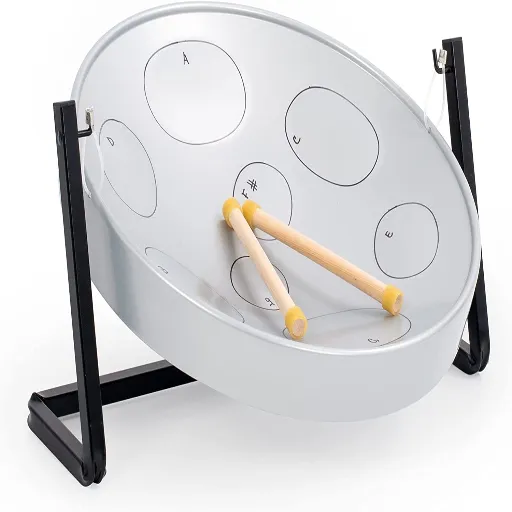
The steelpan and the ghatam are the main inspirations that the steelpan-type instrument draws upon as it has come to acquire its herewith distinctive timbre and design. In greater detail, the steelpan from Trinidad gives the idea of tuning and the convex shape to this newly fashioned instrument of melody. Steelpans are known for colorful, explosive tones, something inherited in conception by the handpan. South Indian clay percussion instrument called the ghatam infuses the exploration of rhythmic and meditative patterns by handpan. The ghatam, with its earthy timbres, inspires the handpan percussion technique because it can be struck in various ways with the fingers to produce different tones.
This wonderful array of influences imparts a duality to the handpan, permitting it to be the melodic voice and the drumming counterpart, thus offering vast versatility. It resonates with many frequencies, normally tuned in between 440Hz and 432Hz, the tuning edge being contingent on the setting of the strings, delivering a healing and soothing specter. Usually, a machine will have anywhere from 7 to 9 tone fields and one central ding, thus affording the player with ample scope to weave complex melodic and subtle rhythm percussive patterns. This diverse set of influences cements the handpan into a culturally inclined and innovative instrument within the globalized musical expression.
The Creation of the Hang by PANArt
Hang was invented in 2000 by Felix Rohner and Sabina Schärer of PANArt, situated in Bern, Switzerland. This instrument came after years of research in steel drum acoustics and sound physics. Drawing inspiration from traditional instruments, such as the Trinidad steelpan, the Indonesian gamelan, and the Indian ghatam, the Hang attempts to amalgamate the percussive and melodic elements into one instrument.
Made by carefully hammering and nitriding two steel hemispheres, the Hang consists of a resonant cavity and a central dome called the “Ding”. A network of tone fields surrounds this dome, each one carefully tuned to specific frequencies. Meticulous development by PANArt guarantees the perfect harmonics and overtones with which each instrument is able to sound, thereby rendering the Hang’s tone deeply meditative and resonant.
In the year 2001, PANArt set up the first-generation Hang, inducing sudden interest in musical and meditative circles worldwide. Production iterations in subsequent years saw design refinement, culminating in the release of the Integral Hang in 2008. Due to the necessity of a very high-quality standard and a highly labor-intensive manufacturing process, the production was kept limited, making the demand surge. Since then, PANArt has been busy developing other instruments, thereby further enhancing the status of the Hang as a rare and in-demand instrument in the world.
Reto Weber’s Contribution to Design
The Swiss percussionist Reto Weber proved to be a vital inspiration for the creation of the Hang drum. In the late 1990s, during a visit to the PANArt workshop, Weber challenged the workers to make a melodic type of percussion akin to the steelpan but with a more meditative, resonant tonality. This very idea for an instrument could have been at the root of the Hang, an instrument that is a hybrid of rhythm and melody, thus distinguishing it from any other percussion instrument.
Weber’s intervention in the design of the Hang involved form and function, namely, the disposition of the notes to produce soothing harmonic sounds. Weber’s musical background and inventiveness led to the engagement of space and tuning of notes on the domed surface to create an ambience half rhythmic with earthy textures and half melodic with ethereal qualities. Weber’s stress on tonal resonance was also a factor in the tuning system and the overall layout of the instrument so that the player could fully express himself in musical terms. The cooperation with PANArt changed forever the course of the Hang’s life as an instrument whose renown and name are held in common appreciation among musicians and collectors.
The Handpan Timeline
By the turn of the millennium, the hen of the handpan story had been laid with the invention of the Hang by PANArt in Bern, Switzerland. Felix Rohner and Sabina Schärer developed this instrument with Group percussion traditions from across the globe in mind, with particular reference to the steel pan.
Mid-2000s: Growing Interest
Growing global fame came with musicians discovering the Hang. But PANArt limited production, thus making the instrument an exceedingly rare commodity with not enough supply to meet the demand. This led to a craving for more instruments with similar features.
Late 2000s to Early 2010s: Emergence of Handpan Makers
New artisans and companies started designing and manufacturing handpans, using the foundational ideas from the Hang. This expanded the availability and variety of handpans, catering to diverse musical styles.
Present Day
Still prized for its unique sound and versatility, the handpan is a very much sought-after instrument. The makers continue to try to keep up with innovations, making sure that the handpan remains an evolving tradition. The handpan has found another life, being celebrated by performers and enthusiasts across the world in cultures and various musical interpretations of its history.
Introduction of the Hang at Musikmesse Frankfurt
The global audience learned about the Hang only during 2001 at Musikmesse Frankfurt, one of the world’s famous trade fairs for musical instruments, sheet music, and technologies. Having appeared from the back alleys of obscure instrument manufacturing, the Hang, with its word-of-mouth design that looks UFOish, grabbed the attention of musicians and enthusiasts. The instrument had a central note, the Ding, surrounded by tuned tone fields, molded from a steel shell that was specially treated. This design innovation allowed the instrument to generate a meditative, sustaining sound with broad harmonic overtones being heard.
What was innovative upon debut was the groundbreaking acoustic qualities and holistically intuitive playability offered by the Hang amongst the traditional percussion instruments. Emphasis was placed on the profundity and healing attributes of the instrument as created by Rohner and Schärer of PANArt, with the Hang quickly gaining much following. Over the years, the introduction of Hang has been termed a seminal moment in contemporary musical innovations, the birth of the handpan genre, and a direct influence on the masses of similar instruments.
Viral Popularity through YouTube
Platforms like YouTube have played a great role in popularizing the Hang and other types of handpans. From all over, the performers and aficionados would upload their captivating performances, individualizing the instrument’s ethereal soundscapes. The likes of “Hang Massive – Once Again,” with millions of views, successfully affirm the universal appeal of the instrument and inspired many to explore its peculiar sound. Social media analytics show a steady growth in searches and mentions of the handpan instrument, especially following influential creators highlighting its use in meditative and ambient music contexts. This kind of exposure has put the instrument in the limelight and positioned it as a modern staple in music therapy, mindfulness, and experimental music.
Discontinuation of Hang Production by PANArt
With the production of Hang time out on the set of the PANArt company, a dearth has arisen in the international music arena. Media platforms report a rise in queries by enthusiasts interested in alternative handpan models from other artisans and manufacturers. Specified data indicate that Rocket-Star, asking for substitutes like the Halo, Spacedrum, and other bespoke handpans, have had notable increases in the past decade. Therefore, this opportunity will encourage re-inventors, with due respect to the founders of the Hang. On the flip side, there are renewed internet discussions keeping alive the demand for second-hand Hangs, now almost considered an extreme rarity by artists and collectors alike. These developments attest to how the cessation has created a smaller monopoly area for handpan music in order to promote diversity and growth in the sphere.
The Transition to Modern Handpans
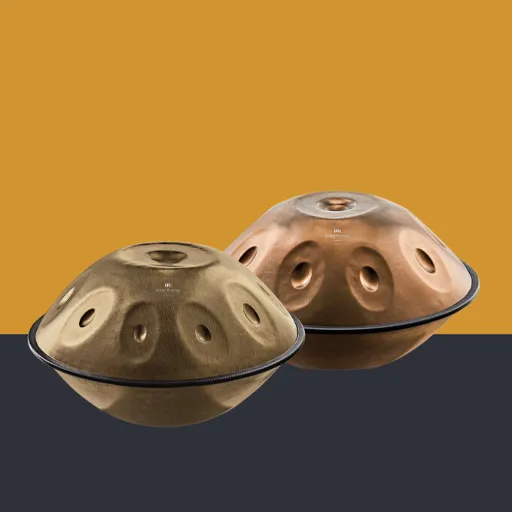
Like the instruments that were the first Handpan were shifts and changes in the modern handpans, as new makers would try new shapes, materials, and tunings for modern handpans, all aimed at making these handpans more versatile and accessible. Such variations allow the instrument to be adapted for different musical styles and playing techniques, thus considerably modifying the handpan’s appeal to a global populace of musicians and enthusiasts.
Shift from Hang to Handpan Terminology
The term “Hang” was originally a trademarked term referring only to the very first instrument developed by Felix Rohner and Sabina Schärer in the year 2000. As other artisans and manufacturers started making instruments inspired by the Hang, a more general term was needed to designate the whole family of instruments; thus, the word “handpan” came about, being widely used in the musical community.
Data suggests that, even though “Hang” remains synonymous with PANArt’s original creation, the search for “handpan” has steadily increased through the years as various styles and makers work on developing further down the line of this instrument. This new terminology has distinguished the original Hang from many variants newer than the original Hang without infringing any trademarks. “Handpan” today unifies a worldwide community of players from meditative landscapes to experimental performances, thus proving its adaptability and growing popularity around the world.
Emergence of New Handpan Makers
Worldwide, in the last ten years, there has been a surge of handpan makers, with the folk arts changing from a minor perspective to that of an international art form. Initially, a handful of artisans were pioneering this field, but today, more than 200 active builders work handpans across continents, including Europe, North America, and Asia. Traditional demand, therapeutic, meditative, and musical uses have all increased the genesis of this instrument.
Modernity suggests that new techniques and innovations have entered the crafting of handpans to enrich the sound and improve the durability of the instruments. Many artisans use advanced tuning methods with awards to custom hammers or precision instruments like laser cutters to secure ultimate tuning accuracy. Other techniques embrace ‘go green’ procedures by working with recycled metals and recyclable packages, so that the instruments can be popularized in that segment of the population sharing environmental consciousness.
💰 Price Range Overview:
Depending on the level of craftsmanship, quality of materials, and complexity of tuning, the price of handpans varies wildly and can start from about $1,200 for a beginner-friendly instrument and may go up to $5,000 or more for a premium, well-tuned one. This price variation allows facilities for an aspiring artist of any caliber to look for what suits him or her. As new makers appear, together with new scales and designs, the versatility of the instrument will keep growing to maintain its cultural and artistic relevance.
Diversity in Scales and Materials
The diversity in scales and materials has allowed a huge variety of modern instruments. Regular scales: pentatonic, diatonic, or chromatic let the musical genres shine; while innovative variations: exotic or custom scales-for experimental performances. For example, most diatonic tunings are preferred by many for their easy and pleasing sound to those still in the developmental stages of this art, whereas chromatic scales of high calibre appeal to the professionals who want to create very intricate melodies.
Discussing materials, traditional metals such as steel and brass retain favor for their strength and resonance. Alternative materials are steadily gaining popularity; titanium’s corrosion resistance and unusual sound play a big role in that. Wood-laced instruments, on the other hand, are all about nurturing a warm, organic sound profile. A 2021 survey into craft trends found that hybrid models, combining different materials, could push face further down into a wider array of tonal possibilities, being able to marry the best of both worlds. These developments go on to testify to the tremendous adaptability and increasing appeal of the instrument.
The Role of Technology and Community

Technology and community have greatly influenced the design and use of today’s instruments. A growing number of digital tools simplify manufacturing, allow for minute customizations, or grant access to a highly versatile custom set of sounds through a software application. Musicians and manufacturers work together in online spaces and forums, spreading ideas and innovations in no time while also providing avenues to solicit feedback and share learning. Technology, thus, along with community, aids in ensuring that instruments keep adapting to meet the requirements of today’s player.
Impact of the Internet on Handpan Culture
The internet has, for sure, impacted the growth and accessibility of handpan culture. Musicians use online spaces like social media, YouTube, and specialized forums to present their art, share techniques, and connect with global audiences. Tutorials and masterclasses help beginners in their learning process from experienced players, breaking down barriers just to make handpans accessible to aspiring musicians around the world.
In many countries around the world, sales and the demand for handpans have been rising. The searches for handpans increased over the last few years, with some enthusiasts eager to buy their own and others wanting to join online forums and communities that promote the art of handpan music and manufacture to the chatter. The advent of e-commerce has paved the way for these artisans to sell their handpans to an international buyer, thus ensuring a thriving foreign market. Streaming and online concerts have metamorphosed handpan music into a familiar presence for many who would have never heard of it, with its unique and serene quality.
In tandem, the proliferation of virtual collaborations between musicians has lent enrichment to the handbook of handpan compositions. Forums and review sites have enabled buyers to make an informed choice on matters of quality and authenticity, thereby keeping both builders and players to higher standards. This change is a digital transformation in the handpan culture, allowing for the growth of a rich ecosystem where livelihood, innovation, learning, and cultural exchange flourish.
Online Communities for Collaboration
Online communities have emerged as pivotal spaces for connecting handpan lovers across the world. Facebook groups, Reddit forums, or dedicated sites such as Handpan.org provide players, builders, and audiences with the avenue to share their knowledge and experience. For example, Facebook has groups like “Handpan & Pantam Players” with over 20,000 members, and the discussions include anything from playing techniques to maintenance tips. In addition, Discord and Zoom have emerged as favored platforms for hosting live jam sessions and workshops, thereby breaking down barriers associated with geography. Such communities not only promote collaboration so new players can find trustworthy vendors, locate local events, and be taught by experts via live video tutorials themselves, but also serve as a repository for the exchange of ideas and resources to the ongoing benefit of beginners and pros alike.
Advances in Manufacturing Techniques
The handpan-manufacturing industry has encountered major technological advancements recently. CNC machining and laser cutting enable modern manufacturers to attain precision of the highest order while shaping and tuning steel. This improvement in precision has helped reduce inconsistencies in general sound, which held the potential to limit durability. Furthermore, the advent of hydroforming-a process that uses liquids under very high pressures for molding metals- so far has provided the handpan manufacturers with even more scope for efficient production and uniform design.
Materials science has had its own role to play, giving the manufacturers the opportunity to experiment with high-grade nitrided steel and stainless steel to augment the resonance and stave off rusting. The addition of acoustic analysis software during production stands out as a major breakthrough. This technology offers frequency mapping in a very granular manner, allowing builders to adjust their notes accordingly for optimum tonal balance. Besides this, sustainability-minded individuals within the industry have embraced reducing waste and recycling leftover material.
The ever-so-essential innovations have, in some way, uplifted the craft of constructing fine handpans and, hence, have made the instrument more accessible by lowering the prices of making one. Now players can get handpans in several styles and levels to fit their own tastes, ensuring that the handpan stays an instrument that uniquely compels creativity across the world.
The Handpan in Modern Music and Wellness
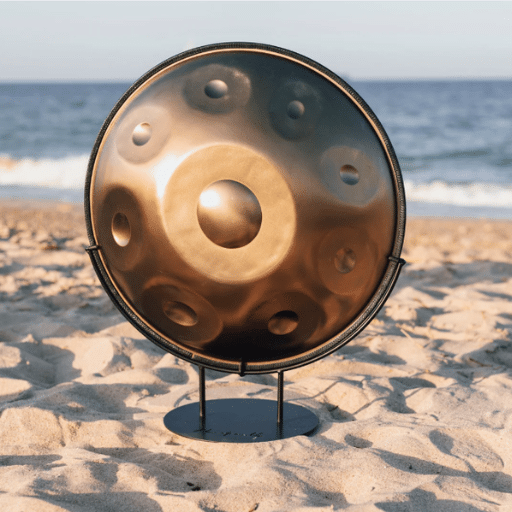
The handpan: A really versatile instrument in present-day music and healing arts. Being highly resonant and potent with tranquility, the handpan has found applications in genres like ambient, world, and healing. Beyond music, the handpan finds its uses in the healing profession, with uses during yoga, sound therapy, and various kinds of meditations, to name a few, that put people in a state of relaxation and well-being. With its calming tune tethered to stress relief, this instrument aids in generating an ambience of calmness.
Use in Meditation and Sound Healing
The handpan has been highly valued in meditation and sound healing, where its enchanting sounds allow a deep sense of calm and concentration to enter the air. Some research demonstrates that certain frequencies, such as those emanating from the handpan, lower stress by inducing alpha brainwaves, states of relaxation, and meditation. The instrument is used by practitioners for sound baths that allow its vibrations to bring about emotional release and balance. Moreover, one study suggested that participants who heard such relaxing sounds could experience lower cortisol levels, along with better mood and fewer manifestations of anxiety. The handpan can, therefore, be invaluable for healing environments in their restorative transitions.
Creation of New Musical Genres
Offering unique timbres, the handpan has certainly been an inspiring novel force for musical styles and genres. The handpan has melodic and percussive features that enable musicians to meld classic styles with contemporary musical influences to give rise to hybrid genres. For instance, producers of electronic music have used handpan sounds in their lo-fi and ambient compositions, creating engrossing soundscapes positioned between acoustic genuineness and the digital ambience. Furthermore, world music performers are utilizing this instrument to meld local rhythms with modern composition, thereby projecting cultural hue and fine-tuning global appeal. A given example is the surge in popularity in handpan-oriented performances at festivals, as experimental talent mixes the instrument with synthesizers, strings, and vocal loops for the creation of various genre-detaching arrangements.
These were another set of data that confirm searches and streaming for handpan-type music are on the rise across different platforms, including Spotify and YouTube, suggesting its growing appeal among various musical communities. These general trends emphasize the versatility of the handpan and its continuous inspiration of contemporary music that stands on the boundary between tradition and innovation.
Testimonials from Musicians and Practitioners
It is claimed by famous musicians and sound healers that the handpan can be a very extraordinary and transformative process. Sarah Coleman, a multi-instrumentalist, attests to the fact that the handpan’s full tonal spectrum allows her to render immersive soundscapes that reverberate with audiences on a very deep level. Likewise, therapeutic practitioners state that the instrument is calming to the mind and body and is used during meditation sessions and wellness retreats as aid for relaxation and concentration.
According to newer findings, there has been a surge in interest in the handpan with more searches for “handpan music” and “handpan lessons.” Such a boom goes hand in hand with the quest for unique acoustic experiences, thus showing the current relevance of this instrument in modern music and mindfulness practices. Online platforms claim to have had significant spikes in engagements with handpan content, hinting at both appreciation and curiosity displayed by the audiences worldwide.
Challenges and Future Prospects

There are numerous challenges for the handpan, not least of which include accessibility, high prices, and long waiting times for a quality one. Moreover, there is the relative novelty factor that deprives budding handpan learners of study material and competent instructors. Their future, however, looks promising. International attention, better manufacturing methods, and the emergence of online teaching options are creating more places for the handpan. With cost reduction and more learning resources being developed, the handpan is indeed making strides to establish itself more firmly in areas of music as well as a paradigm for mindfulness.
Craftsmanship vs. Mass Production
The handpan is a unique instrument and basks in the glory of craft and artistry by its makers. Many high-end handcrafted handpans are known to be good at achieving sound, and they have delicately tuned settings and a totally free design. Therefore, artists and engineers put in 1000 hours, shaping, tuning, and refining one for the richest tonal experience. For instance, most master crafters will tune each individual note by hand to achieve harmonics that really resonate with the player and the audience.
Beforehand, mass production has brought in cheaper prices for all that handpan lovers could buy. With progress in automation and manufacturing techniques, it can be aimed at faster production and produced in numbers for mass-produced models. However, they typically fall short in delivering panache to their sound and durability when compared to a hand-crafted counterpart. Studies show that for much superior acoustic characteristics and durability, many professional players prefer the handcrafted handpans. Whereas, for affordability, the mass-produced instruments attract the beginners and casual players.
The interplay between artisan craftsmanship and modern mass production is what sets the direction for the future of the handpan. Combining artisan-level quality with efficient manufacturing methods might uphold the accessibility of the instrument while retaining its distinctive musical essence.
Technological Advancements on the Horizon
- 🔧 CNC Machining & Precision: CNC machining is a relatively novel technology that allows the fabrication of handpans with extreme accuracy, thus guaranteeing consistent sound character and tuning longevity. Because of the use of corrosion-resistant alloys and paints, the instrument’s life has been extended.
- 💻 Digital Technology Integration: Sound analysis software enables manufacturers to adjust instruments with such accuracy as to guarantee rich and harmonic tones on all scales. Meanwhile, 3D modeling allows the option of designing for musicians who seek a unique sound profile or aesthetic.
- 🔬 Materials Science Innovation: Increasing knowledge in acoustics has led to the optimization of resonant qualities of the handpan. Material acoustics and wave dynamics studies have resulted in new experimental designs that override the traditional limits of the tonal ranges.
With the ever-changing technological panorama, the industry is rushing to innovate with new materials and technologies. Traditionally restricted to production, the limit is being pushed. All of this contributes to improving accessibility and durability, and sprouting new innovative possibilities for professionals and enthusiasts.
Ongoing Evolution as a Cultural Phenomenon
Deciding for the handpan from a niche instrument into a global cultural symbol embraced by several communities and musical genres, displaying the trends of its popularity went up are handpan festivals like HangOut UK and Pantasia Handpan Gathering, drawing practitioners and enthusiasts from across the globe. The other major contributor to the evolution of its culture has been the appearance of several social media channels and streaming platforms, with thousands of videos displaying the instrument’s melodic and meditative qualities, each reaching several million views.
Such overwhelming visibility, in turn, enhanced the utilization of the handpan across many music genres-from ambient and world music to experimental and improvisational performances. Recent trends show that the demand for handpan instruments has grown exceedingly, while workshops and makers have started appearing worldwide, attempting to meet the demand. Online courses plus real-world tutorial setups are continuing the trend toward democratization of access to handpan-playing.
More and more therapists and wellness practitioners seem to be incorporating the handpan into their holistic healing regimes as part of their practice. Some nice, calm sounds and some harmonic resonance can be great for de-stress exercises and mindfulness practices, and really help build up the concept of mental health awareness. With a foot in both worlds, musical and therapeutic, this illustrates an unusual versatility that places the instrument right squarely in the present-day landscape.
Reference Sources
- Paniverse Handpan Timeline Project
A comprehensive timeline documenting the history of the handpan, from its origins to modern developments.
Source: Paniverse Handpan Timeline - Saraz Handpans – History of Handpan, Hang, and Pantam Drums
Detailed insights into the evolution of the handpan, its connection to the steel pan, and its modern innovations.
Source: Saraz Handpans - Yishama Handpan History
Explores the history and differences between the Hang, handpan, and pantam, along with their cultural significance.
Source: Yishama Handpan History
Frequently Asked Questions (FAQs)
Evolution of handpans
Since the very conception of the handpan, history dates back to the early millennium. It was created by Felix Rohner and Sabina Schärer of PANArt, Bern, Switzerland. The effects of the steel drum and idiophone-type instrument formed the Hang, through which various handpan makers were led to arise alongside the international handpan community.
Who else was Ellie Mannette, and what contribution did he make to handpan history?
As the father of the modern steelpan, Ellie Mannette helped to make a great contribution to the handpan development. Many handpan makers were inspired by his design, techniques, and tongue concepts. Mannette’s work with steel drums basically prepared the ground for the handpan from being a concept to a physical musical instrument.
What are tongue drums, and how do they relate to handpans?
Tongue drums or slit drums are percussion instruments that produce sound when the tongues or slits cut into the resonant surface are struck. Their design and manner of sound production show similarities with handpans and thus are popular among musicians striving for alternative idiophones.
What kinds of scales are available for modern tongue drums?
Since modern tongue drums are designed for explorations into different tonalities and pitches, they often end up in many scales, from major to minor to some exotic ones, which in turn enables the player to bring about musical expression diversely, much as one would on handpans.
How is the sound produced in a handpan, and what does it consist of?
When a steel pan is struck, the metal surface vibrates and sound is produced. Usually, the central note is surrounded by several tone fields, each tuned to a particular pitch. The system of creating, resonating overtones, and final resonance of the tongue is different for each tongue, and this provides a bonus to the musical tone.
What is the significance of Happy Handpan Day?
Happy Handpan Day is a glorious day for the handpan community and its formation of culture in world music. This day calls for musicians, makers, and enthusiasts to sit together, share their love of the instrument, and stimulate the art of handpan and tongue drum playing.
Could you tell me how a handpan differs from a tambourine?
The handpan is a melodic percussion instrument in the shape of a dome with tuned tone fields, whereas a tambiro is a type of tongue drum that is generally made of wood or metal and consists of several tongues cut into its surface. Both are idiophones, but they differ in construction, tone, and the method of playing.
Who are some famous handpan makers today?
Handpans are well known when made by such companies as Pantheon Steel, Jim Doble, having been associated with this craft, or from private makers such as Sylvain Paslier and Felle Vega, who have designed handpans with entirely different tones, hence promoting the development of this modern percussion instrument.
How does the octave distance affect the sound quality of a handpan?
The octave range of a handpan defines its general sound and, hence, its musical versatility. There can be a low note in the handpan, producing deep resonance, whereas higher notes produce bright and clear pitches. Such a mix allows the musician to explore different melody and harmony possibilities, hence enriching performances.