A Comprehensive Guide to Understanding Handpan Acoustics and Sound Quality
Handpans are special and pretty unique. That is thanks to their craftsmanship and the beautiful sound they produce as an instrument. It’s actually a percussive instrument which is loved by players and listeners all over the world, as you should know. So, what gives handpans their distinctiveness? There are so many characteristics to indicate, which are acoustic resonance, Helmholtz modes, tuning accuracy, and tonal scales. This article is a beautiful guide to the matter. Whether you are a musician and you are thinking about getting a handpan, or you are into handpans and would love to buy one just to know the fundamentals and tech behind it, this guide is just for you and would surely give us access to lots of sweet information.
Understanding Handpan Sound Quality

High-quality sound in a handpan is determined by the material, craft, and tuner. A handpan produced with heavy-duty steel is manufactured by a craftsman. This does help with the clarity. Honed craftsmanship is a must to ensure that the notes are in perfect harmony. This includes the notes being perfectly in tune with the scale being desired. In generating soothing and melodic sounds, playing with the balance of sustain (duration of a note) and decay (the note’s weave) plays an important role. A handpan is able to truly achieve an amazing sound quality, with little to no distortion, and is completely handcrafted in order to produce the best sound.
What is Handpan Sound?
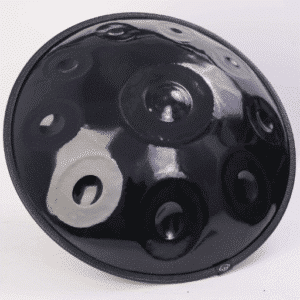
Each handpan is carefully crafted to achieve a combination of both resonance and tonal clarity, allowing the instrument to produce its characteristic sounds in the tranquil and meditative settings. Furthermore, with the handpan, the “ding” and the tone fields that are surrounded by it and gently tapped, it can produce a fantastic combination of melodies and percussion. Such is the uniqueness of this blend of sound that it appeals to sound healers, music lovers. The handpan is scientifically designed to produce and combine these tones in exact pitches, and this, in the process, is appealing to musicians’ sense of hearing. The shapes and designs of handpans that are sold add to the visual appeal, which in turn makes them amazing souvenirs to own.
Factors Affecting Handpan Sound Quality
Material Composition
High-grade nitrided steel is utilized in order to create more durable instruments that also give off the recommended clear, high-vibrant tones.
Shape & Design
The curvature of the handpan and structure of the tone fields contribute significantly to the acoustic dynamics.
When it comes to creating the thoroughly captivating sound of a handpan, there are significant materials that are put in place to make that particular sound. First and foremost, the resonance of the handpan itself is determined with material composition. As much as the previous points are important, it is equally important to note that the handpan requires a specific sound scale to match each note. There is a handpan scale, and the notes have to be tuned with the exact balance.
Another important factor is the sound of the handpan, which is influenced significantly by the shape and design of the instrument. The most important aspect is the curvature of the handpan. In collaboration with the structure of the tone fields, which contributes a lot to the acoustic dynamics of the handpan. The steel is perfect in that the thickness and size contribute to the pitch and sustain that enables depth, and the richness of notes the handpan produces. Also, weather elements, for example, the humidity the temperature factors, contribute a little to deform the overall tone by affecting the tension of the steel.
It goes without saying that the watertight nature of the instrument is directly maintained. In conjunction with the recurring maintenance of the instrument to prevent the material from rusting and the degradation of the steel. All the damage and impact due to the carelessness of man are kept at bay. As such, the handpan is assured to be of the highest quality and the perfect gift that all musicians can get, since it is certain that it won’t be damaged. Each of these aspects collectively ensures the production of mesmerizing melodies that captivate listeners.
The Role of Resonance in Handpan Music
Handpans bear a unique and distinct sound due to resonance. There’s something elemental to the instrument that tugs the spirit. Striking the steel drum and producing every note is a form of meditation. Diving deeply into its sound world, one is immersed in a state of sound harmony. Each note, essentially, is crafted with care, folding a spectrum of overtones and tone quality. As such, a space of art is yielded, accommodating performance and receiving, weaving on the handpan’s universal tapestry.
The impetus to go further and perceive as a construe handpan makes the emotion visual instead of mere melody is precisely what I talk about. Valuing each play, the oscillatory ripples across the steely surface and the very air make the very note valuable on the handpan. The aforesaid value ensures the unique handpan gives the sensation of unique music with vibes rather than mechanical oscillations. Such a feeling is utterly unattainable by any paid performer and requires a sense of emotion as a human and instruments as a handpan, for a person appreciating its vibes.
Moreover, resonance is greatly influenced by the context in which it is played. Outdoor spaces allow for sound to be expansive and audible in a rhythmic manner, while a good indoor setup increases the carry of its echo. There is also a confluence of an audience, where the musician and the public can jointly feel something of significance. The impact of the shape of the handpan in relation to the sound, for me, is why I believe that the entire music comes to a stop.
Exploring Handpan Resonance

The handpan uses a rare composition of metal design to hold its shell, which is used to produce an alloy that is skillfully crafted and then painted to create the tones. When this instrument is gently struck to the note and can vibrate to the note, it hits the sound spectrum that sounds to hit the sound of a note other than the standard note headnote. The stand-alone notes work, increasing vibration, and exhausted sound that produces the loud, all-encompassing wave of sound. The sound creates a deep sensation of the degradation of profound touch of the soul, in which the handpan stands out.
Types of Resonance in Handpans
The primary types of resonance in handpans are sympathetic resonance, harmonic resonance, and percussive resonance.
Helmholtz Resonance Explained
Air resonance is a powerful phenomenon in acoustics, and it occurs at a certain frequency due to air traveling in a cavity. This phenomenon arises when airflow is pushed in and out of the cavity, say a bottle, via a small neck or opening. Air molecules go through compression and rarefaction due to airflow interaction, which in turn causes natural frequency oscillations. This natural frequency, or Helmholtz frequency, is influenced by parameters that include cavity volume, air density, and size of the opening.
An example is the resonant frequency of a typical water bottle, which can be calculated with the help of air volume, the geometry of the neck, and the speed of sound in air. The effective use of air resonance performs well in actual world designs, as in the field of musical instrument design and in structuring buildings for acoustics. The principle helps to build and design structures that reduce disturbing noises, refine sound quality, and concentrate certain sounds. It is a known principle in the world of audio engineering, vehicle design, to create mufflers and even sound systems to enhance the speakers. The ability to understand and utilize this principle in any given field enables one to craft acoustic environments that are engineered to perform well and to treat all sorts of sound well.
Optimizing Resonance for Enhanced Performance
Silencing systems and materials play an important role in the overall acoustic behavior of the system. Among the fine-tuning methods, materials, and structures are acoustics and control systems. One way to optimize the acoustics of a system is through optimal tuning or control methods, such as the use of advanced damping methods, where extra energy is used to produce the desired sound. Using advanced damping technologies, it is possible to virtually model and request the exact shape of some structures, without having and experimentally fine-tune and manufacture them exactly to the desired shape.
For example, in architectural acoustics, the use of materials with the appropriate density and springiness can greatly increase control of resonance, therefore reducing echoes and improving sound field shaping in large spaces, such as concert halls and conference halls. In the auto industry, the addition of sound control materials like sound-absorbing layers in the cabin of cars improves the balance of the engine noise and increases the comfort of the passengers. Such strategies aid in the construction of more effective work areas and environments that enhance the user experience, thanks to the refined post-modern sound control technologies in place.
Tuning Your Handpan for Optimal Sound

To keep the balanced, unique sound of a handpan, it is very important to precisely adjust it. Besides shaping the material, this adjustment involves shaping the metal’s surface as well as adjusting its note. The usual tools that can be used include hammers and tuning tools. The quality of sound, which is going to be tampered with by sound distortion emanating from the effects of wear and tear or temperature changes, might lead to the handpan being less delicate. It is highly recommended to hire music experts who are experienced in sound adjustments.
Understanding Handpan Tuning
Handpan tuning is a delicate and precise procedure that plays a big role in its unique sound. The harmonics of each steel note need to be balanced, and small tweaks can make the instrument resonate magically. Getting the design and metal under control is the key. Fine-tuning handpans regulates the unique metal notes so that all notes that need to sound good together ring harmoniously. No music nearby, a drifting hand, and sedentary logging contribute to the tone of the music handpan. A handpan can drift, distort, and sound dull – taking care of its pitch maintains its beautiful tone.
How to Tune a Handpan
Tuning a handpan is a skillful process because it allows a perfect blend of frequencies. The methods to achieve this depend on the materials, and in the case of steel handpans, note fields have to be adjusted individually as each has its own frequency. This is a guide on how to properly tune a handpan:
Assess the Current Tuning
Begin by evaluating the quality of each sound. Be attentive to signs like note wobble, dissonance, and differing pitches of the same note. While doing so, a tuner or tuning app is needed to make an effort to discover the offset in the pitch.
Set Up Workplace
A small room is required, which is peaceful and well-lit for the handspan to concentrate. The handpan must be positioned at a steady position in order to restrict any sort of movement. Since the handpan is a sensitive instrument, having a non-stick rubber hammer and a handspan tuner is a must.
Adjust Using Tools of Higher Quality
Lightly strike the metal in the handpan around the note field, and adjust the handpan by changing the pitch of the required tone. It is advisable to strike along the edges, the side, and the top of the handpan. While undertaking the process, effective and consistent striking with the appropriate tool is crucial.
Correctly Adjust Harmonics and Overtones
When a handpan is being adjusted, the primary note is accompanied by the root, octave, and fifth harmonics. Once the focal note has been adjusted, the remaining harmonics should be adjusted in a manner that allows them to blend seamlessly with the primary note. This ensures that a flowing sound is achieved from the handpan.
Test and Refine
Verify the overall harmony of the instrument consistently. The instruments need multiple extensive refinements for the instrument in order for all the desired notes to be balanced.
Consistency Maintained Over Time
The task of tuning a handspan is not completed in a few hours. Time and consistent usage of the instrument have a way of affecting the maximum note it is able to reach. The handspan tuner has to be maintained so as to achieve the recommended pitch.
For novices, as they have to learn the minor tricks, it requires the very specialized assistance of the handspan tuner. The structure of the handspan is very sensitive; it is prone to musical archery if not properly done. In the course of tuning, the handspan requires a high level of focus for the handspan as the tools are very demanding.
Effects of Tuning on Sound Quality
The hand-playing instrument’s tuning is a breeze when you have it set up properly. Every musical note sings its intended pitch in full and lovely timbre with no deviation. In turn, the range of pitches strengthens and becomes stable, giving an instrument a warmer sound which is not concentrated on a single note. This constant tuning is crucial – now more than ever – when performing period pieces. The music is so finely tuned that even stepping off a pitch — from the recommended pitch in this case — is easily heard and distracting.
In addition, the handspan/instep notes have a better sonic output once you keep them in tune. This makes the performance easier and more balanced as it merges with the sound of other instruments, making it excellent for ensemble work. It is more relaxed and polished, and it can be molded by the performer into something new with the required feeling. Being able to change the sound production helps me deliver better results in what I perform. But I need to be constantly vigilant; otherwise, the instrument might drastically start producing very flat or sharp tones.
In my opinion, carrying out the act of tuning is not just mechanically driven; it’s an absolute form of creativity. It demands my undivided attention, as well as a grasp of the delicate relationship that exists between an instrument and the sound it produces. The manual adjustments bring about a remarkable change to the character of the handpan, making it a delightful instrument to enjoy. Tuning the handpan brings every listener joy as it reveals the purity and resonance of its sound. Quite certainly, the tuning and quality of the sound go hand in hand, and this is a crucial aspect that I have been focusing on to make every performance a success.
Improving Handpan Sound through Technique

To really make the most of the unique tones in a handpan, simplifying the playing style can go a long way. Repeated strikes executed using the fingers are an excellent example. Playing should be gentle rather than forceful to sustain the musical spirit. And then, a slight pause allows the sound to dissipate slightly before the next one is struck. But it does take dedication to keep the mind from speeding up along with the music. With the three variations mastered and the contrast that a little silence adds, the melody becomes much more beautiful.
Proper Striking Methods for Better Sound
Better sound quality means ‘better striking’. To strike the handpan properly and appropriately, I ensure to strike the handpan by touching only the pads of my fingers gently but securely, avoiding any form of stiffness and excessive gentleness in my force. Through this method, I obtain a consistent sound rotation that fills out the handpan’s note and the whole depth, and additional sound. Over time, I have considered the importance of the angle, which significantly affects the sound. Having my hand approach the notes at a slight downward angle and staying relaxed has helped me get a clearer and much more hummed sound.
Knowing and grasping the ideal note striking zone is very efficient. Every handpan dimple has a striking area where the best harmony is played. I strike those parts over and over to have muscle memory and make it easier to play even when there are more challenging structures and rhythms. To be able to refine my strikes and be able to attain the truest note, I have ungraded my handpan and work on the moment to aim. For handpan, a connection with the touch of emotion is very welcome; handpan is, therefore, rewarding when the connection and strikes are attained. As a result, lapses of voluntary entry and performance are able to improve with the desired tones.
Last but not least, I tend to work a lot on my own dynamics with my musical touch. I attempt to strike with different dynamics, which aid the performance when it comes to music playing, bringing an emotional touch to the music. Hence, I tend to work more on my handpan and try to work on my dynamics, thin helps improve my handpan when it comes to the music and is a great way to listen to as a solo, which can enhance strict attention to a crowd.
Hand Positioning Tips for Enhanced Resonance
Correctly positioning your hands is very important for maximum resonance and a good sound quality from a handpan. To improve the sound of the tone of the handpan, the hands should be positioned with attention to the angle, pressure, and aggressiveness with which they strike the note. The first thing to note upon grab is the right fingers that should be slightly hinged to touch the fingers using the pads as opposed to the nails or the tips. This position provides both a round and a warm tone and avoids the unwanted overtones encountered due to poor playing.
Besides that, your relaxation needs to be combined with the resistance that slows and brakes slightly your wrist motion as you go for the strike, as excessive push will stifle the sound, while insufficient push will fail to trigger the desired pitch. To ensure better note triggers, you may want to attempt the tine fields with your hands running alongside. With the hands running alongside the tine fields, the hands again will provide a cleaner and more resonant strike. The more you practice, the less energy is required, as well as a reduction in the potential of repetitive muscle stress to bring a performance to life.
Using Accessories to Improve Handpan Sound
Instruments like your handpan are never alone; every one of them possesses a variety of sound qualities that are doubled by the accompaniments one can get. A handpan stand is the most well-known add-on, simply because it raises the instrument and provides it the opportunity to produce tone and sound much better. The added advantage of stands is that they provide steadiness during performances and reduce the need for consistent adjustment when in use, in addition to dulling vibrations.
Another piece of equipment that is particularly beneficial is a pair of mallets tailored for handpans. Handpans are typically played with the hand; however, the use of mallets allows for a different sound that caters to the player’s Mallets can offer dynamic strikes, a sound that is mellow but can also be bold. Mallets that have gel covers should be selected in order not to cause any damage to the handpan.
Players with an interest in reshaping their handpan playing experience can opt for adjustable sound dampeners or acoustic padding. In particular, players can be in a position to optimize the tentative. Respect for excess noise is key in recording, therefore adjustable sound dampeners are a cane. A quality impact-resistant carrying case with added cushioning is necessary to avert damage from either impact or the external environment.
These features are not only an asset in terms of maintaining your sound-but also in shielding the instrument. Such an instrument is an asset, it is enabling its owner to explore. These pads are to maintain the sound quality and migration-support aspects, are were over for a recap and even on future handpan advancements.
Maintaining Your Handpan for Longevity

Taking care of your handpan can be a meticulous process. To make it easier to do properly, these are essential steps to carry out:
- Cleansing: Wipe your handpan each time you use it to get rid of oils, moisture, and dirt. If you wish to conduct a deeper clean, you must use a product designed for handpans or a soft, non-abrasive cleaner.
- Keep Dry: It is important that you place your handpan in an area free of moisture. Do not expose it to excess water and humidity. Also, it will be helpful to use silicate packets in the case to prevent rust from forming.
- Have A Durable Case: Ensure that you have a handpan case that provides adequate protection in terms of padding and protection in case of falling, to prevent any scratches and damage.
- Do Not Expose To Harsh Weather: Keep it away from extreme temperatures, both hot and cold as it can negatively affect the tuning and the overall structure of the handpan over time.
- Gently Use: The handpan is generally strong in structure. However, strenuous playing can damage the tuning and even the surface of the instrument.
- After-Purchase Care: Be sure to assess your handpan for dents, rust, and any other signs of damage. If you come across such issues, be sure to promptly notify the relevant professionals for prompt assistance.
By adhering to the list above, you will retain your handpan for a long time and age the sound emissions beautifully.
Cleaning and Care Techniques
Maintaining the proper care of your handpan enhances the instrument’s sound resonance and protection from wear and tear. For one, use a soft microfiber cloth to regularly remove dust, dirt, and debris to prevent the material from accumulating and impacting the drum’s sound. Once or twice a month, lightly polish the entire drum with a minimal amount of natural oil, for example, coconut or mineral, to protect the surface from rust or corrosion. After polishing or if the drum gets wet, handpans must be thoroughly dried, as the excess moisture might disintegrate the material.
Furthermore, it is unwise to expose a handpan to any extreme climatic conditions, hot or cold, for any length of time, as doing so could lead to structural problems and, along the same lines, could cause a variation in tone. If you truly care for your handpan, invest in a good-quality padded case, as those serve as added protection whenever you have to move the instrument. By doing the aforementioned things, you can effectively save your handpan from getting destroyed and keep the pattern of the sound in pristine condition.
Storage Solutions for Optimal Sound
Storing your handpan well is perhaps the most important step you can take to protect its tone and the quality of its sound. To do this, it is important to store the handpan at a stable temperature and in a room that has humidity levels that do not fluctuate. Excessive heat and humidity can lead to changes in the structure of the handpan, muffle the sound, or cause damage. The room should have an optimal humidity level, ideally in the range of 40 – 60 %. The other very crucial step is not to keep the handpan in the warm sun for very long. The handpan metal is overheated, and the result is bending or a change of its color.
Protecting your instrument comes next, and it requires buying a high-quality handpan case. The case should have a rock-solid outer frame and internal padding strong enough to cushion the handpan against impacts during transport and storage. Some highly modern cases have an insulation layer and moisture proofing in addition to temperature dampening. Handpans that come with finishes and coatings should be kept in soft-lined covers to prevent, as a result, minor scratches and dirtying marks. Placing the handpan along with the case in a standing position away from the ground provides an additional protective layer to the instrument since the instrument is more at risk of having heavier objects placed on top in the event the handpan and case are flat. The combination of all these techniques will prolong the life of the handpan and the quality of the sound.
Regular Tuning and Its Importance
The sound quality and pitch of handpans depend heavily on the settings used to tune them. Even when handled properly, changes such as environmental changes and playing the instrument can cause subtle changes in the tuning. This may affect the overall tonal balance and harmony of the instrument, effectively diminishing the sound quality. Tuning the notes under the aegis of experienced professionals aims to restore the handpan’s voice and range. This maintains the handpan and makes it last longer. With proper consumables, a player and an audience are provided with a performance that’s of a unique handpan and its tonal quality.
Reference Sources
Saraz Handpans
Handpan, Hang, Pantam Resonance and Wave Interference
This source provides detailed insights into handpan resonance, wave interference, and tuning techniques.
RAV Vast
This blog discusses the evolution of handpans, their sound quality, and their use in various music styles.
The Sound Artist
Traits of a Great Handpan: Quality Factors
This article highlights the factors that contribute to the quality of handpan sound, including tuning and resonance.
Handpan Shop Europe
Should I Buy a Tongue Drum, a RAV-Vast, or a Handpan?
This source explores the sound characteristics of handpans and their appeal to a diverse audience.
Scalar USC
Handpan Music Instrument for Meditation and Performance
This article is about the emotional and resonant qualities of handpan music that make it an ideal tool for meditation and performances.
Frequently Asked Questions (FAQs)
What resonance is caused by handpan notes?
A handpan’s notes serve as one of the most crucial factors in maintaining the sound in tune. Each section of toned metal is designed in such a way as to create a harmonious sound that can be echoed. The overall tone and sound qualities will be greatly altered by the tuning system and the arrangement of toned metal. The choice of toned metal in the creation of a handpan, be it stainless or nitrided steel, will affect the quality of the echoes that are produced. When tuned properly, a handpan has a clear overtone, a great voice, and a different clear clear-toned meditative voice. The role of the overtones, or the presence of multiple notes, is also important. If one note does not resonate well with the other note, it will leave the other notes sounding unbalanced and muted. If crafting a handpan is thought of as a medicine, or because many quotes I have heard said it, or because, and this is a common belief, the healing qualities with music and so forth, it leaves the craftsmanship of the “medicine” good, but the healing aspect of the handpan is not present.
What effect does quality handpan design have on its sound?
The sound quality of a handpan is significantly influenced by the design of the handpan. To ensure the sound produced by a handpan is truly exceptional, designers who possess great attention to detail mainly focus on the tuning of the notes and the selection of the material. A great handpan is made from either nitrided or stainless steel, and all other components are carefully crafted to balance the instrument. Moreover, apart from the sound, the durability of a handpan and the instrument’s responsive quality are dependent on the handpan’s make. Also, it is possible to create a wide range of notes using different handpan playing methods, each of which allows different musical styles to be combined. Hence, having all in mind, the handpan can be branded under a given brand to ensure that what is set on the handpan is the magician-crafted crafted is supposed to work in the right way.
How can my handpan’s percussive sounds be improved?
Employing numerous playing procedures is required to improve the percussive sounds of your handpan. An excellent example is hitting the ding or the edges of the notes, which results in a range of different percussion effects. In addition, altering the intensity of your hits affects the overall resonance of the handpan, providing you with greater flexibility in terms of sound. Each degree and point of hitting offers a major of re-hitting has a different note amplitude, creating a broader spectrum of tonal characteristics. Playing the handpan in various settings, considering the acoustics, will affect the handpan’s sound production using the dint or any striking. Crafting your own unique strategy will assist in unlocking the limits of handpan and maximizing the handpan’s percussiveness.
What are the acoustic features that contribute to a handpan sound?
A handpan’s sound is determined by a blend of factors. The material utilized and the number of notes available notably define the sound. Each note has an influence of its own regarding harmonics, which is either strengthened or weakened by the notes in conjunction. The tuning of the handpan, regarded as among the most crucial, accentuates harmonies in the handpan. The overall sound is improved when the right techniques are used to play. The way the handpan is played adds to the way the sound is heard. Handpans may differ in terms of the total notes available, while in others, the notes might just be retuned. All these aspects guide the player into choosing an instrument appropriate to the sound they wish to project.
What about handpans relates to Helmholtz resonance, and how is it important?
Known as Helmholtz resonance, handpans engage this physical phenomenon in a quite interesting way. The handpan’s belly is essentially its resonant cavity, producing specific tones akin to Helmholtz resonances. As a case study, attune a minor interval and gently stroke a G3 note. What you ought to hear is a well-developed sort of omphy texture that evolutionary attuned waves of air. The pieces of waves are helical and spiral about the belly cavity of a handpan, which is held in a particular layout due to its shape, and the Helmholtz waves are reliable. The grav is such that the waves at this selected frequency are reliable in affinity to the handpan, forming a web, and so on. Learners of the instrument can see that shaping the handpan in the proper design lessens the effort of air maintenance, and the handpan Valentine is a step toward the Helmholtz. Such concepts provide architects with tremendous.