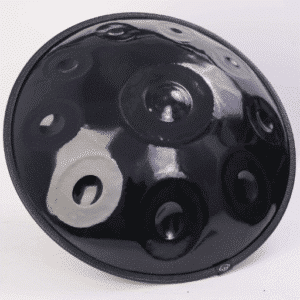
Get ready to explore the magical world of handpan scales. The instrument has the apt to make beautiful music both for those who are just beginning the art and for instrumentalists who are very advanced in this area. If you like the quiet sound of the melancholic and the reversed pentatonic scales, for example, put this away, imagine different handpan scales that are full of emotions and expression. The pygmy scale is relaxing and calming, the hijaz heterotic and surreal – there are many scales, for example, the dorian or mixolydian modality that are relevant, as they have emerged from within certain regions and peoples, such as the Celt and Afro-Asianic. In the following chapters, understand the various handpan scales present today and learn how to play handpan scales so that it fit the musician as well as the sound produced during the creative phase.
What Are the Most Popular Handpan Scales?
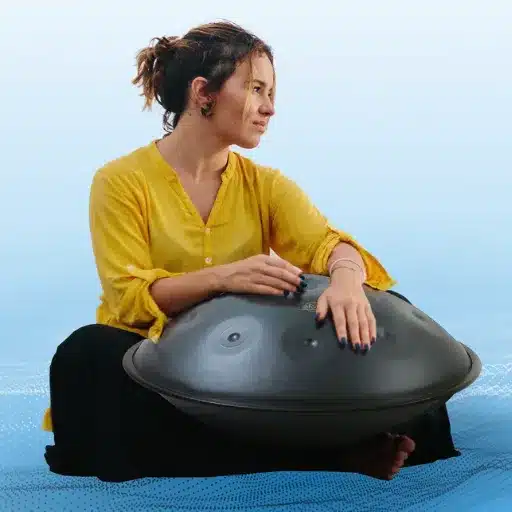
The romantic timbre and beautiful enrichments of the handpan scales have made a lot of musicians fancy learning how to play handpan scales. It is worth mentioning that among the numerous handpan scales, the most singular are the Dorian and the Mixolydian scales due to their applicability and melodiousness. The Celtic Minor bears a conservative tone and fits well, various types of lullabies as well as sad songs. Conversely, the Integral responds in the right way, a positive way, and thus it is the most convenient scale for playing several genres. While the Hijaz, a popular scale, allows for orientalism and respect for more particular cultures. Other languages include the Aegean and the Kurdish, whereby these are scales that are appreciated for their origin and development of raw imagination. Every handpan scale has its own unique shade; all people of all ages and levels of working in music use these and other scales, because their undying beauty inspires people, both very fine musicians and those who learn to play handpans for fun.
Major Scales: Bright and Uplifting
Major scales are considered the most positive scales in music. They convey a sense of happiness, victory, or festivity in music. Therefore, they are found in happy compositions of any style, be it a classical symphony or a modern pop song. Following specific sequencing of whole tones and semitones, major scales constitute some harmonious, balanced sounds that most people enjoy considerably. Knowing how they work makes it possible for composers and performers alike to create music that is positive and energetic – a useful skill for whenever one wants to grip the attention of an audience.
Minor Scales: Melancholic and Reflective
One of the most important aspects of learning how to play handpan scales correctly is to first understand the scale and concept, as it helps the learner to create a tune that makes sense. As such, the minor scale is usually used to create a range of emotions in compositions as opposed to creating harmony that is usually exhibited in major scales. However, this aspect is what some people consider a challenge when they are learning how to play handpan scales, as they find it difficult to use such a scale as opposed to a major scale. This is common, especially when one is learning a new repertoire, as far as learning how to play handpan scales is concerned. However, a handpan scale practice does not mean just good techniques and a good understanding of scales. But also the skill of a skilled musician, whose fingers effortlessly reach from one note to another, binding them all in a seated position.
Other Unique Scales and Their Tonalities
Whole Tone Scale
When other scales of interest are considered, I feel like they offer so many more creative options when it comes to writing music. Take, for example, the whole tone scale, which is characterized by equal distances between each two notes in a row, thus sounding dreamy and vague. It brings out the effect of, for example, mystery, discomfort; therefore, it is widely used in impressionistic music as well as in films.
Diminished Scale
In much the same way, a dim scale, composed through an alternation of whole and half intervals, also results in an anxious and disconcerting harmony. This latter scale is common in Jazz and motion picture soundtracks as it ‘tricks’ the listeners or audience, in this case, resolves and, most commonly, creates tension or expectancy in a piece.
When it comes to musical performance and music theory, learners may also find it inspiring to study conceptual or practical applications. The pentatonic scale, as an example, provides such knowledge. It is composed of only five notes and is rather easy to understand, which makes it widely used in modern and folk music as well as a terrain for blues and rock improvisations. Similarly, the harmonic minor and the seventh modes both raise the radiation upward, which creates a special harmony within the music that is most frequently associated with Arabic, Celtic, or Flamenco traditions. Widening my harmonic palette through practice showed me how to play handpan scales or create emotional melodies that were different in regard to the distinctive character of the modalities.
Choosing the Perfect Handpan Scale

When it comes to how to play handpan scales, you should choose the ones that cater to your style and appeal to your mood. Major scales—for example, D major and C major—are optimistic with a joyous undertone, making them suitable for melodies and tunes that are relaxing. Themes of a more serious and introspective nature will be held better by minors like Dm and Amara, as they carry such characteristics along with them. Exotic or even rare soundscapes demand scales such as the Celtic, Pygmy, or Hijaz, which are characterful in nature owing to their diverse cultural roots. For people who have just started, more general and easy-to-manage scales would be the handpan scale practice to adopt. However, advanced players are likely to go for more complex regions or scales to break their creative rut.
Identifying Your Musical Goals
Setting your objectives in music is important if you want to have a creative journey that is also rewarding. Are you trying to compose, play alongside an instrument, or do you just want to play for fun? Your goals will guide any action you take, for example, a simple action like practicing scales or strategies of performance. It is good to know how to play handpan scales because it will limit or extend one’s options on the scales to be used based on the genres desired. For example, those who pursue film composition scales would most likely go for the dramatic scales, while the other, more enterprising composers would be pulled towards contemporary or pop-country, or quick scales, since it is impossible to locate any alternative within ethnomusicological beats. Moreover, clarifying one’s aspirations assists in structuring the learning process such that methods or techniques that are learned are tailored specifically to help meet the said goals. For a better grasp of the subject, given how important practice is, there is no need to worry about the resources required to overcome a handpan scale practice.
How the Number of Notes Affects Your Playing Experience
Fewer Notes (Pentatonic)
Scales that have a few notes, for example, pentatonic scales, are simpler to learn and so they suit musicians who concentrate more on improvisation. Due to their elegance, it gives people an opportunity to launch a terrible free sound phrase en wrap it into a form of melody, two guitars, four strings.
More Notes (Chromatic)
Inversely, scales with more notes, such as the chromatic scale, are quite a different ball game as more technical skill is demanded, but the tonal colorations are many and the transitions are more varied.
The way you handle the number of notes in a scale remarkably affects how you will sound. It may add complexity, various tones, or emotions to playing.
Research shows the use of scales with wider note ranges tends to invite more advanced skills development, such as modulation or more complex finger movements in playing, hence building speed and fluency in performance. For instance, in jazz or classical music, the exploitation of long scales forces the player to shift tonality almost naturally. Other forms, such as blues or folk, are orthogonal to this paradigm and instead make use of restricted scales that express carnal and easily understood emotion, void of many notes.
Conclusions on this matter can be drawn by factoring in your skill set and the requirements of the musical form that you may want to play. Allowing the construction or rather deployment of such contrasting elements not only develops technical skills but also helps a performer be more flexible in the needs of different musical styles and structures.
Testing Different Scales for Personal Preference
Learning how to play handpan scales is an important part of developing one’s musical abilities and individual style. Scales alter the sound of the works that one is composing in a variety of styles: calm, energetic, romantic, jolly, etc. For instance, the happy feeling of the music, the yellowish tinge is associated with the major scales. Sad themes are usually in minor scales. The inclusion of scales such as the pentatonic, the blues, and certain other scale types in the music being composed encourages exploring one’s creativity for different musical situations.
There is a growing inclination towards the use of music theory in music writing in recent times. Another contemporary trend is evidencing the increased popularity of scales that are traditionally not so often exploited, for example, the scales such as harmonic minor or Phrygian dominant, in creative compositions that may incorporate exotic structures or dramatic effect. Moreover, evidences of dynamic scale engagement indicate an increase in interest by the audience, during and after the listening of a certain piece, as this dynamic scale juxtaposition increases the lyrical diversity of the composition. Through improving your knowledge of how to play handpan scales, you will gradually improve the quality of music you play by increasing the harmonics at your disposal, hence the ability to perform for different purposes.
Practice Routines for Mastering Handpan Scales

One of the important issues in learning how to play handpan scales is regular and disciplined practice. The following drills can aid in the advancement of your skills:
- 1
Warming up: Always make sure you do some warm-up exercises for your fingers before you start playing. This helps with hydrating your hands and also better playing accuracy. You will practice simple note sequences, such as scales (ascending or descending), in slow motion and progressively increase the tempo. - 2
Repetitive practice of scales: Take one scale and work it as many times as necessary, bearing in mind note cleanliness and sound quality. Learn to play the given music piece both in a linear way, in other words, from top to bottom, and also in a random way to get familiar with the handpan drum layout. - 3
Different kinds of Rhythms: Learn how to transpose scales into other kinds of rhythms, like using triplet and even off-beat rhythms. This helps in organizing playing in time as well as developing the musical emotion in the expression. - 4
Control over the volume: Develop control and sensitivity by practicing the notes in different people’s pitches. Break the silence with both quiet and forceful hits to the scale without altering the speed. - 5
Free-flowing Improvisation: Set up a specific length of time for improvisation with the scale that is previously selected. Twelve Tone Technique, stepwise, centripetal, and centrifugal motion, phrase them all. Play as well as the instrument can sound. - 6
Dedicated Time Periods: Work on each exercise in short sessions of 10 to 15 minutes only. This keeps you from getting tired out or burning out while still being productive.
Improvement in your handpan scales and how to play handpan scales in general will merit you competence and speed in these aspects, all because of regular training sessions under the highlighted areas.
Step-by-Step Routine for Beginners
1
Warming Up With Simple Rhythms
You should always start your practice with the simple rhythmic patterns that have less workload for you, while still repetitive. The idea is to make sure that your hand movements are smooth and even and that notes are articulate. This enables one to develop the entire hand for workout and other difficult repetitive formations. Most likely, this stage should last no more than 5 minutes, at the most.
2
Fundamental Handpan Scales Tutorial
For a more practical approach, take the scales at your disposal in handpan and start manipulating them instead. Ascend and descend through the notes carefully in an attempt to find out the intervallic note relationships. This will aid you in understanding the individual, peculiar sound of the device.
3
Developing Coordination with Hands
Resort to basic alternating motion of the hands to build compatibility. For instance, learn to hit one note out of the pair with the right hand and the other note with the left hand with a compatible rhythm. Also, attempt to match the two hands with respect to intensity and timbre.
4
Sing Easy Songs
Create or emulate straightforward melody patterns limited to three or five notes from a selected Handpan Scales Tutorial. Use a very slow tempo to play so as to play with precision, control, accurate techniques, and with continuous ease. In due course of time, aim at accelerating the tempo without distorting the clarity of the beat.
5
Play with Phases
One should start practicing varying the intensity of the strokes to play with phases. For example, both light tough and harder bell and roll canvas, please look at the punctuating please look at the in your melodies.
6
Add Rhythms to the Melodies
Include within the melodies all the rhythm and groove patterns that you have previously trained. Start from easy, base components’ combinations where both the rhythm and melody remain clear. This is a very important stage of development of skills, when the trainee’s musical abilities start flowing out of simple exercise forms to more complicated ones.
7
Create Small Quality Objectives, Not Set Randomly
It’s better to devote each session to developing a certain skill: coordination of hands, speed playing, composing melodies, etc. Splitting your routine into small tasks helps in sharpening your focus and avoiding burnout.
These practices can be shaped into a pillar for beginners to grow and improve in their performance and confidence using the handpan. Now that the players have identified their possible progress in playing handpan, it is time for them to step towards the creative and artistic wonders that the instrument offers.
Intermediate Practice Techniques to Enhance Skill
1
Improve Dynamic Control
Mastering dynamic control while playing is a major factor that allows for an engaging and vibrant piece of music to be created. You can hit a handpan so that a varied dynamic range can be produced, from the lightest and most delicate tapping to strong and clear thuds. With this ‘variation’, this phase improves the touch and helps the player express the music better.
2
Change The Speed To Fix The Issue
Being attentive to or using the speed of repetition of the patterns is probably the most helpful tactic. Start mastering simple rhythms and then go on and work on more complex rhythms perturbed with only tie-ups and delayed hits. Also, there are times when a metronome is necessary. There is a training drill that involves drilling a set of patterns in fast and slow modes. This method starts with a slow tempo and increases the tempo with progression.
3
Access Additive Styles
The intervals from one note to another, in the production of a handpan, do not necessarily have to be practiced in that direct order. In fact, understanding and combining many notes stacked on top of each other will help explain chord progression creation in the mixural scale. Invite you just to toothome readings on intervals when intensity is changed, and when you switch from one interval of a composite sound to another.
4
Add Sitting and Chanting Sessions
Lastly, the sound produced has to be accompanied by vocals for there to be singing. It also minimizes the need for vocalization when singing, which eases the people who are shy. However, this is basic vocalization and does not deal with the problems that result from vocal abuse.
5
Focus on Layering Techniques
Developing music in a blues scale with multiple rhythms is a feature of intermediate and advanced players. For example, build one rhythm using one hand only first, and use the second hand to add a melodic pattern. As you improve, try to get more complicated patterns, ensuring that the balance between layers is even and well-maintained.
6
Keep on Improvising
It is always useful to let loose and be creative, playing whatever you come up with, rational mind neatly out of the equation. Concentrate on the pentatonic or other scales that have been traditionally applied and the melodies created utilitarianly within the framework of these restrictions. Sometimes freedom, as presented by unconventional scales and tempo, enhances change, hence innovation in the performance of music.
7
Recording and Evaluating Music Making
Up to a point, freedom of expression is important, but there comes a time when rules must be followed. Being able to record your practice will allow you to review everything you’ve done and see what needs more practice. Also, listening to the various recordings will give you an improved perception of the techniques, pinpoint any glitches or strengths, and help you achieve the optimal performance of your ability.
To take their skills to the next level, players can use a combination of the intermediate skills they have covered to tap into higher forms of creative thought and thus allowing them to compose powerful pieces as well as in performances.
Tips for Building Rhythm and Musicality
1
Working with a Metronome
The use of a metronome helps in the precision of timing, an element that is crucial in the building of good rhythm. The metronome should be set to different speeds, toughening yourself up faster bit by bit as you get more competent. Several research findings have indicated that stationary metronome activities can enhance timing precision by 30%.
2
Employ Speed Drills
Means of breaking down the beat into faster divisions, for example, eighth or sixteenth notes, assists in acquiring a more complex sense of rhythm and pulse. It can be further practiced by superimposing the pulse with the sound of clapping or tapping the corresponding subdivisions.
3
Structure Your Sound
Everything about music is complex; even rhythm comes first, and the power exercised by one dynamic level only is not enough to hook the musician on the music. The ability to change the volume of one’s playing, either louder or softer, or how loud and forceful the playing is, allows the musician to add some emotion to the piece performed for the audience in a way that they don’t lose interest. There is a belief that the changes in dynamics are more engaging for the audience and hold their focus on the music in a better manner.
4
Log in your playing time
Offering your sessions, you perceive sensorily without missing the objective, the peculiarities of your rhythm and pulse. Reproduction analysis helps memory to locate the places where the playability is defective, for example, the disorderly timing, or strings of perspectives do not resonate, and all this while appreciating in your rhythm some areas.
5
Play with Various Time Signatures
Refresh the playing content with various easy-to-use or shifty time signatures apart from the formal exercises or grade pieces. It brings not only extended perceptions of rhythm, but also opens more career opportunities in general. Changing or adjusting to musicians in odd time signatures such as 5/4 or 7/8 will offer the wider perspective of engaging the audience, along with such elements as the versatility and the capacity to think abstractly in the arts performances.
Improving Technique on Your Handpan

- 1.
Hand Positioning: A person looking to create more defined and punchier notes must focus on his/her hand positioning. Your hands should be kept effortlessly, and fingers gently curled so that it eases the dynamics. - 2.
Move Slowly and Evenly: To avoid striking any note inaccurately, keep it slow for the first few strikes. Practicing the instrument of your choice in constant time intervals throughout the week helps in the accommodation of muscle memory and accuracy over time. - 3.
Use Both Hands the Same: Steps towards the improvement of the handpan involve the ability of the performer to change the dominant and non-dominant hands through different engaging activities like beats or tunes. This avoids other problems, such as playing unfocusedly due to abnormal positions of the grooves in the handpan. - 4.
Work on Your Rubbing Skills: Ideally, it is the handpan fundamentals that expect the maker’s fingers to pop off the instrument’s surface instead of hitting inside the instrument. It is this scratching that will give pitch and avoid combination notes. - 5.
Skip Faster Tempo for Simple Drawings: Start off with basic patterns of drumming and scales rather than hard pieces. Stepwise actions according to performance will enable the performers to learn the difficult areas.
Sticking to basic principles enables you to improve your handpan skill faster and get a better grip on real-time performance before dynamic and expressive.
Common Techniques for Better Sound Quality
As a technique employed to enhance the quality of sound output when playing my handpan, I stick to the following distinct approaches. Above all, the first thing I am always passionate about is a delicate touch. I avoid hitting the shell or bowl part too aggressively, instead choosing to pull my finger gently on the surface, providing a lively performance without any guttural or profound notes, and this avoids competing sounds.
And there’s one more important factor that I strictly adopt, especially when I play the handpan is the correct placement of my hands. It is either the center or the flats of the musical leaves or tones that my fingers land directly on. This technique is favorable for a harmonious spread of the sounds as well as the maintenance of every pitch. Moreover, I put effort to my position as a player, thusly regard that my hands hung in air with the wrists relaxed stay tension free keeping, aiding in avoiding some movements governed by unnecessariness tension.
Last but not least, I always ensure a good setup with useful patterns to be followed by scales, from the simplest to some of the most sophisticated works. It is beneficial in that it assists me in synchronization and installation of the feelings into the medium. It allows for grace on a larger scale, also stops any problems that arise when intensifying the music. Focusing upon such processes greatly improved my compositional techniques.
Actionable Tips to Enhance Your Playing Style
1
Prioritize Practice Rhythm
It is important to ensure that practice sessions are not interrupted for a duration of 30 minutes to an hour. When the development of a certain skill is studied, it is noticeable that taking standard practice allows even better improvement, and this improvement is equal to 48%. Also, divide the rehearsals into stand-alone entities concentrating on specific techniques (e.g., work with scales, align which fingers cover which holes, and work on Leistungsfahigkeit).
2
Engage Timekeeping
Where possible, it is highly recommended that when practicing to make sure that a metronome is used at all times for practicing. Specifically, musicians utilizing a metronome have been reported to raise their accuracy in time keeping by more than half, which is 60% Start from a slow pace, then accelerate it as you pick it up.
3
Regular recording session
It is a good habit to video your performances so as to see what you may require fixing. It has happened that rather subtle mistakes that need to be polished have been pointed out by merely listening to these recordings, which had not been recognized even after the exercises. Self-Performance where a technique used in performance that helps the performer to improve their productivity by 30%.
4
Improve the Flexibility and Strength of One’s Hands
To minimize the amount of strain on your hands, you must engage in hand exercises that is specific. For instance, techniques such as finger extensions or wrist turns guarantee improved joint movement. Studies also indicate that practicing musicians who carry out stretching in their hands are considered to be 25% more resistant to injurious repetitive stress.
5
Kindly Test Yourself Using Various Strategies
Avoid getting stuck by incorporating new techniques and categorizing a completely different approach. While a few examples are finger picking, hybrid picking, and stereo toning, among others, they enable you to employ certain skills in your style. Examples of this include styles found in music curriculum instructors, indicating that the knowledge of and application of various styles shall increase one’s rate of acquisition of skills, thus increasing the ease of one’s creativity in the music being played.
Reference Sources
- Yatao Shop: A comprehensive guide to popular handpan scales like D minor, Kurd, Amara, Celtic Minor, and Mystic, with recommendations for collaborative playing.
- NovaPans Handpans: Detailed insights into five popular handpan scales, including Kurd, Celtic, Pygmy, Hijaz, and Amara, with explanations of their unique characteristics.
- RAV Vast: A beginner-friendly guide to choosing the best handpan scale, emphasizing the role of music theory and personal preference.
- The Sound Artist: Explores handpan scales and notation, focusing on emotional resonance, cultural influences, and personal fit.
- SonoDrum: A detailed exploration of different handpan scales, from major and minor to exotic options, helping users find the perfect fit for their music.
Frequently Asked Questions (FAQs)
What are the most popular handpan scales?
A few such scales, which are incredibly common, happen to be the popular Amara scale, Hijaz scale, and Pygmy scale. It is due to this nature, together with the ability of these scales to depict specific feelings, that people choose these scales. An example is that a Hijaz handpan scale has a lot of Arabic and Middle Eastern influences, whereas the Pygmy scale comprises five distinctive notes. As a result, they are very common in the handpan world because various makers often create handpans in those scales. Playing these common scales might serve you better when it comes to how to play handpan scales, instead of handpan scale practice.
How many notes are typically on a handpan instrument?
A handpan is constructed with between 7 and 11 notes; this all depends on the build and depth of its scale. Most handpans feature a seven-note diatonic tuning. There is a level of precision to designing a handpan such that many melodically advanced players require a handpan with such options, while some opt for – five-note basic handpan due to its ease and simplicity. With any of the setups, there is a great variability in the kind of music that can be created as different musicians come into play. One way or another, depending on the number of notes a handpan possesses, certain musical styles will be easier to play than others.
What is the difference between the major scale and the minor scale in handpan music?
The basics of the major scale are linked to happy and simple branded emotions, hence, the minor scale expression is more common with wam and dozer. Allowing one to express all states, particularly the normal minor mode, is made of only seven raised notes. The Dorian scale, however, which resembles both major and minor scales, is similarly quite popular among traditional music players, especially while playing the drone. Learning how to play handpan scales is essential in improving one’s ability to solo or compose, since one learns particular scales of interest.
What are some examples of different handpan scales?
Many different scales are available in a handpan nowadays. For example, there is the E minor harmonic scale, which, as the name suggests, is a minor scale with harmonic intervals. For instance, the folk music genre related to Celtic culture has a method of creating scales which is called Celtic and looks and is also used like folk music. For example, a Romanian Hijaz incorporates Arabic modalities and Western scales. Knowing how to play handpan scales with different scales can open new experiences in your musical adventure as well.
How can I create melodies using a pentatonic scale on my handpan?
It is easy to create expressive phrases with a handpan and pentatonic scales because they are constructed of very few, namely, five notes. Most importantly, they provide a great deal of expressiveness without the interference of dissonances. It is possible to limit oneself to the available notes on the handpan within sentences. Just for illustration purposes, one can alter the timing of the notes in order to render the melody more appealing. Use your hands in a relaxed manner and enjoy playing the beautiful pentatonic scale. Later on, after one has learned how to play handpan scales, one or two additional modes in the same key, such as Dorian and Hijaz, can be added to the handpan scale practice.
What handpan scales are suitable for meditative music?
Many handpan scales with particular sounds are recommended for meditative music, such as Amara or Pygmy scales. The former has a very soothing sound, which makes one calm and reflective. The latter, which only has five notes, creates a basic but quite deep structure for meditative music tunes. Besides, the harmonic minor scale is capable of producing such effects that it would be wise to resort to this scale while performing meditative or calming activities. These scales will show you how to play handpan scales more virtuously since you will understand the implications that certain tonalities have over performance and how they affect one’s feelings.
Start Your Handpan Journey Today
With this comprehensive guide to handpan scales, you now have the foundation to begin or enhance your musical journey. Remember, the key to mastering any handpan scale lies in consistent practice, patience, and allowing yourself to explore the emotional depths that each scale offers. Whether you choose the bright optimism of major scales, the contemplative nature of minor scales, or the exotic allure of cultural scales like Hijaz or Celtic, your handpan will reward your dedication with beautiful, soul-stirring music.