
For all handpan lovers, keeping such a unique instrument is just as significant as playing it. Proper care and maintenance prolong and protect both the instrument and its special sound. This guide will provide an in-depth explanation of cleaning, maintenance, and rust prevention methods. Getting started or playing for many years, however, you will find practical advice in this book that explains how to clean a handpan. And protect the handpan from turning into an environmentally undesirable piece. In the following words, you will find out how to nurture, look after, and care for your handpan.
Understanding Your Handpan

The handpan is comprised of two shells made of metal, the one containing the fata (the Ding), which is a central dome, and around it several tone fields. Each of the tone fields has a particular note. There is usually a hole (the Gu) on most of them, which augments the sound and enhances its sustainability. Handpans are delicate equipment; they are handmade and calibrated for resonant tones. Therefore, it is important that with a well-maintained, clean handpan, its sonic quality as well as its durability is enhanced.
What is a Handpan?
A clean handpan is a steel melodic percussion instrument with a spherical top that has a percussive center in the middle with additional note areas around it. With its soothing, enchanting, and yet enveloping sound, the musical hand pan is a coup de grâce for musicians as well as amateurs wishing to play music for meditation. influences from drum work. In the last ten years, this instrument with an intuitive technique, named Handpan, has attracted a lot of attention across the globe for its adaptability to different types of music, such as ambient, new age, or ethnic music.
Materials Used in Handpans
The production of handpans, a musical instrument made of such steel, for example, nitrited steel, is a process where the raw material of high quality is prepared to reach the acoustic result and other required operational characteristics. One of these is also nitrited steel, which is a type of steel that has been put through a special kind of treatment to prevent it from rusting and to increase its lifespan to the maximum, as well as helping the instrument to lead a long life and to be less affected by weather conditions. Beyond this, there is serum, which is another kind of steel present that is more resistant to corrosion but produces a more appealing sound, unlike the nitrided.
Creating handpans usually commences with hammering and forming a cavity in the metal, which is then fine-tuned by crafting each slab of sound to reach optimal tuning of the inharmonic field. In addition, some of them include different metalling to amplify or reduce the nuances of sounds further to satisfy different sets of needs and genres of handpan enthusiasts. It showcases metal crafting aesthetics reaching its limits over traditional know-how in the fabrication of a musical instrument designed to stand the test of time and guarantee superior sound output as well.
Importance of Proper Care
The appeal of the handpan largely lies in the distinctive sound it produces, which requires proper methods of handling for it to be retained for long. As a matter of fact, I have observed that with regular cleaning and careful use of these hard-to-find instruments, it diminishes the risk of detuning the notes drastically diminishes with time. One of the easiest ways to clean a handpan is extremely important for the care of the handpan because you have to clean it after every playing with a Nicki cloth thoroughly to get rid of all the body oils, dirt, or water, which may damage the skin. For more advanced maintenance steps, one can polish the handpan and oil it with a mild, no-scrub anti-rust oil every once in a while in order to keep the polish in one place.
I always make sure that I never leave a handpan in a car, in the sun, right by the fire, or wet in the rain, or exposed to temperature changes. Swinging temperatures can warp it and make the sound unreliable; for this reason, I always use a padded bag when carrying it anywhere. This measure not only secures the instrument against damage but also helps in insulating it from atmospheric conditions. Moreover, I always use my naked or washed hands to play the handpan, so that I do not transfer unnecessary impurities, which would distort the sound.
It consists of something more than just knowing a certain routine – it means having a certain relationship with the object. I take great care of it, knowing that it will return the flavor that I love so much. Such care neither improves the instrument nor helps it, but makes the pleasure of using it more delicate and adds new dimensions.
Cleaning Your Handpan

Handpans are relatively simple to clean. The owner ought to use a soft, lightweight wipe and remove only traces of dust and marks of fingers. If some areas require wiping more carefully, slightly moisten the cloth and clean them as well, wary of pressing it with a lot of force. Refrain from using rough surfaces or harsh substances, as they will ruin the handpan due to such cleaning. In the case of further protection, the handpan should be cleaned with a bit of specialized oil, in case the oil used is approved. The even application should be done with a clean rag, preventing corrosion and easing maintenance of the musical tool. Store always in a protected, dry place your palm instrument in order to protect and maintain the best state as well as sound.
Effective Cleaning Techniques
To clean a handpan helpfully, it is important to consider a cleaning method that will not spoil the instrument, but will help it to serve longer. Firstly, take a microfiber cloth, which is the most suitable option for eliminating dust or fingerprints without scrubbing the instrument. In the case of a particular handpan that has traces of dirt and grease, the cloth needs to be poured with a little amount of distilled water – this keeps the coating safe from any deposits present as a result of normal tap water. Refrain from using abrasive cleaning tools; otherwise, the protective layer will be overworked.
To clean a handpan deeply, you can use pH-neutral and non-abrasive solutions suitable for instrumental purposes. Do not use too much of the solution and ensure that it does not get to the seams or any other delicate parts of the handpan. After a clean-up, it is advisable to apply a very light oil laced with rust inhibitors like flaxseed or coconut oil, as this is a natural way to combat corrosion. Then, the surface should be brushed with a clean cloth that does not leave any fibers.
Also, make sure the handpan is thoroughly dry before putting it away. The correct storage method will be to keep it in a foam case or bag and in a place where there is controlled humidity to prevent the moisture, which can cause rust or scratches, from coming in contact with it. With these methods in place, you not only keep the handpan in a very good, clean condition, but also make sure that the sound remains clear for a long period of time.
Recommended Tools and Products
Taking care of a handpan and doing so for its longest acceptable life span can prove to be quite easy, provided the appropriate materials and equipment are used. The following are handy suggestions applicable for cleaning and storage purposes:
Rust-preventing oils
Non-corrosive and nonabrasive kit affording such oil is highly recommended to avoid processes such as cleaning rusty parts. As well as carefully making your instrument name shine, the outer surface of the metal is polished, applying and removing the film of the oil prevents loss of such excellent finish of the handpan.
Smooth And Gentle
However, it is important to invest in quality cotton cloths like microfiber with no stitches to efficiently clean the handpan and put oil on it without any stains. These cloths also aid during maintenance by preventing any scratches and offering effective coverage.
Cushioned Hard Cases
Handpan, like other musical instruments, is broken during transportation in some cases. Hardcase Technologies’ cushioned case is suitable for storing and traveling with the instrument without harm. One must ensure that these cases have extra foam, humidity control bags, and good belts or handles for proper and comfortable carrying.
Moisture Balancer Packs
A pack such as Boveda stabilizes moisture in your handpan case. It blocks excess moisture from entering the pack and helps combat corrosion in the long term.
Dedicated Cleaning Packs
All-in-one cleaning sets with oil cleaning sticks or pads, branded ones such as Oberton Pro, offer this type of maintenance package.
Such provisions enable appropriate nurturing and nursing, thus maintaining all brooks of harmony and formality in the years to come. The market value of the handpan will remain intact if the cleaning equipment and any other suggested items are used regularly and with care.
Step-by-Step Guide to Clean Your Handpan
- Prepare Your Cleaning Tools and Area
Find and prepare what is going to be necessary for the procedure, such as a microfiber cloth, a cleaning solution for metal handpans, and a small sponge or applicator. Avoid any chances of your instrument getting dirty in the name of cleaning, thus finding a clean and dry place with enough lighting. - Remove the Dust
Take a microfiber cloth and use it to clean the handpan by removing any dust or a particles of dirt on its surface. Always clean from the Inner part of the instrument towards the outer part, slightly motioning without pressing. - Put the Cleaner On
Get a soft sponge or any microfiber cloths and wet it lightly with a non-greasy, soft working cleaning aid that is designed particularly for metallic tools. Don’t use acid-based cathodes since they will interfere with the finish or even the tonal balance. - Section the Cleaning Task
Do not attempt to clean the whole handpan at once, as the cleaner might dry before it reaches a specific point. Gently scrub the surface in circular motions and do not forget to clean especially areas around the dimple or note. - Remove Extra Liquid
Once you have cleaned, use a dry soft cloth to remove any remaining solution, if there is any. Do not leave any moisture since it causes rust buildup and/or tarnishes. - Spray the Maintenance Oil (if Needed)
For a handpan that has a protective oil layer, when the maintenance oils for handpans are provided, very thin oil is applied with a soft material. This paint forms an additional layer of protection from corrosion and maintains the luster and life of the musical instrument. - Examine the Table
Turn off the lights that enhance the visuals of a clean handpan and examine it thoroughly. Inspect along the edges, at the seams, and inside the shell for any cleaning that has been avoided or rushed through. - Store Safely
After cleaning, flap the instrument dry and close the case. Keep it outside in shade and not inside at all, as direct sun or blasting AC affects the tone and physically damages it.
By sticking to these guidelines, you can keep a clean handpan, both visually and functionally, which will aid the efficacy of its use and prolong its lifespan. Besides, there are special products every now and then, such as sealants, for instruments that help with wear or corrosion protection.
Handpan Cleaning Tips
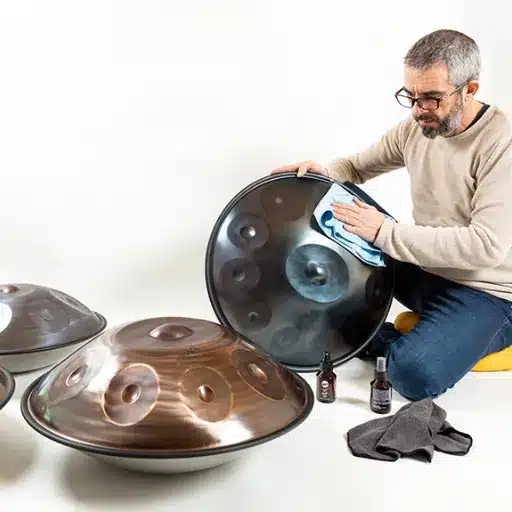
The following cleaning suggestions are effective in keeping your handpan in tip-top shape:
- Use a soft cloth: A microfiber cloth is ideal for the gentle removal of dust and fingerprints.
- Avoid using harsh chemicals: Mild soap and water are perfect for use. Abrasive cleaners are not recommended as they can completely ruin the finish.
- Dry the handpan after cleaning: This may be the most important step because moisture is so harmful and will lead to oxidation almost on contact.
- Store the handpan properly: By minimizing exposure to dust and moisture during storage, a protective bag or a case will vastly improve the lifespan.
- Maintenance inspections: Immediately aim to repair any wear or damage that is found when the wash is performed routinely.
Handpan care and maintenance are improved by the preceding practices.
Daily Maintenance Tips
Wipe Down After Use
Before each session, take a cleaning session and make use of the multi-corner handpan. Using a multi-corner handpan with a lint-free cloth and a little bit of pressure should assist in the removal of all sweat, wet, and sticky prints. Wiping your multi-tone handpan with a lint-free cloth or a dry cloth will not harm the outer coat, and it is very good for the instrument’s maintenance. Dusting and cleaning can be done every nap sound or multi-tone handpaning by using a dry or damp lint-free cloth.
Avoid Moisture Exposure
Do not even attempt minimal water usage of the handpan to postpone the rusting of the instrument, which might be a result of the string through the remote from the west. For the betterment of the handpan, always use a water case that is moisture-resistant.
Check for Dust Build-Up
Use a soft, clean microfiber cloth to wipe off the surface of the handpan and the inner parts of the instrument. Ensure you maintain a period in which you clean the handpan to keep it in its original form; this prevents damaging the sound and the tone of the handpan.
Periodic Application of Oil
In a period of one week, a handpan should be given an even coverage of any natural oil, like flaxseed or coconut. This will shield the instrument from the external factors and preserve its form. To apply the oil, use only a handpan and a soft, clean rag.
Periodic Maintenance Practices
Handpan Care Instructions
A thorough cleaning is necessary every few months in the proper care of the handpan. It is recommended to use a soft microfiber cloth and a metal-specific cleaning solution, which will assist in the removal of dust and oil from usage and any other particles that pose a threat to the surface of the handpan. A soft microfiber cloth helps to eliminate dust and handle it in a more gentle manner that will not harm the surface. In addition to the long-term protection from harsh substances.
Evaluating Tune Integrity
For occasional to significant alteration, the tuning of the handpan can be influenced by a number of different circumstances, for instance, interacting with the instrument, or the kind of environment that changes during playing. It might be useful to think of visiting a music shop, since the instrument will need new wind tunings following the demonstrated songs and the intention to preserve its original tones.
Controlling The Handpan’s Surroundings
Keeping an eye on the room where the hang is kept or where it is played is also important. The humidity must not be too high and must be kept reduced. Violent transitions of temperatures, like going from too hot to very cold, should be avoided. The instrument is soft and thus does not respond very well to extreme weather changes, being extremely hot or cold.
Handpan Protection While in Storage
It is a good idea to purchase a case for the hang, as it will protect it while transporting or storing it. These cases are custom-made and usually crafted for hang pans and come fully padded with custom beadings. This padding is to guard it against all sorts of knocks and wear and tear, as well as the weather. By doing this, you will protect the instrument’s acoustic and visually appealing integrity and also the instrument’s lifespan.
Proper, hands-on care—along with storing the hang in the proper conditions—as well as the use of a solid handpan case all add up to the instrument’s lifespan, as well as the delivery of a fair handpan sound quality, forever.
Rusting is a Big Problem for Handpans

Steel is the chief component of a handpan, as it is the one utmost common and most likely to rust. To protect the handpan, it should be stored in a cool, dry place. It should not be exposed to moisture for extended periods of time, and it will require regular application of oil to its surface to ensure that it doesn’t corrode from oxidation. Moreover, wiping away the instrument’s oil layer immediately after playing will remove it from the hand and offer some protection from its own oils, which can cause oxidation. Maintaining a handpan and attending to it helps to prolong its life and to retain the fresh sounds it produces as a delicate metal-based sound instrument.
Pinpointing Rust on Your Handpan
An adequate light source is all you need to detect rust on the surface of a handpan. Rust is normally an unfamiliar red or brown colour that appears in patches on the metal of the instrument. These patches may seem minor, but they deserve to be examined more carefully. In addition to visually identifying any possible rust spots, I often pay attention to handpan areas that feel rough and are difficult to the touch and rough as they may signal the presence of rust with my fingertips.
After that, I shift my focus to the handpan’s body parts, where I can detect the accumulation and stagnation of moisture, like the rim of the handpan and the handpan’s crevices, as these are parts of the handpan most likely to develop rust. If my handpan has protective oil or wax applied, I make sure it is spread evenly all over the surface, since any unpreserved part might bear rust. At times, I also come across what looks like rust but is actually residue or dirt. To verify this, I wipe the surface gently with a soft cloth and check if the blemish persists. If it does, then it is more likely rust.
Patrolling my handpan with rust in mind and being vigilant can help take steps to overcome any threat of rust I might face. Such a routine, when combined with frequent washing and a standard checklist of maintenance items, helps in maintaining the visual and acoustic aesthetics in a great way.
How to Get Rid of Rust the Right Way
The gentle sound of handpans demands that extra level of care while removing any rust to not destroy the thin surface of the metal. The initial step to take is to accumulate all required non-abrasive products, such as microfiber cloths, fine-grade steel wool, and metal cleaners that are not corrosive. Test all of these on a non-visible small spot to confirm the product is safe for the metal of the handpan.
The next step is to rub the rusted surface with a light, non-scratching, fine-grade steel wool or a soft tool that works the same so that the rust can be safely removed. Keep scrubbing the area with light circular movements till the rust is lifted, and then use some appropriate cleaning solution with the microfiber cloth, moistened with the cloth, to clean the residue left. The area can be cleaned as many times as needed till the rust has been fully removed, but work should be calm and patience should be in practice to diagnose any damage.
When the rust is gone, the handpan needs to have a protective coating applied. This can be done by applying a good-quality mineral or specialised handpan oil, not just to avoid more rust but also to improve the looks of the pan. With a soft cloth, an even spread of the oil can be applied, and any extra can be wiped to avoid some damage. The pan can be stored with regular oiling in some dry regions, making the temperature manageable, which will significantly reduce the chances of rust appearing again. This safe and effective process helps in reducing the chances of degradation in the performance and longevity of the instrument.
Secure Your Handpan from Rust
To preserve my handpan from the threat of rust, I prioritize regular care and proper storage. Firstly, I am insistent on keeping the handpan in some dry, climate-controlled area, as the presence of humidity and repetitive changes in temperature can serve as a stimulus for the handpan to rust. Throughout my handpan’s bands, I am extremely keen to wash my hands, wipe them till they are dry, and make sure no oil is left to prevent the risk of any oils and moisture from leaving any residues. I follow the same procedure in terms of care, where I am able to wipe it when I am done working with a soft working cloth to prevent any moisture build-up.
Apart from that, I do visit measures of applying oil over the handpan, which I do regularly to provide an oil-coated barrier to the instrument that protects it from moisture. I use a working cloth to spread the oil over the metal and always make sure the oil does not leave any residue to avoid any moisture. It certainly does help with protecting the handpan, but it significantly helps in preserving the handpan’s precious shine, and, in my opinion, it makes the handpan look a lot nicer. An equal level of care is required of the bottom side of the instrument for the handpan to have a definite level of maintenance.
Ensuring the handpan is properly cared for is crucial in stopping the development of rust. The little considerations in doing so will surely help in maintaining the quality of the sound, in addition to prolonging the instrument’s lifespan. Taking care of the handpan involves extra effort of doing the needful at every moment, which the handpan demands, and in doing so, the instrument will stay in top condition for an extended period.
Reference Sources
- Master the Handpan: A detailed step-by-step guide on cleaning, rust removal, and protection for handpans. Master the Handpan Guide
- SEW Handpan: Offers essential tips for cleaning, maintenance, and rust removal, including recommended products. SEW Handpan Guide
- Yatao Shop: Provides a comprehensive care guide, including cleaning, moisture prevention, and oil application. Yatao Shop Guide
- NovaPans Handpans: Covers essential care tips for all environments, with detailed explanations for each practice. NovaPans Handpan Guide
- Metal Sounds Shop: Focuses on cleaning and protecting handpans, including the use of natural wax or oil. Metal Sounds Shop Guide
Frequently Asked Questions (FAQs)
How is it most efficient to clean a handpan?
In case the handpan is to serve for a long time without any destruction, cleaning it occasionally is inevitable. Every time you use the handpan, make sure you clean the surface of the handpan with the help of a fabric called microfiber. The purpose of doing so is to get rid of any water or grease, or any substance that may cause buildup. Besides, one might also want to use, for instance, coconut oil to preserve it. The performance and durability of your handpan can be greatly improved if everyday care is taken.
How can I make sure that my handpan does not rust?
For the handpan not to rust, other measures have to be taken since humidity contributes to it. Playing the instrument is only allowable when there’s no water on it. Therefore, dry the handpan with a microfiber towel after playing. In addition, it is recommended to store it in its dry case without additional sunlight exposure. The usual preventative care done to oil handpans with handpan oil protects them from rusting as well as losing their sheen.
What actions should be taken in case of rust on a handpan?
In the event that your clean handpan gets rust spots, you will have to take action immediately. When cleaning, it is advisable to employ a gentle scouring pad, distilled water, and stainless steel rust remover for instruments. Scrub this area tenderly and with precision, then use a microfiber cloth to clean any deposits. And once that’s completed, do it again in a different way – unclean it by oiling, not oiled, employing your handpan to prevent any more rust. Even so, practice allows for the handpan to last longer thanks to a day-to-day handpan maintenance routine.
How often should I apply oil to my handpan?
It’s best to oil your handpan – at least once every month – more so if it has been played heavily. Good handpan oil will protect the instrument from corrosion and still maintain its tone boundaries. Ensure you do the application with a cleaning cloth and in a thin layer to avoid the mess. Oiling regularly is a crucial part of taking care of your handpan and enhances the longevity of the instrument.
Is it okay to leave my handpan outside?
I would advise against storing your handpan outside, considering the fact that they rust and get damaged when exposed to the environment. Rather, it is better to store your handpan pot in a suitable case inside, away from the sun and humid areas. It is because the case facilitates the cleanliness of the handpan and protects it from harsh weather conditions. In case of traveling with it, make sure it is well secured so that no one knocks it.
How do I clean a handpan after use?
In order to clean the handpan properly after use, one must simply take a dry microfiber towel and wipe the surface of the instrument. It helps to keep moisture, oils, or fingerprints that were on the hand away from the handpan. Given that we want to clean the instrument deeper, using mild soapy water occasionally wouldn’t hurt, provided the instrument is dried thoroughly. The captivating part about the routine of daily cleaning is that it assists a person in preserving the sound tuning of the handpan so that even many years later, if the handpan is played, it sounds as good as it did initially.
Conclusion
Proper handpan care is essential for maintaining both the instrument’s beautiful sound and its longevity. By following these comprehensive guidelines for cleaning, maintenance, and rust prevention, you’ll ensure that your handpan continues to produce its enchanting melodies for years to come. Remember, consistent daily care combined with periodic deep maintenance is the key to preserving your instrument’s acoustic integrity and visual appeal.


