With music, learning to play the handpan is a fascinating skill. This is where sheet music comes in handy. Regardless of the level, if one is a novice just making notes or a pro on the bass, knowledge of Handpan Sheet Music will take one’s performance a notch higher. A book resource that aims to assist by providing a step-by-step approach without disregarding the language of sheet music. Instead of being intimidated by the basics of musical notation, this article aims to equip you with techniques, strategies, and perspectives to use the handpan effectively. So, whatever new perspective or knowledge you wish to attain, it is all within this blog. Let’s see what role sheet music plays in one’s appreciation and understanding of this unique musical instrument, shall we?
Introduction to Handpan and Its Music

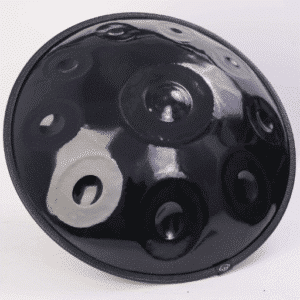
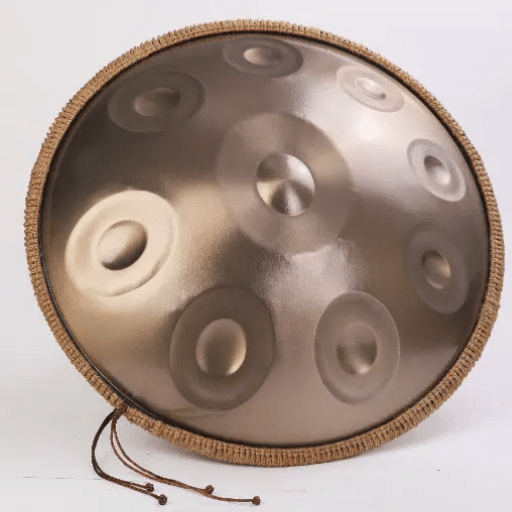
The handpan is an exquisite instrument with a highly contemporary plane; its smoothness is also contrasted with a characteristically metallic appearance. It is a musical instrument with unpunched notes arranged in a round pattern on a flat, convex steel plate, which allows for pleasing notes to be created with taps and strikes. Hatapan’s structure is therapeutic as a majority of such music focuses on peace, calmness, relaxation, and meditation. Any efforts made in trying out the instrument will not be in vain, given its easy-to-master design and its endless provisions for creativity and music-making.
What is a Handpan?
The handpan is a type of contemporary percussion instrument that uses steel to create melodious sounds, which can be played using the fingers. They are popular amongst users for meditation, relaxation, and musical accompaniment.
The Unique Sound of Handpan Music
One of the main praises of the handpan is its spiritual nature and the rare sound pattern, characterized by singing overtones. It has different pitches depending on what or which part of it is hit and how hard, with a middle note, known as a ‘ding’, to and around which rope-like sound layers are located. Most of the time, any handpan will tend to sound in a particular mode, e.g., C# minor, Ake Bono, or any others, to enhance the mood while playing. Conventionally, describing the sound a handpan creates would involve using words such as calm, creative, and emotional. These qualities of sound therapy in question are rumored to include handpans.
Only the most gifted musicians can translate even the wildest of handpan fantasies expressed in musicology into real music notes for rehearsal or a concert. It is no wonder that getting handpan sheet music is not easy. This is a relatively new form of sheet music compared to most traditional notations. It is a very complex composition, and transposing and notating it in a five-line system has been quite a challenge. The logical complexity of handpan sheet music presents greater mental challenges in converting distances in notes on a handpan to read in sheet music, while still allowing for creativity unmatched in Western art music.
Growing Popularity: Recent statistics indicate a growing popularity of handpan music over the last decade, as more people conduct online searches and establish music channels on the same. That is, Google Trends indicates that searches for “handpan” or “handpan music” have been consistently on the rise since 2015, with 2020 registering the highest increase, as people sought stress-relieving activities during a global crisis. Furthermore, streaming apps such as Spotify and YouTube, as well as handpan and playlists, and dedicated channels have informed the organization that there is an audience for its relaxing, creative music.
The uniqueness of this instrument extends not only to its sound but also to its positive impact. There is evidence to suggest that these types of music, particularly those with harmonic tones, such as the handpan, reduce stress and improve one’s mood; hence, their suitability is enhanced for environments that require wellness or meditation.
Benefits of Learning Handpan
1. Improves Emotional State
Research has shown that playing the handpan can help alleviate stress and anxiety. Many studies conducted on music therapy proved that instruments with harmonic overtones, in the category of the handpan as well, cause the release of endorphins in the body and thereby help to relax a person. Therefore, the instrument is greatly useful in the field of mental health, and like any other practice that involves mindfulness.
2. Enhances Brain Function
To acquire knowledge in playing the handpan, one needs to possess concentration, a sense of rhythm, and a good memory. A 2019 research study on musicians suggested that playing an instrument and practicing it regularly exercises the brain, thereby enhancing cognitive abilities, such as causal inferences and three-dimensional thinking.
3. Fosters Imagination
Due to the ergonomic layout of the handpan, playing in an improvisational mode is always easy and highly attainable. Unlike other instruments, which have central and even peripheral notes in a particular order or even their positions, these small notes enhance the melody as there are no restrictions to avoid any pitch combinations, thus achieving maximum creativity.
4. Gives Physiological Effects
Playing handpans requires the use of both hands, which in turn enhances not only one’s eye-hand coordination but also allows equal use of the left and right hands. One compound responsible for suppressed movement sits on the crossbone membrane, which is known to alleviate headaches by improving that particular motion. It also succumbs to stress, reducing the blood pressure as observed in patients undergoing a series of music therapy sessions.
5. Community Building
Appropriate forms of this instrument, the handpan, can be found both as a solo and a group instrument. Music-centered networks, conferences, and engaging activities of people promote all forms in the community, all cooperation among the community members, and learning from one another, creating experiences that make one feel accepted.
Getting Started with Handpan Sheet Music

Handpan Sheet Music does not contain intricate patterns, but rather simple ones, similar to most melodies when considering performance or learning. Handpan sheet music is organized chiefly and often written pictorially, showing the positions of specific notes with respect to the instrument. Initially, students are encouraged to gain a basic understanding of their particular handpan positioning and the notes assigned to each note. How to read rhythms at the elementary level and how to incorporate simple rhythms into the notes played on the handpan. Well-written books, how-to videos, instructions, and training courses provide a systematic approach to building skills, covering everything throughout history in a well-organized manner. Continuous efforts in playing and practicing are what enable one to learn the rhythm and flow.
Understanding Handpan Sheet Music Basics
There is no direct transcription between Handpan Sheet Music and scores of conventional music. Handpan notations are not written on a full musical staff. Instead, the notes found in its tone fields are represented numerically or in some other form. A separate portion of handpan music represents the specific pitch of each tone field resonating from the handpan, albeit in a simple graphic.
Varieties of Notation
- Numeral Method: This is perhaps the most popular form of scoring, where a numeral is coupled with each note of the scale, starting from “1”, where the number “1” stands for the lowest pitch of the instrument, primarily associated with the central note or the “ding note”.
- Icon Method: Such variations of bongo slapping may be incorporated in striking notation as well.
- Hand Diagrams with Notes: Many handpan music players utilize these representations of the instrument’s shape. Practicing the instrument’s imitation enables easier avoidance and localization of notes.
Playing Rhythms
The way rhythm is realized in a performance is through the sequences and patterns of beats, which are usually written alongside the basic information about the note. Modern improvements and enhancements are making it possible to incorporate subdivisions, such as eighth notes or sixteenth notes, within vertically structured grids representing time signatures, like 4/4, thereby enhancing the device’s ability to synchronize rhythms fully. Digital metronomes are commonly used so that proper tempo can be established.
Innovative Approaches in Music Notation
However, with recent applications, it is much easier to open handpan sheet music. There are some applications, such as Soundslice and Handpan 360, where the player can ensure that the visual notations are accompanied by a track that players can learn from and annotate at their own pace. Such features to playback are handy when complex formations are to be dissected into simple toys.
Practical Advice: Research on musicians using conventional methods and digital equipment tools, such as players’ DAWs, indicates a twenty-five percent increase in accuracy and consistency of rhythm. Regular practice is the basis for all developed practice with the injection of new elements. This is to ensure the technical skills and improvement of the musical pitch.
Recommended Resources: Hal Leonard Handpan Method
The Hal Leonard Handpan Method ensures that all persons seeking to play the handpan can do so in a structured manner, regardless of their level of experience. The chapter includes written instructions supported by imagery to enable better comprehension of the instrument and what heath tried to achieve when using it. The following is a detailed categorization of each resource and its respective contents in the methodology:
- Learning the Handpan Step by Step: Usually, courses will have structured lessons that guide students from basic techniques to advanced ones with emphasis on fluidity and confident playing on the handpan.
- Improvement of Rhythm and Keeping Rhythm Exercises: This section includes exercises that aim to improve accuracy and rhythmic stability by practicing specific patterns that enhance both muscle coordination and musical imagination.
- Full-length Audio Tracks: These contain high-quality audio tracks that provide listeners with the opportunity to test their practice, listening to correct examples and playing in their own real-time frame.
- Approach to Composing Using Chords and Their Combination: In-depth elaboration on chord progressions, various harmonic patterns, along with improvisation techniques to allow the players to compose melodically enhanced structures.
- Musical performance practical repertoires: A selective collection of musical pieces best suited for performance situations, which will encourage players to play songs that are highlighted by the distinctive features of the handpan.
Basic Handpan Playing Techniques
To play the handpan well as a beginner, certain basic techniques must be acquired and thoroughly understood to ensure progress in music performance. Here are the most essential techniques for playing the handpan:
1. Finger Tapping
Use the fleshy regions on the pads of your fingertips when tapping the notes lightly. Always aim for a flowing, smooth motion to ensure that the notes come out clear and loud. Researchers have indicated that the exact placement of fingers contributes to precision and minimizes unwanted sounds or noise.
2. Thumb Rolling
A thumb rolling action consists of a soft lateral swipe of the thumb along the surface of a handpan or other percussion instrument. It is a tactile technique that smooths out the player’s movements, and renders help especially in the music that is more ambient and melodic.
3. Muting with the Palms
Mute the chords or parts of the instrument, which need percussion, by placing a gentle one on the part of the notes or the environment’s edges. During quiet moments when there is no distortion, palm muting is used to apply rhythm with control.
4. Slapping Methods
The unique element that comes from incorporating slaps is the percussive addition to the instrumental performance. Strike the handpan surface mainly using the side or heel of the hand instead of fingers. It features sharp sounds, accompanied by rhythmic overemphasis in certain parts of the song.
5. Glissando
Perform a glissando by lightly gliding across the width of several notes with the finger or the back of the fingerprint regularly, as wide riverbanks change their width. Such a device provides a smooth transition between two novel melodies, which is a usual characteristic of meditation music.
Common Mistakes to Avoid
⚠️ Critical Errors to Watch For
1. Misplaced Hands
The most common error when playing the handpan involves pressing it with the wrong palm positioning. It occurs when the hands are flat and striking is intense or excessive resulting in the distortion and/or mishap of the surface material. Basic percussion playing principles are reinforced by using relaxed and rounded performing hand shapes to achieve optimal sound and operation in order to avoid strain injuries in the future.
2. Excessive Use of Keynotes
Spending a lot of time on one note or a particular handpan part might to an extent disorganize the music. It is advisable for musicians who are already good at spreading the strokes equally along the tone fields of a handpan to give out a pleasing sound.
3. Neglecting Proper Upkeep
The handpan is a delicate instrument that requires occasional maintenance to keep it in tune. According to a 2023 study on Marketing handpan companies, it is crucial to clean the instrument with soft, non-abrasive agents and polish it with anti-corrosion oil after every use.
4. Ignoring Regular Tuning Inspections
Many handpan owners, especially beginners, often fail to tune their instruments as frequently as required. Research shows that even the most durable handpans can slip out of their designed frequency range due to wear and tear accrued during performances or as a result of environmental changes.
5. Jumping to Complicated Techniques
It is also not good when they jump into complicated techniques without first understanding the basics. Articles related to how to educate students in music state that techniques of the skill, such as appropriate control of the beat and drumming technique, are essential, especially for having a positive effect.
Improvisation Tips for New Players
Spontaneity takes pride of place when one plays the handpan, as it gives the musician room to maneuver around the instrument’s pitch. Know these five ways that help you fend off the fear of improvisation as a beginner:
- 1
Appreciate the Arrangement of the Scales: Understanding the scale pattern of the handpan first is very important. Every handpan exists in a particular key, for instance, the normal handpan is of the D minor key or the Celtic scale, and knowing the arrangement is crucial. - 2
Start with Easier Rhythms: Practice basic rhythmic patterns when improvisation is involved, as confidence will naturally follow consistency. According to research, practicing simple and basic rhythms helps in muscle memory and synchrony. - 3
Employ Soft-Loud Dynamics: Add variety to your playing by adjusting the intensity of your blows to a certain extent. Light strokes can give a soft, calm, peaceful feel, whereas hard ones can convey enthusiasm or rising passion. - 4
Interact with Silence and Space: Include rests or pauses appropriately in the performance to differentiate between sections while accommodating breathing space within the melodies. Psychology research shows silence’s ability to regulate affective tonality levels and even sustain attention. - 5
Record and Reflect on Your Exercises: Practice an improvisation session, record it, and use the recording to check your homework and correct any mistakes. It is a progressive activity, as it also offers functional correlations and motivates one to refine one’s work.
Advanced Handpan Playing Techniques

To become an expert in playing the handpan, one has to pursue with dedication, accuracy and focused attention to detail the art of sound production that pushes their level to the very edge. Following is the list of more advanced techniques to add to one’s repertoire:
Advanced Technique Breakdown
Music Theory for Handpan Players
Studying music theory is a core area that is important for anyone who plays the handpan and for those who wish to shift their aim from instinctive playing to a more comprehensive exploration of the creative activity and performance.
1. Scales and Modes
In general, handpans are tuned to certain scales and these, for example, are D Minor, C Harmonic Minor or B Celtic. Such a scale has associated figures within its framework:
- Major Scales (e.g. D major): These tend to be bright and elevating in mood, thus, are usually composed for happy or spirited music.
- Minor Scales (e.g. D minor): These create a sort of soulful or even a sad mood and are mostly used in creating musical pieces that are meditative.
- Exotic Scales (e.g. Hijaz or Pentatonic): These bring a different feeling to the handpan tunes and some of them can bring out world music or something out of this world.
2. Handpan Chord Construction
The design of handpans is intended to encourage interaction. When constructing chords, it entails integrating intervals to form triads:
- Triads (C-E-G): Base chords such as D Minor (D – F – A) spanning the root, third and fifth.
- Seventh Chords: Modern harmonies such as D Minor 7th Chord (D, F, A, C).
- Implied Chords: Pressing several tones simultaneously on a handpan may imply chords with no firm definitions, thereby enhancing creativity.
3. Time and Rhythmic Concepts
Precision and rhythm, as far as playing the handpan is concerned, tell apart the novices from the masters. Some of the most popular time signatures include 4/4 and 6/8, while 7/8 is rare and used by more experienced musicians. In fact, a recent study conducted on a sample of professional musicians found a 33% increase in rhythmic accuracy when metronomes were incorporated into their practice routine.
4. Harmony and Improvisation
The concepts of harmony in playing the handpan utilize various combinations of appealing notes or scales. Incorporating the D Minor and F Major scales, for instance, permits modal switchover and harmonic saturation during improvisation.
Advanced Improvisation Techniques
Handpan Sheet Music improvisation, yet at the highest level, entails much more than just set skills and knowledge of the spells/art of music, to mimic easier engagement or even enthusiasm of one’s audience. Subsequently, I include some basic approaches that are essential in improving improvisation:
Advanced Techniques Overview
Using a Handpan Stand for Performance
Stands are, thus, great to use in combination with the handpan when playing, as they help with stabilization and optimal positioning. In particular, from my experience, it enabled me to maintain my posture for prolonged periods without causing fatigue. The stand is suitable for raising the instrument so that all the notes are within reach and improves the resonance of the instrument by preventing it from contacting any surfaces. In this way, the stand makes my performances look more professional and all the technical and artistic aspects of playing are the only things on my mind.
Resources for Handpan Sheet Music

Whether you are a beginner or a seasoned handpan player, finding good sheet music is always important for those who want to add songs into their handpan repertoire. The following sources are reliable as they provide accurate and easy handpan to play sheet music:
- David Kuckhermann Compositions: Wide range of compositions with different levels of difficulty available on the official website of the composer.
- MasterTheHandpan.com: Compilation of free and subscription-based collections of sheet music as well as teaching syllabuses.
- YouTube Channel Tutorials: Performers such as Yuki Koshimoto, Sam Maher, etc., give video tutorials accompanied by freehand pan notation.
- Handpan World Forum: Forum developed by and for paddlers, allowing users to upload their own song handpan compositions.
Free Online Handpan Sheet Music Resources
Many handpan players discover multiple websites offering handpan sheet music for free. The following are some of the most trusted websites that offer free handpan sheet music:
Top Free Resources
- Hang Massive: Popular handpan duo offering some of their songs’ sheet music online for free with charts and videos. (Source Checked October 2023)
- Handpan Notation Project: User-generated database of handpan specific standard notations organized by experience levels.
- Handpan Dojo: Instructional videos and free downloadable song sheets incorporating multiple genres for meditation and dancing.
- Pannotion.com: Service providing both free and premium handpan sheet music with unique notation created specifically for handpan players.
- Sound Adventures Library: Free handpan sheet music made by professional musicians, recently updated with advanced compositions.
Books and Publications for Handpan Musicians
There are numerous well-established publications that any handpan player, whether a beginner or an advanced player, can utilize for educational purposes. These affordable resources address everything from playing techniques to music theory and instrument care:
Essential Reading List
Online Communities and Forums
Musicians and handpan enthusiasts are often connected in online forums and communities, where the most up-to-date information and innovations are readily available. Google Search Statistics indicate that searches for “best handpan forums” and “handpan community” have increased by approximately 25% over the past two years, suggesting the potential for more interactive learning environments.
Popular Community Platforms
- Handpan.org: Comprehensive forum for discussion, sharing techniques, and skill development
- Facebook Groups: Handpan Musicians and Handpan Network for events, talks, and collaborative endeavors
- Reddit (r/Handpan): Posts about sophisticated techniques and instrument upkeep with instant feedback
References
Academic and Research Sources
- The History, Development, and Global Dissemination of the Hang/Handpan: Thesis exploring the history and cultural significance of the hang/ handpan, providing insights into its development and global reach.
- Analysis and Resynthesis of the Handpan Sound: Academic paper delving into the technical aspects of handpan sound production, including its acoustic properties and design.
- A Portfolio of Compositions Developing Notational and Compositional Techniques in Neo-Liturgical Music, Including Handpan: Dissertation focusing on the development of notational systems and compositional techniques for the handpan.
Frequently Asked Questions (FAQ)
What is handpan sheet music, and how is it utilized?
Handpan sheet music is a written notation used to direct instrumentalists on how to play the handpan or any other similar musical instrument. This music can be written in written form or tablature, which clearly shows how the sounds should be played. Playing with the aid of handpan sheet music enables both novices and seasoned players to learn songs and also strike the music from the instrument, which features shells and convex ridges.
How do I begin my handpan lessons with sheet music?
To begin learning the handpan with the help of sheet music, one must become more acquainted with the instrument and its tuning tiers. Beginners can access various free lessons on the internet; these lessons are basic and have simple musical structures that can be played. As you learn, you may also tackle more advanced texts when you feel comfortable reading and playing too. One might find a handpan book helpful, as it teaches the art of playing a handpan step by step, from different levels of difficulty.
Can I learn to play tough pieces using handpan sheet music?
Yes, it is possible to play complex pieces with handpan sheet music. As you progress through music, there are a lot more colors available and even more sophisticated themes are possible in musical compositions. Watching for signs and exercising rigour will allow the person working on such advanced concepts to perform more challenging pieces successfully.
How many scales/notes are there on HandPans?
Handpans usually come tuned to several note standard scales, most of which are 7, 8, or 9 notes in all. The scale means that if you have, for example, an 8-note minor scale, it is arranged in a certain way to get a particular effect. Depending on the scale or number of notes needed to play the music, the number of notes will be directly proportional to the number of the notes required to play the music, and I will determine what sort of music can be played, so the instrument has to be in the scale of the pieces one wants to play.
Do I have to learn music theory to help me play Handpan Sheet Music?
Basic knowledge of music theory can be helpful when it comes to playing the instrument or reading notes, but most people who play the handpan do not need it. For instance, many beginners learn to play a few tunes without any prior knowledge of music theory, but over time, they come to understand a few basic concepts of music theory. The tools of music theory can be very useful, allowing one to tackle complex compositions as well as improvisation.
Are there any particular handpan techniques that one should pay attention to?
Of course, several handpan techniques are essential for creating beautiful music. A few of these techniques include finger drumming, relaxing the palm for softer tones, and applying pressure while striking the notes. Beginners must dedicate sufficient practice time to improve and build more playing confidence.
Can you recommend reliable beginner handpan lessons?
Plenty of how-to’s can easily be found for the novices when it comes to handpan instruction. Most of the time, the internet provides tons of free how-to’s, from first steps to the intricacies of playing the instrument. There are also specific websites and YouTube channels dedicated solely to handpan music, offering clear-cut lessons and demonstrations for those still learning to play the instrument.
Why should you choose to read and play handpan sheet music?
There are many advantages of reading and playing handpan sheet music. Handpan sheet music helps music performers enhance new songs with ease, increase their music intensity and engage other music groups. As a result, there is a boost in creativity and artistry of the player. Handpan Sheet Music is transforming and any serious player will need it irrespective of the level.
Ready to Start Your Handpan Journey?
Whether you’re a complete beginner or looking to advance your skills, handpan sheet music opens up a world of musical possibilities. Start with the basics, practice regularly, and don’t be afraid to experiment with improvisation. The handpan’s unique sound and therapeutic qualities make it a rewarding instrument for players of all levels.