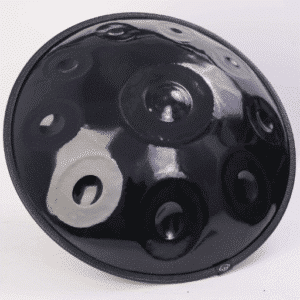
From scale to materials, and from artisanal to craft development stages, the choices can seem endless when selecting an ideal handpan, not to mention options for everyone with a budget. But it’s no small task to find the right instrument for one’s style and needs. This guide will help make the handpan search easier, solidifying the fundamentals and providing a detailed review of some of the most famous handpans on the market, covering aspects of tonal quality and durability, while also factoring in the occasions or functions that set them apart. By then, you will have gained the confidence and insight to embrace a handpan that intertwines with your music and soul.
Understanding Handpans and Their Variants
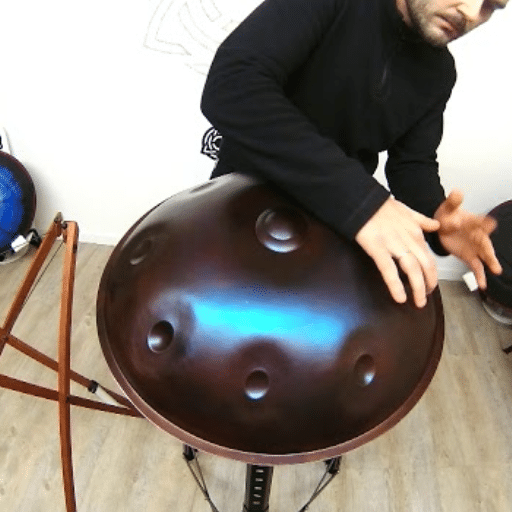
Handpans are steel-made percussion instruments considered highly soothing and melodic in nature and are famously recognized for their unusual, low, dome-shaped design. They are usually played by striking or tapping specific areas, so they may produce pleasing sounds that are appreciated by both players and audiences alike. Handpans can be either the classic handpan, which has a more extensive series of notes, or the tongue drum, a much smaller and less costly instrument that sounds entirely different. Important scales in handpan selection include the scale, the quality of the material, and the tuning, all of which affect the overall sound and playability of the instrument. These aspects ensure that the handpan complements the player’s style and musical choices.
What is a Handpan?
The handpan is a type of drum made from metal, featuring a dome shape with tuned notes arranged in patterns that are struck to create beautiful, ethereal, and harmonic sounds.
The Evolution of the Hang Drum
Created in Switzerland in the early 2000s, the Hang drum is the more generic term for the handpan. The Hang, conceived by Felix Rohner and Sabina Schärer of PANArt, is a hybrid of the steelpan and some traditional percussion instruments such as the Ghatam and Udu. The Hang instruments were the first to be completely handmade and carefully tuned to specific scales, becoming highly sought after by musicians and connoisseurs alike. Production of the Hang ceased in 2013 as PANArt focused on other instruments; nonetheless, their innovation created a worldwide phenomenon in the alternative-maker community for the modern handpan.
The introduction of the Hang drum has set new paradigms in manufacturing and availability. Today, handpans are crafted by many artisans worldwide, utilizing various materials such as nitrided steel and stainless steel to enhance durability and resonance. Moreover, they come in a variety of scales to cater to different styles and personal music preferences, such as the Dorian, Celtic, or Aeolian scales.
Market Growth Statistics
The global demand has sharply risen, and the market is estimated to grow at a CAGR of around 5 percent between 2020 and 2030, owing to the rise in world music and meditation practices. The ascent of the internet and social platforms has undoubtedly contributed to the growing popularity of the instrument, making it easier for enthusiasts and practitioners to find tutorials and performances on the handpan, as well as learn about its unique sound.
This depiction of the evolution of the Hang Drum suggests that this novelty inspired the creation of a thriving community of world music, where age-old influences meet modern craftsmanship to foster a tradition of otherworldly vibrations with universal appeal.
Differences Between Handpan and Tongue Drum
Features to Consider When Choosing a Handpan

Buying a handpan is not merely purchasing a musical instrument; it is a moment where one accepts a practice and an endless wealth of experience. It is therefore essential to examine specific aspects to determine its suitability for your own musical needs and preferences. Here are five major points that you can consider in choosing a handpan:
1. Material
Handpans are most commonly made from stainless steel or nitrided steel. Stainless steel will resist rust and give the instrument a brighter tone with more sustain, whereas nitrided stainless steel is much tougher and achieves a warmer tone. Consider the materials according to the climate where you will be playing and what you desire in terms of sound.
2. Tuning and Scale
Handpans are available in various musical scales, such as D minor, C major, or some other exotic tunings. Choose a scale based on the type of music you want to play, as it will have a significant impact on the instrument’s versatility and emotional content.
3. Number of Notes
The number of notes varies between handpans, typically fitted with 7 to 13 notes. More notes allow more versatility in terms of melody, whereas fewer notes create a more focused and meditative sound.
4. Sound Quality
Every handpan has its own unique characteristics of resonance, sustain, and harmonic quality. Test the quality by playing different notes and listening for a crystal-clear, vibrant sound. A well-built handpan should have almost no buzzing sounds or inconsistencies in sound quality.
5. Budget
Handpans are priced from a few hundred to thousands of dollars. While high-end models typically offer better craftsmanship and tone, there are also affordable options to suit beginners. Set a budget, then try to compromise on spending on things that matter to you.
Quality Handpan Materials
The choice of materials influences a handpan’s longevity, resonance, and tonal qualities. Traditionally, handpans are made from nitrided or stainless steel, each with its own set of characteristics.
Nitrided Steel
Nitrided steel is essentially a treatment that enhances both hardness and rust resistance. This material is prized for its warm and rich tones, complemented by a good dynamic range. It does, however, require regular maintenance to prevent corrosion, especially in humid climates. The process of nitriding basically puts nitrogen in the surface of the steel, which aids in giving a longer-lasting resonance to handpans.
Stainless Steel
The stainless steel handpans resist rust more effectively and require significantly less maintenance than the nitrided steel. And they make brighter, clearer tones with a longer sustain. This is perfect for individuals who prefer an airy sound and reside in areas with weather that is unfavorable to other types of instruments.
Thickness
The thickness of the steel is yet another factor that influences the sound quality. Thicker materials create deeper and stable tones. On the contrary, thinner steel can sway easily with lighter vibrations, producing a softer tone and increased sensitivity.
Advanced Materials and Coatings
Modern technologies have enabled the creation of handpans, made from hybrid steel alloys or with specialty coatings, that marry the advantages of nitrided and stainless steel. The materials really achieve a delicate balance between durability, tone, and environmental resistance.
Professional Manufacturing Standards
According to the latest data, most professional-grade handpans have a thickness range of 1.2 mm to 1.5 mm and are then hand-hammered or hydroformed. As a purchaser, you should therefore pick materials according to your playing style, willingness to maintain the instrument, and environmental setting. Trustworthy references for quality of materials and construction include names such as “Rav Vast” and “Panart”.
Sound Quality and Tuning
The construction, material, and precise tuning determine the sound quality of a handpan. A handpan, when well-crafted, produces a rich and harmonious tone with minimal dissonance. However, what actually gives the handpan its somewhat ethereal and melodic sound is that each note on the instrument’s surface is fine-tuned to resonate with overtones.
Tuning typically involves adjusting the dimples or “tone fields” of the handpan to a specific set of frequencies, which are commonly arranged within a musical scale. Popular scales include D Minor, C Major, and Celtic scales, although custom scales can also be created. Handpans are generally tuned to 440 Hz, which is the standard pitch; however, some players prefer tuning to 432 Hz, which is believed to evoke a more calming and natural resonance.
🔧 Professional Tuning Process
Tuning a handpan requires great precision. According to research, with experience, a single instrument can be fine-tuned in 6-12 hours; i.e., fine-tuning a single instrument is a matter that requires 6-12 hours of an experienced tuner’s time. The latest technology, such as electronic tuners coupled with frequency spectrum analysis methods, ensures that all notes, including overtones, are accurately tuned. New techniques for dynamic tuning have emerged recently, allowing players to adjust the tension of the steel for different pitch preferences or playing styles.
An under-tuned handpan can sound flat and dissonant, making it much less playable and musically expressive. From Google searches, it appears that many players will also say that the instrument should be bought from respected makers who will provide, time and again, proposals for tuning specifications and guarantees of stability in tuning for some time. Some have reported that reliable makers also tend to tune their handpans a second time after the initial build, allowing the handpan to settle in following its actual construction for the added assurance of tonal accuracy.
⚠️ Maintenance Tips
Maintenance thus keeps the tuning intact. Handpan owners are encouraged to store their handpans in a stable environment, one that is not subjected to drastic changes in temperature or high levels of humidity, as these can affect the tension of the material and its tuning. Cleaning is also recommended for regular maintenance, and it is advisable to retain the protective cover for this purpose.
Size and Weight Considerations
Size plays a crucial role in choosing a handpan, influencing its portability, playability, and storage options. Then there are five factors considered vital.
- Diameter: Handpans, in most cases, range in diameter from 20 to 24 inches, or approximately 50 to 60 centimeters. Size also matters in terms of the range of notes and the resonance capacity of the instrument.
- Height: A handpan is generally 8 to 12 inches tall, which corresponds to a height of 20 to 30 centimeters. The smaller ones might be easy to carry since tall ones build deeper tone fields.
- Weight: A normal handpan typically weighs between 6 and 12 pounds, depending on its construction and the materials used in its manufacture. Lighter models are usually good for traveling because they are easy to carry, whereas heavier instruments may lend strength and steadiness.
- Portability: Does the handpan come with a travel case? If not, a large and heavy handpan might prove cumbersome to carry around while commuting or performing.
- Comfort of Playing: The instrument’s size must accommodate the player’s posture and arm reach to provide the utmost comfort during long practice or performance sessions.
If these are carefully weighed, a handpan can be perfectly picked to suit the player’s needs.
Top Brands and Models of Handpans
RAV Vast Overview
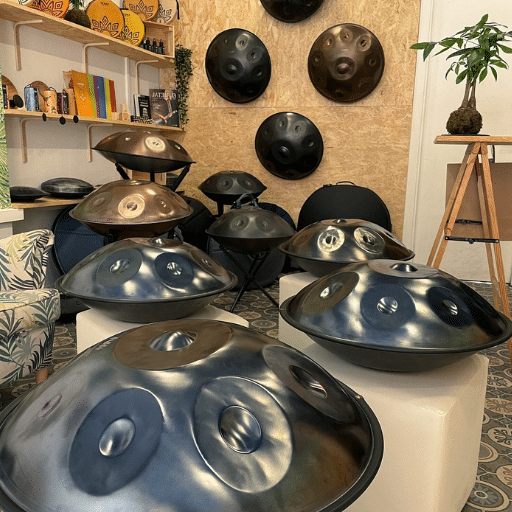
The RAV Vast is a highly acclaimed handpan-like musical instrument that produces rich, deep, and melodious tones. Considered to be a Russian creation, the RAV Vast is made out of high carbon steel through a process that has an entirely different and distinct tuning method from traditional handpan instruments. It is also available in various tunings, allowing both beginners and professional musicians to utilize it.
RAV Vast’s resonance and sustain are one of its most defining qualities. Each note rings true and resonates strongly for a long time, encouraging players to experiment and innovate with their musical expression. The instrument is often described as user-friendly, with its accuracy allowing even those with the least musical knowledge to play simple and melodious tunes.
Popular Models and Tunings
RAV Vast B Celtic Minor
Tuning: (B2, F#3, G3, A3, B3, C#4, D4, E4, F#4)
Due to its tranquil sound, this is a popular choice for spaces featuring ambient and meditative music.
RAV Vast D Major
Tuning: (D3, A3, B3, C#4, D4, E4, F#4, G4, A4)
This tuning is the most general kind and is suited for all upbeat and merry tunes.
RAV Vast D Celtic Minor
Tuning: (D3, A3, C4, D4, E4, F4, G4, A4, C5)
This one is great for those hauntingly beautiful, deeply touching tunes.
Making and Durability
The iron body, measuring 1.5 mm, is coated with a thin layer of paint to prevent rusting and provide some degree of durability. The quality of the sound is sustained with time while providing materials to bear frequent usage, thus making it a reliable instrument for use in both outdoor and indoor performances.
Price Range
💰 Affordable Pricing
$600 to $1,500
Compared to regular handpans, the RAV Vast is priced modestly, ranging from $600 to $1,500, depending on the type and tuning.
Accessories
There is always a good package of accessories that come with RAV Vast instruments, which mainly include soft carrying cases, rope decorations, and sometimes even handpan stands for the comfort of musicians who prefer to carry their instruments around.
Closing Thoughts
On the world handpan and steel tongue drum map, the RAV Vast stands apart due to its unique sound, sturdy build, and array of timbres. The curious appeal of this instrument for people of all levels of experience lies in its affordable price tag and ease of playability, from those amateurs who have just tested the waters with music to professionals who wish to open a new soundscape to explore. Today, the RAV Vast remains widely popular, proving to be a trusted companion for all those who nurture a love for their art, an intriguing proposition for any handpan enthusiast.
Comparing Different Handpan Brands
Best Handpan Models for Beginners
For a newbie, choosing the right handpan can prove quite daunting; however, some models have been designed to remain easy to use, relatively affordable, and consistently good in sound quality. Some of the best handpan models for beginners are:
RAV Vast E Low Pygmy
Features: It produces deep and rich tones and is easy to play. Being in the E Low Pygmy scale, it is ideal for new players to explore a soothing set of melodies.
Why Beginner-Friendly: This nice balancing act between dynamics in sound encourages a shy beginner by allowing an unconfident player to tap simple beats to make lovely harmonies.
HAPI Drum UFO Steel Tongue Drum
Features: The drum is exceptionally lightweight and portable, featuring an unusual UFO design. It offers soft, meditative tones.
Why Beginner-Friendly: This is a great value piece to start from, considering its low entry price and obvious layout.
Yishama Handpans (Celtic Minor)
Features: Handcrafted with the finest steel, it offers warm, soothing, and relaxing sounds in the Celtic Minor scale.
Why Beginner-Friendly: It combines a scale that suits beginners with a sturdy build, providing newcomers with a good long-term investment.
Tacta Shell Viva Series
Features: Bright-toned and simple in note arrangement, the Viva series is designed specifically for beginners.
Why Beginner-Friendly: It offers comfort and ease of learning, thereby appealing to individuals fresh to the world of handpans.
Meinl Sonic Energy Handpan (D Kurd Scale)
Features: This finely tuned handpan features a D Kurd scale, perfect for a wide range of applications and easy to master.
Why Beginner-Friendly: Intuitive layout and fairly loud, balanced tones lend themselves to experimentation and building skills.
💡 Beginner’s Summary
With each handpan, you can be assured of good design, reasonable pricing, and excellent sound, all of which make these handpans perfect for beginners. Selection, then, is all a matter of tone preference and budget, but all five are great options from which your handpan journey can begin.
Pricing and Where to Buy a Handpan
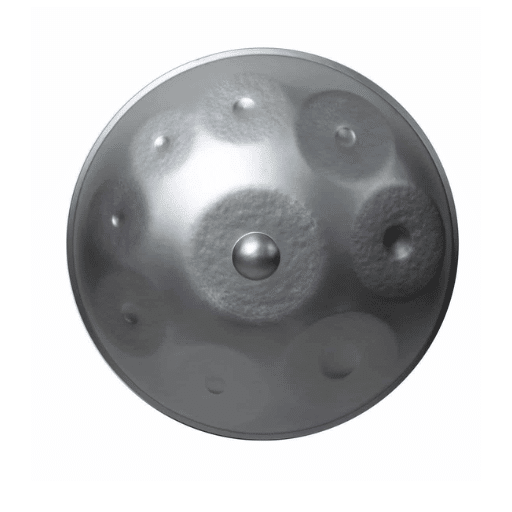
When purchasing a handpan, it is essential to consider both your budget and the preferred source. Depending on their degree of craftsmanship, type of material used, tuning, and the reputation of the brand, handpans range in price from $500 to well over $3,000. Advanced or artisanal handpans sell for $2,000 and above, given their premium finishes and special tunings.
Recommended Retailers and Platforms
🎵 Harmonic Handpans
Price Range: $1,000 – $1,800
They work mainly with handcrafted instruments, accompanied by sound samples listed with each item. Worldwide shipment is available.
Website: www.harmonichandpans.com
📦 Handpan Store (via Amazon)
Price Range: $500 – $1,200
A range of handpans priced from $500 to $1,200, well-suited for entry-level players eager to try the instrument.
Platform: Amazon Handpans
🏆 PANArt Original Hang®
Price Range: $2,500+
Higher-end authentic handpans and tremendous sound texture. Traditionally, the instruments start at around $2,500 with PANArt.
Contact: Visit PANArt for purchase details (www.panart.ch)
🔄 Second-Hand Marketplaces
Price Range: Varies (Often Lower)
Websites such as eBay or forums dedicated to handpans, like Handpan.org, sometimes list used handpans in varying conditions, often for a lower price.
⚠️ Note: Be careful and always check the credibility of your seller.
Extra Costs to Keep in Mind
- 🚚 Shipping Charges: International shipments may incur additional costs ranging from $100 to $300, which will be included in your overall total.
- 🎒 Accessories: Expenses for handpan bags, stands, and maintenance kits can add around $50 to $150 to your purchase price.
💡 Purchasing Tip
It is advisable to listen to audio samples in advance, check customer reviews, and verify if prior arrangements for return have been made, so you can get the best possible instrument that suits your needs.
Understanding Handpan Pricing
Handpan pricing changes significantly depending on factors such as craftsmanship, material quality, tuning precision, and brand reputation. The top-tier handpans, generally considered to be flawless, though those made by famous makers, range from $1,500 to $3,500 and sometimes more. In contrast, novice-friendly ones or factory-made instruments will usually be priced around a couple of hundred or a little above. An increase in price tags will often entail better sound quality, more emphasis on detail, and finer options for custom tuning.
Price Influencers
Material and Quality of Construction
An excellent handpan is often made of nitrided steel or stainless steel to enhance durability and resonance. The use of such materials increases production costs, thereby adding to the price.
Tuning and Craftsmanship
When they are hand-tuned by a craftsman, these instruments achieve perfect tonal accuracy. Such an intense tuning process makes its price higher compared to a mass-produced one.
Scale Customization
Customized scales refer to handpans built to specific keys or scales, and/or with additional notes. These tend to command extra fees because of the intricacies surrounding custom manufacturing.
Brand Reputation and Branding
Brands such as PANArt, Ayasa, and Yishama can typically sell their products at premium prices due to the reputation of their instruments. Lesser-known or established brands may pose threats through bargain prices.
Prices You Can Expect
💡 Entry-Level: $500–$1,200
Designed for novice or casual players, these may have simpler designs and a basic level of tuning. Some may well be factory-produced.
🎯 Mid-Range: $1,200–$2,500
These handpans are typically crafted by artisanal craftsmen or smaller workshops, and therefore feature higher-quality materials and precise tuning.
👑 Premium/Professional: $2,500+
The top end, made by big-name makers who deliver on superb quality, the best technical harmonics, and highly unique, resonating, luscious tones.
Market Trends and Additional Notes
The recent market trend indicates an increase in demand due to the surge in interest in handpans for meditation, yoga, and musical therapy. The growing trend of mid-quality instruments, which provide a good balance between cost and quality, is also being met by a rise in counterfeit instruments. Hence, it becomes detrimental to verify the purchase of a handpan.
⚠️ Important Consideration
Evaluate the minimum and maximum price ranges for additional costs, such as international shipping. This can vary from $100 to $300. Then there are other basic accessories, such as bags and stands, which can be anywhere from $50 to $150. Keeping these little details in mind can help guide you toward a purchase that you can be confident will meet your expectations.
Best Places to Buy a Handpan
When purchasing a handpan, I would recommend sticking to reputable makers and sellers of high-quality instruments. For consideration, placing the order directly with a reputable manufacturer, such as PanArt, Ayasa, or Yishama, would be ideal for their commitment to truly knowledgeable craftsmanship. Otherwise, browse among certified distributors or other reputable online sites, such as Sounds Inspiring or Handpan Tribe, for a large selection and helpful customer reviews. A trustworthy source is of utmost importance to avoid counterfeits and ensure that what you are buying is truly well-made, making for a worthwhile handpan purchase.
Second-Hand Handpan Market
Due to its high demand in the second-hand market, the aim is to offer cost-effective options to those who cannot afford a premium. Second-hand things might be comparatively cheaper to buy, but before you take the risk, you should check the instrument’s genuineness and if it is in good working condition. There are many platforms and handpan communities that sell pre-owned handpans, offering a wide variety of choices for both beginners and experts.
Here are five good places to consider in your search for a secondhand handpan:
🌐 Handpan.org Marketplace
An online community that features a marketplace section where members regularly list their used handpans for sale. In many cases, sellers provide detailed descriptions, photographs, and sometimes even videos demonstrating the sound and condition of the instrument.
📘 Facebook Handpan Groups
There are several Facebook groups devoted to connecting buyers and sellers of second-hand handpans, such as “Handpan Instruments for Sale.” These groups are community-driven, allowing individuals to seek advice or recommendations from knowledgeable members.
🏘️ The Handpan Village
It is a comprehensive website, also featuring a second-hand section. It is a trustworthy place where owners can safely upload used handpans, while buyers can check key information before making a purchase.
🛒 eBay
One of the well-known platforms for tracking down second-hand handpans. Though sometimes genuine second-hand deals are available on eBay, it is, however, necessary for the buyer to know how to judge the seller from his/her ratings and feedbac,k and also to check the return policy.
📍 Local Classifieds or Forums
Sites like Craigslist or local musician forums may occasionally have a secondhand handpan listing. While unstructured, they are a worthy source for hidden gems if one performs due diligence by inspecting the instrument firsthand.
⚠️ Important Buying Tips
When browsing the second-hand market, researching brand names and verifying the authenticity of the instrument is something one should consider. Always consider trustworthiness and transparency to get a handpan living up to your expectations.
Playing and Enjoying Handpan Music

The handpan is a versatile instrument. People of all skill levels can play it. Begin by setting the handpan on your lap or on a sturdy surface so that the most extensive notes are easily accessible. Use your fingertips or the soft part of your palms to strike the notes carefully, producing a clear, resonant tone. Concentrate on simple rhythms or patterns to familiarize yourself with the instrument’s layout. Gradually, with practice, you will develop coordination and flow that will enable you to create gentle or dynamic melodies at will. The magic of handpan music is found in freely experimenting with the instrument and bonding with its soothing sound.
Basic Techniques for Playing Handpan
👆 Finger Tapping
Using fingertips is one way to tap notes on a handpan gently. This technique yields bright and clear tones along with controlled and precise melodies. Make sure to be gentle with the stroke of the notes and avoid forcing much for the proper resonance of the instrument.
🖐️ Palm Striking
Using palm strikes, employ the soft part of your palm to strike the handpan, especially when aiming for deeper and more resonant tones. This technique is excellent for producing bass sounds and for adding rhythmic components to your melody.
✋ Slap Technique
Slapping is a quick and sharp striking motion, typically performed with the fingers or the edge of the hand. These percussive sounds are high in pitch and add a strong dynamic contrast to your arrangements.
🌊 Gliding or Sliding
Gliding involves sliding the fingers across many notes to link them smoothly. This accentuates the flow of one’s playing and typically expresses dreamy or meditative melodies.
🤫 Muting Notes
With your other hand, lightly touch an area on a vibrating note soon after it’s been struck. This method dampens the sound, allowing for the creation of staccato effects and rhythmic variations in your performance.
🎯 Practice Tip
Experimenting with all of these will lead you to discover your personal style and help enhance your handpan playing skills.
Using Mallets with Handpans
Mallets on handpans open up another dimension of tone and expression for the players. Whereas conventional handpan playing involves the hands and fingers, mallets can generate more volume and sustain a broader range of tones. For mallets, it is essential to use those with soft, rubberized heads that will not damage the delicate handpan surface.
Advantages of Playing with Mallets
🔊 Increased Volume and Sustain
Mallets amplify the sound of the handpan, making it suitable for performances in larger rooms or outdoors. The greater force exerted by mallets also creates a sustained ringing tone.
🎛️ Fine Dynamics
Mallets provide the performer with greater dynamic control through variations in the pressure and velocity of their strikes.
🎨 Distinctive Textures
The round rubber head of the mallet produces a nice, warm, mellow texture, very different from the finger strikes, which in turn adds to the variety of sounds we may want to explore.
Mallet Playing Techniques
- Striking Zones: Mallets strike the middle of the note field for a pure tone or hit the edge for a rich overtone. The best approach is to experiment carefully and explore each handpan’s unique response to mallets.
- Interchanging Between Hands and Mallets: Interchanging between finger playing and mallets within the same piece can provide dynamic contrast and help prevent performances from becoming monotonous.
Trends in Modern Use
📊 Community Survey Results
As demonstrated in a 2023 playing technique presentation, many players have expressed that mallets are increasingly used in therapeutic and meditative musical practices. According to a community survey, 34% of handpan enthusiasts have tried mallets, and almost 20% use them frequently within their performances. This trend highlights an increasing focus on exploring non-traditional playing methods.
⚠️ Care Instructions
Mallet experimentation adds an extra layer of musical expression to an artist’s handpan repertoire, whether for performance or personal enjoyment. Mallet use is a much-needed way to upgrade your musical experience. However, always take care of your handpan when using mallets to ensure the preservation of sound quality and the instrument itself.
Handpan Music Genres and Styles
The handpan has versatile musical possibilities, spanning various genres and styles while adding novel textures and tones to classical pieces.
Here are five major musical and stylistic avenues where the handpan occupies a central position:
🌍 World Music
With its global traditions-rooted origins, the handpan is an uncommon instrument in world music. It lends itself beautifully as a complement to many instruments from diverse ethnic backgrounds, resulting in a rich, multicultural soundscape.
🌫️ Ambient Music
Characterized by its calm and ethereal sound, the handpan is extensively used in ambient music. Its soft, slow, resonating tones instill calmness and mindfulness in the listener.
🎼 Fusion Music
From time to time, artists incorporate a handpan into fusion settings, where its tone is blended with electronic, acoustic, or other conventional elements. The handpan’s versatility enables unusual amalgamations that transcend musical boundaries.
🧘 Yoga and Meditation Soundscapes
Due to its tranquility, it is perfect for yoga and meditation practices. Most handpan players have rooted themselves into this line of music as well: helping one to find inner peace and concentration.
🎸 Contemporary Acoustic Performances
Modern acoustic music has witnessed a surge in the use of the handpan: bridging acoustic innovations, whether presented solo or in ensembles. The blended tonal qualities of these instruments offer a fresh perspective on acoustic music and have garnered widespread acclaim from diverse audiences.
🎭 Musical Evolution
The integration of the handpan showcases the handiwork of human JS in contemporary music and dance rock. Due to its distinctive tone, the handpan continues to inspire musicians across genres to innovate and be creative.
References
📚 Academic Research
The History, Development, and Global Dissemination of the Hang/Handpan
This thesis examines the history and global dissemination of the handpan, offering a comprehensive academic perspective. Read the thesis here
🎵 Compositional Studies
A Portfolio of Compositions Developing Notational and Compositional Techniques in Neo-Liturgical Music, Including Handpan
This work explores the role of the handpan in music composition and education. Access the document on ProQuest
🔬 Sound Analysis
Analysis and Synthesis of the Handpan Sound
This study analyzes the unique sound characteristics of the handpan. View the research on White Rose eTheses Online
Frequently Asked Questions (FAQ)
❓ What is the best handpan for beginners?
A beginner learns best on the handpan with diatonic scales, as they are easier to play and understand. With 8 to 10 notes, the handpan can keep up and allow a relatively extensive playing range. Brands like HAPI and Panart deliver quality handpans suitable for beginners and are much respected in the handpan realm.
🎯 How to Choose the Right Handpan for Yourself?
The choice of handpan depends on your level of skill and the kind of music you want to do; the somewhat simple 8-note handpan is recommended for beginners, while a 10-note or chromatic handpan suits intermediates. Additionally, experimenting with various handpan scales, such as Ake Bono or Gubal, can help you better relate to the instrument and enhance your musical style.
🎼 What types of scales are used in handpans?
There are different scales in handpans, each with its own set of harmonic characteristics. Exemplary scales include Ake Bono, which is great for improvisation, and diatonic scales, which refer to a more traditional sound. The player’s preference for either scale would therefore be significant in determining the final sound character and pitch of the instrument.
🥢 Can one use mallets with the handpan?
Using soft rubber mallets to vary tonality and dynamics is a technique employed by some handpan players. A mallet may increase the reverb and overtone qualities of a handpan, providing for additional expression. On the other hand, a handpan is made of steel, and one must consider the possibility of causing damage to the surface; so, mallets should be chosen with care.
🧹 Is there anything I need to know about handpan maintenance?
Maintenance is everything if you want to keep the best sound possible in your handpan throughout its lifetime. Consider regularly dusting the surface with a clean, dry, soft cloth or microfiber. Clean the handpan from chlorides or oil, and store it in a case that is both protective of the object from scratches and rust, yet safe from extreme temperature fluctuations. For pitch changes, a reputable handpan manufacturer that offers drop-tuning may be considered.
🎒 Are there any handpan accessories that I really need?
Many handpan accessories can make your playing better. You need to protect the case during transport and keep your instruments. You may also need a stand, depending on whether your knees or posture cause discomfort during extended playing sessions. A tuner will definitely come in handy to check the pitch of your handpan occasionally. Exploring various mallets to produce a range of textures, colors, and dynamics can be a rewarding and enjoyable experience.
⏰ What is the waiting list like for marriage to popular handpan makers?
Due to unfavorable demand, waiting lists exist for all renowned handpan makers worldwide, including Felix Rohner and Sabina Schärer. The waiting time varies significantly on a waiting list, ranging from a few months to a couple of years, depending on the maker and the model itself. Therefore, you should ask the makers themselves to find out the most accurate waiting time information at present.
🥁 How would you differentiate the handpan from a steel tongue drum?
Despite being percussion instruments made out of steel, the handpan and steel tongue drum differ in design and sound. The handpan generally has a convex shape and can produce a wide range of overtones, whereas the steel tongue drum has a flat surface with cut tongues that produce more focused tones. Both of these instruments offer distinct and complementary experiences for players.
🎵 What importance do harmonic overtones hold in handpan music?
Harmonic overtones converge in good handpan music to create a layered and rich quality. The handpan produces fundamental notes when struck, along with harmonics that resonate to form an exquisite soundscape. Knowing the theory of music helps players make full use of these overtones and thus improve their capacity for improvisation and the whole musically applicable circumstance.
🎯 Final Thoughts
Whether you’re a complete beginner or an experienced musician looking to expand your repertoire, choosing the right handpan is a journey that combines personal preference, budget considerations, and musical goals. Take your time to research, listen to different scales and models, and don’t hesitate to reach out to the handpan community for advice. The perfect handpan is waiting for you to discover it.