Discover the captivating world of handpan music and unlock your musical potential
The handpan has captured the hearts of musicians and fans around the world with its amazing music and sound effects. Whether it’s a new hobby, an activity that helps you relax, or you simply wonder what that musical instrument is, learning how to play handpan, regardless of experience, is an enjoyable process. I this review, we are going to discuss all the components needed by beginners to embark on their Handpan skills. From history and details of structure, to comfort with certain basic laws, this essay offers enough learning mechanisms that should enable one to enjoy their handpan. Discover the tips, strategies, and learn the secrets of producing winning musical tunes flawlessly than it seems.
Understanding the Handpan

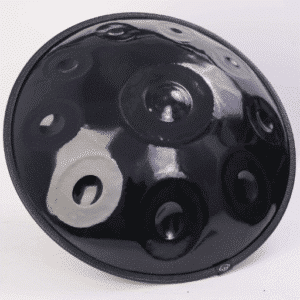
Hand pans are unique steel percussion instruments with a fascinating sound. They are in two halves of the metal that are joined together. The higher part of the handpan is arched and has a field tone of usual and unpitched areas that sound different on impact, depending on the pitch and amplitude of the tones. This was created in the early 2000s and is suited for beginners because it is actually played by the hands and the fingers, and it is easy for those who are more advanced in the music art to learn and to play as well. This separate melody feature of the instrument makes it not only play but also compose music.
What is a Handpan?
A handpan is an exclusive musical instrument devised as a dome-type drum, the production of which should be correctly assumed involving the central field of the top drum as well as multiple donuts of additional tonal fields on the same part, representing the musical notes. With the history of creation beginning in recent times, no longer than the early 2000s, this drum was primarily made with the thought of the steel beat instruments in mind, in order to be an easy medium for striking pattern patches as well as notes with hands and fingers. A handpan rather successfully catches some quiet and harmony, so it is often used in meditation, concerts, and even physical rehabilitation treatments. The assessment of the attractiveness of handpans for the new audience through the development of the availability of this musical instrument for a wide audience and the development of the emotional substantive aspect of the musical sounds, which they provide, is still relevant.
How Does the Handpan Work?
The dog dish works by connecting the case to develop sound. Vibrating the steel surface of the case will produce a sound because every dog dish has been carefully prepared with a reference note, most of which is known as “ding” and notes interacting in a scale-like tonal organization. The creation of the device is possible thanks to the hubs formed in the dog dish that help make accurate tuning for the creation of overtones possible when beating or hitting the stove.
Because of the complex architecture of this musical instrument, tension/frequency can be manipulated to produce both types of sounds: rhythmic percussion and melodic musical notes. Other factors, such as how hard the instrument is struck, the location of the hands, and how hard the surface is struck, play a role in the tone and quality of the sound produced by the instrument. Again, the physical properties of the material and the method of manufacture both contribute to the state of the tone, since well-corrosion-resistant steel adds to the service life of the handpan as well as enhances its sound. This instrument widely covers various styles and levels, breaks the age stereotype of its learners, and perfectly suits all players who love it.
Choosing the Best Handpan for Beginners
💡 Key Selection Factors
- Scale Selection: D minor or C major scales are beginner-friendly
- Budget Range: $600 – $1,500 for quality beginner instruments
- Note Count: 8-10 notes are ideal for learning
- Material Quality: High-precision tuning with quality steel
As a beginner looking to acquire a handpan, the process involves weighing different aspects, including cost, correctness, and ease of use. Most importantly, one of the factors is the instrument’s scale; this is because certain scales, such as D minor or C major, are friendly and more practical for use by beginners. In fact, with scales such as these, it does not matter which notes are played in what order; the sound will always be in harmony, giving beginners room to freely play without striking those irritatingly off notes.
The budget is not to be overlooked either. Although the finest custom-made handpans produced from either nitrided carbon steel or stainless steel are durable and have better sound than their cost is many thousands of dollars. In facilitating beginners who wish to learn handpan basics, there are lower-end versions of handpans manufactured by well-established brands that are better versions but at lower costs, ranging from $600 to $1,500. The presence of cases with percussion can be useful because they add value in terms of maintenance and transportation.
It is typical to carefully regard the craftsmanship of these instruments. Well-made thin metal handpans produce just the ringing and resonance desired with negligible distortive components as imperative. Most handpans produced using high precision tuning are certified or warranted to adhere to certain quality assurances or even warranties by the manufacturers. The most basic handpans range from 8 to 10 notes, which are more understandable for learners in trying to learn handpan basics.
In conclusion, one can say that the selection process can be greatly simplified by talking to friends who play, or even trying out some samples during exhibitions or demonstrations. This is because trying out different handpan models in the present condition helps you to measure the influence or affection you might have on a particular instrument and also tonal qualities, which makes it possible to have a hopeful and motivating beginning as a handpan player. Click the link to learn more about the beginner handpan.
Essential Handpan Techniques for Beginners

✋ Correct Hand Posture
Relax your fingers and keep them in a slightly rounded shape. Use your finger pads, not your fingernails, when striking the notes for a clear sound.
🎯 Strike Consistency
Work on practicing how to strike consistently at the same force for homogeneous sounds. Avoid percussion with excessive force, and instead, resolve to tap with even pressure.
🎵 Very Easy Patterns
Get acquainted with simple rhythms where, for instance, there is alternately striking of the main note and one or two outer ones. Such a practice lays the groundwork for mastering rhythm and hand-eye coordination.
🔇 Mutes
Practice how to control and manage the duration of sound by softly placing the palm on or close to the note immediately after striking it, thus often referred to as Staccato.
🎚️ Dynamic Range Possibilities
Play the instrument with different forces in order to examine the timbres it can offer. These tones are normally played with less force.
⏰ Have Patience In Practice
Hone techniques through easier, undisturbed practices. Even mastering the simplest movements takes a while, requires the same exercise frequently, and gives great results.
Learning the set of related skills will allow you to learn handpan basics techniques.
Proper Hand Positioning
In order to learn handpan basics, it is vital to start with the proper positioning of your hands for ease of tone production. Foremost, ease your palms and allow them to assume their natural, gentle arch. Your palms should be above the instrument’s surface but not exerting any force. Do not tear up the instrument, but use the pads of your fingers or the edges of your hands when hitting the notes instead of the knuckles or the fingertips. This is, in many cases, important for avoiding blunt or unmusical sound.
To handle the instrument well and without difficulty hitting the notes, one should not hold too rigid to the drum pads too rigidly but should keep the wrist loose so that fingers can easily glide from one note to another. Stress-free handplaying is also facilitated by loosening the wrist, and as a result, petrification in long fingers does not take place. On top of that, making your fingers suit the shape of a particular note area produces well-spaced out and even hits in this action. Try to contain and make movements and motions effective only when needed, so there is no unnecessary waste of energy or attention. Once you set your hands in place, purposeful and mindful engagement will do justice in carrying a tone well and the handpan as a whole to its utmost best that it deserves.
Basic Handpan Playing Techniques
Particularly, it is a practice of hand coordination, synchrony and sound, and rhythm. To learn handpan basics, especially concentrate on the “dead stroke” and the “open stroke” because they are one of the most important techniques that help achieve the desired sound dynamics. The dead stroke is when the note is struck and the hand stays on the surface for some time to make the sound muted, but the open stroke is where the hit allows the hand to recover so that the noise is clearly heard.
Learning how to play rhythmically is another important aspect. Children are first taught simple tasks, and as they become more confident, the tasks become more complicated. It is also a good idea to use a metronome so that time management is enhanced and a beat is maintained. Besides these, try and switch up the regular hitting techniques with the fingertips and palms. Doing so can make one’s performance much more interesting.
Lastly, consistent practice combined with active listening will be the most effective method to master your skills further. Take note of the subtleties between the sounds that you make and the way the various regions of the handpan produce different tonality effects. Precision, rhythm, and creativity are basic ingredients to learn handpan basics in as satisfying and interesting a manner as possible.
Creating Melodic Patterns
When it comes to crafting melodic ideas on the handpan, I prefer beginning with the scale of the instrument itself. As each handpan is set to a particular scale, knowing the layout means figuring out visually where the notes are and how they are placed in relation to each other. Exploring melodic potential usually starts with the simple putting together of notes. I try out note runs and inversions that make me feel like playing or reflect the emotions that I need to evoke. I resort to redundancy and modification of notes; that is, repetition situates a phrase on a certain level while it contains a fair amount of motion.
As a composer, I always grasp the importance of the phrase structure’s rhythmic flow whilst writing any melody. Placement of rest notes, as well as offbeats, or highlighting a certain beat, all written or unplanned, could help give some validity to motion throughout the melody. I can make such complex rhythmic pads conforming to scale jumps sound interesting. I use a playful technique where sometimes I don’t play any stroke but make quick strikes, and the accompanying, beautiful melodies are produced.
Whenever I need to improve on my music’s lyrical patterns, I engage in more close listening and spontaneity. Practically speaking, on top of that, I generally find it more in my interests to record most of my practice sessions so I can later replay and pinpoint the different areas that need adjustments so as to make the melody flow better. There is a good side to improvising, as it not only lights up some artistic freedom within people; its unpredictability often ensures that one discovers the most peculiar progressions. Even after habitually indulging in writing it, I still discover that writing melodies is more gratifying and a way to improve my music as well as my bond with the handpan.
Starting Your Handpan Journey

🚀 Your Journey Begins Here
The first steps in playing the hand pan are getting the relevant hand pan. You might need to look for a better-sounding quality hand pan which has a particular scale that you are more comfortable with, for example, D minor or maybe the Celtic scales, as those are common scales used by beginners. Play as often as possible, in order to adapt and use the different drum notes, and start building up with some basic drum beats or styles. Find the available resources, like community plugins and more, and get started. Being among the handpan fan community will make it easier to get involved, get feedback, and lessons from higher-level players. In the end, what makes it all happen is staying on course in training and being patient as skills gradually evolve as per each player on the handpan sound.
Setting Up Your Practice Sessions
📋 Practice Session Structure
- Warm-up (5-10 minutes): Hand positioning and basic scales
- Technical Practice (10-15 minutes): Rhythm and progression exercises
- Creative Time (5-15 minutes): Improvisation and melody exploration
- Cool-down (5 minutes): Gentle playing and reflection
It is very necessary for every handpan player to observe that an effective way to practice the instrument effectively is essential because what is practiced will help to be effective. One starts by selecting a calm place where interaction, from things and other people, is minimal. Also, ensure the handpan instrument is within easy reach of the player, be it on their lap or in a coat, so as to enable the player to play the instrument comfortably. Decide how much time you will devote to practice each day, and fix it in blocks, preferably at the same time each day.
To enhance the quality of your practice sessions, split the practice into structured slices. The first step involves a warm-up, which should concentrate on hand positions and scales to help the hands acclimate to the feel and sound of the instrument. Next, carry out the exercise by applying and increasing in rhythm and the progression of elements while the activity and memory increments. During the latter part of the practice, you can also add some improvisation, some freedom of the melody or bass, as well as the study of musical phrases and melodies in a more creative manner.
Checking your advances definitely pays off. Grab a journal and record every improvement done, every new rhythm learned, and every trouble or incentive. For more safety, it might be worthwhile considering having the playing sessions recorded to better evaluate the playing and identify the weaknesses. Efficient practice concentrates on the quality rather than quantity- it is worthwhile to know that short and intensive practice is superior to a long but distracting one. However, every effort can be made to build a positive and relaxed practice session that directly fits into artistic development.
Developing a Comfortable Practice Routine
When focusing on the importance of maintaining a satisfying daily practice, it is imperative that I conjure up ways to foster attentiveness and lessen potential disturbances. I take necessary steps to see that all the facilities which I use while I am on practice are in good order and that there is enough light and there are no disturbances whatsoever, which help me concentrate on my practice entirely. Moreover, I follow a strict practice program to keep practicing on schedule so that I incorporate it at those hours when my attentiveness and energy levels are at their highest, thus ensuring effective practice sessions. I also come up with a set of objectives for every endeavor, regardless of whether that involves perfecting a certain scale or advanced chord progression, enhancing the way you practice music, or even unleashing the inner musician in you.
My instrumental practice includes a combination of technical tasks, exercises for relaxation, and tune learning throughout the lesson. What also helps me is doing stretching exercises while playing, because it helps me to develop the necessary physical abilities. In addition, regular rests also help against overworking myself, especially when the rehearsals are more than one hour long. Constant monitoring of my improvement and progress plays a big part in my practice regime because I can reward and map an outline of some work that needs refining. For example, there have been instances where I have practiced in isolation for a whole day without paying attention to any trivial activities, such as watching TV. Most importantly, I want to find a form of practice that I am content with – one where I can still keep discipline but not make practice a burden, and enjoy increasing my skill without getting bored in the audit.
Avoiding Common Beginner Mistakes
⚠️ Common Pitfalls to Avoid
- Focusing on speed over accuracy
- Neglecting proper posture and positioning
- Practicing without clear goals or structure
- Studying only one musical style
- Not taking adequate rest breaks
- Overextending practice sessions leading to burnout
It can be an enlivening and daunting experience to start learning, for example, a musical instrument. Nonetheless, inasmuch as there are numerous opportunities in doing so, it would be unfortunate if one were captivated by these opportunities in such a way that they overlooked the many challenges and risks. Among the many pitfalls novice musicians tend to make, the most predominant is their excessive concentration on the quality of their speed in a given tune rather than the accuracy factor. An individual may experience joy in the art of proceeding rapidly, yet this leads to the inculcation of improper techniques, habits, and runs in the performance. It then becomes truly hard to rectify these after they have completely set in. Posture and positioning are also other common pitfalls, as many people focus solely on improving their playing style, forgetting that standing or sitting correctly is just as vital. This is because developing surgically eminent talent may only enhance the attainable performance before joint aches occur.
As a note, it is often ignored by popular newcomers which is the essential importance of a workout plan. Not just practicing but aimlessly practicing, repetitively and predictably, can, in the end, take the players back and cause discouragement, too. In another instance, it is quite narrow-minded to study only one work from one composer, for example, ot et such perfection for example, an etude. And many neophytes fail to see the purpose of breaks or even repetitive days when one entirely foregoes practice. Overextending oneself and not stopping for rest or even breaking are among the root causes of burnout and learning underperformance. Consequently, early mitigation of the above well-known problems helps new learners better utilize their ti10 hours of play and enjoy that time better.
Exploring Rhythmic and Melodic Elements

When it comes to music, the components such as rhythm and melody are of greater significance. Rhythm in music, as the term suggests, deals with the organization of sounds with respect to specific time frames and sequences, and there are features like tempo, beat, and syncopation involved. Rhythm in music can be viewed as a force that propels the music forward. Melody, in contrast, is a series of notes that create a specific tune or theme for a certain music. This is the part of music that one remembers and often starts to sing.
To get a firm grasp of the rhythm and melody elements, it will be the scope of activities to deconstruct a piece of music. It helps to determine the pace at which the song is sung and determine where the beginning and ending beats occur, and then determine which beat is stronger. During the same period, try to figure out the song’s melody regarding pitch, major/minor scale, as well as the number of times any phrase is repeated. Observing the essentials of the analysis on both rhythmic and melodic levels improves one’s ability to appreciate and produce high-quality music.
Understanding Basic Rhythms
Basic rhythms are at the core of most musical compositions. In essence, the rhythm is a result of the organization of sounds and the pauses between them over time. It is the base, the very essence of the music- the pace and the energy in music is controlled by such rhythms. Among these are the time signature, which serves as a metrical expansory, and note values, which refer to how long a particular sound in music lasts. Additionally, rhythmic patterns may be simple, for example, an evenly spaced 4/4 time signature, or the more complex jazz and other genres characterised by a particular type of structured displacement of notes against the main beat pattern.
Accessing fundamental rhythms necessitates the ability to differentiate repetitive designs in terms of speed and movement coordination. To explain, an average routine activity chiefly includes consistent and distinguishing strong and weak suppressive rhythms, but complex rhythms contain accented points this sounds which subvert and change such predications or time signatures. The intrinsic strength of rhythm, however, enters through the use of melodies and harmonies, and emotions, therefore creating a lively backdrop. This is where even the standard time signatures become exciting through feeling and action because of some of the music parts or development, much like one may be going deeper in the vocal sections. Lastly, for a musician looking to broaden their scope of music, it is imperative for one to look into diverse genres so that they can bring their own thoughts and feelings into the cover of their work.
Incorporating Resonance in Your Playing
When it comes to expressing the resonance in my playing, I opt to maintain a level of proficiency that allows me to comprehend completely how sound waves behave within the physical limitations of my instrument and immediate surroundings. Resonance isn’t merely a matter of volume or increasing the amount of sound produced; rather, it relates to vibrations being spread over harmoniously equal distances, which, in turn, enhances the quality and emotional impact of every note of the music. To get to this order or semblance, I make it my business to be very strict when it comes to how I position my fingers. I always make sure that their position would not allow any strangulation of the instrument, while it will allow it to make free vibrations. Even when I have to pluck, press, or blow a mouth organ, I try to come up with the kind of sound that is vibrant and in synch with its overtone position in nature.
I also value the space I perform in, which I believe is a crucial component of the music-making process. Resonance can also be controlled by the features of the given space, particularly in terms of acoustics—such as reverb, reflections, and sound projection. It is possible to modify the way music is played in relation to the surroundings and to its natural resonance by changing the volume level and tone of the notes. Equally, I come to understand that the slightest adjustments in the brutality, speed, and point of impact on the case bring the rich ringing features from the instrument to the forefront, allowing relatively simple melodies to become more effective.
Understandingly, playing while absorbing oneself in resonance proves to be a step-by-step function that requires time and constant adjustments. Normally, I make sure that I blend with the strings and the notes in every performance I hold. I always aim at creating music that the audience will be able to perceive as a far-standing, dimensional, and rich field of emotions within the frame of a given piece.
Combining Melody and Rhythm
🎼 The Perfect Balance
The art of combining melody and rhythm creates musical magic that speaks to both the mind and heart, ensuring your handpan performances captivate listeners.
Without a doubt, the coexistence of melody with rhythm is one of the major challenges faced in the creation of captivating music. It is worth mentioning that melody is the deep fountain from which emotions in a given music composition flow, while rhythm provides momentum and means of progress for the composition. When attuned properly, both aspects contribute positively to the music’s fabrication, and this creates several dynamic and linear moments.
For this reason, working in favor of this delicate balance requires the appreciation of such aspects as the piece’s rhythmic foundation, and it does not matter if it uses a simple regular meter or a more complicated one with off-beat patterns. A good rhythm accompanied by a good melody can be the lifeline for any piece of music, and ensures the end product is painting the intended picture with sound. Musicians can manipulate accents, pauses, speed changes, or scales to find unusual ways of moving together with the melody or the tempo, all of which make the music more gripping for the audience.
In essence, the art of infusion of harmony and pulse involves the creation of a single unitary piece of music with a message that speaks to the emotions, yet never loses the tempo and ebb. There is a call for a performer to understand and to apply both aspects so that they can interact with the music in a delicate and effective manner without ever sounding aimless.
Reference Sources
📚 Recommended Learning Resources
- Sonodrum Blog: How to Play Handpan: A Beginner’s Guide to Playing
A comprehensive guide for beginners to start playing the handpan. - The Sound Artist Blog: 12 Handpan Techniques Every Beginner Should Master First
A detailed resource on essential techniques for beginners. - Master the Handpan: Essentials for Handpan Beginners
Offers tutorials and lessons specifically designed for beginner players. - Cosmos Handpan Blog: Handpan for Beginners: Your Step-by-Step Guide to Getting Started
A step-by-step guide to help beginners get started with the handpan. - David Charrier’s Tutorials: Handpan Tutorials and Lessons
Tutorials by a renowned handpan player, David Charrier, aimed at helping beginners learn and master techniques.
Frequently Asked Questions (FAQs)
🎵 Begin Your Handpan Journey Today
With dedication, proper technique, and consistent practice, you’ll soon discover the magical world of handpan music. Remember, every master was once a beginner – your musical adventure starts with a single note.