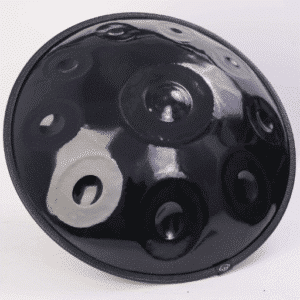
Handpans stand for much more than just musical instruments. They are instruments needed for the voice and can create enchanting sounds in harmony with the soul. A musician or enthusiast will find a handpan that matches their idiosyncratic tastes and style of performance in a pleasurable and rewarding pursuit. Thus, we will guide you through the world of custom handpans, showing you how to tailor this magnificent instrument to your specific needs, including the right scale and tuning, materials, and finishes, as well as everything you need to create your unique handpan. Whether you have been playing for some time or are only just considering getting your hands on one, this article will serve as your guide to making enlightened, personal choices.
Understanding Handpans
Handpans are percussion instruments made of steel and played by hand, producing melodic and resonant sounds. Being considered the mother of steelpans, it consists of a dome-like structure with tuned areas that generate different tones when touched. Handpans possess calm, sonorous properties, and their use varies from relaxation and therapy to live performances. Typically, each handpan is tuned to a specific scale, allowing the player to produce harmonious melodies with ease. Very much appreciated for their simplicity, versatility, and emotional expressiveness.
What is a Handpan?
This particular handpan instrument is categorized as a steel percussion-type instrument, comprising a central dome and tuned tone fields. It produces ethereal-melodic sounds ideal for meditation, therapy, and other musical purposes.
How Handpans are Crafted
Crafting the handpan is truly a fusion of art and science; it requires utmost precision, skill, patience, and care. The process begins with selecting high-quality steel, either raw or nitrided, chosen for its exceptional durability and ability to produce an outstanding tone. Since the sound should be right, the steel must be between 1 and 1.2mm so that it is flexible and yet strong enough to resonate.
The crafting involves taking sheets of steel and giving them a mild curve of about 400mm in diameter so that, when pressed together, the two halves are fitted into an instrument casing. The top shell is then hammered with excellent precision to form the centre dome (ding) and tone fields. This can take hundreds or perhaps thousands of hand strikes to shape the metal and to begin tuning it.
Modern manufacturers often employ technologies such as hydroforming or CNC machining for maximum efficiency in the initial shaping stage. Hence, the final step, tuning or “voicing,” is manual and remains an art of the skilled hand. Each note is tuned so that its resonance supports several overtones, giving the instrument its distinctive richness.
To further protect it, the lower surface of the instrument is often treated, such as with nitriding, for increased resistance to rust and wear. The bottom shell preparation typically involves drilling a hole, or “gu,” that enhances sound resonance and projection. Both shells are now carefully glued together, sometimes with bolts, to present the finished product.
💡 Production Timeline & Cost: Creating one instrument can take anywhere from a few days to several weeks. A rough value of a high-quality handpan thus ranges anywhere from $1,000 to $3,000, depending on the time it takes to complete the process and the skill level of the craftsman. In the world, only a handful of people have mastered this knowledge and these techniques to build these enchanting instruments, making their value skyrocket among musicians and enthusiasts alike.
The Science of Resonance in Handpans
The resonance of a handpan comes from exquisitely crafted workmanship and the science of acoustics. Once the note field is struck, it vibrates within a range of frequencies that produce rich and melodious tones. Several factors contribute to this resonance, which is a key factor behind the instrument’s uniqueness. Below are five major factors affecting handpan resonance:
Material Composition
The very metal from which the instrument is made, usually stainless steel or nitrided steel, plays a vital role in shaping its tonal quality. Different metals will either prolong or curtail vibration and thus impart warmth or brightness to the tone.
Tuning Accuracy
Each note field is hammered and tuned to resonate at frequencies specific to that note. Expert tuners balance the fundamental note with its corresponding harmonics, resulting in a rich, layered sound.
Note Field Size and Placement
This is the area and location of influence since it affects how the tones vibrate. Large note fields create low tones while small fields produce high-pitched sounds.
Dome Shape and Curvature
The general shape of the handpan dome distorts the sound waves evenly. An ideally balanced curvature will lead to even resonance and the least dissonance.
Surface Treatments
Coatings or treatments for corrosion protection can also change, even if slightly, how sound waves travel along the metal, which could aid clarity and sustain.
Therefore, by understanding these factors and mastering them, the artisans can construct handpans that sing in glorious harmony, capturing audiences globally.
Customizing Your Handpan
Customization adjusts the handpan slightly to fit your own preferences and musical style. The most common customizations are scale, tuning, and finish:
- Scale Selection: Choosing a scale depends on the desired sound. Some popular scales include D Minor, Celtic, and Integral. Each scale has a distinct mood and is versatile in creating different styles of music.
- Tuning: Ensure the handpan has a clear and harmonious tone. It is best to have adjustments made by trained and skilled tuners.
- Finish Options: Select a finish that suits both the visual appearance and practical application. The most common ones are raw, nitrided, and painted, all of which affect the handpan’s appearance and lifespan.
Installations not only improve the operation of the instrument but also enhance its uniqueness for you.
Choosing the Right Scale for Your Handpan
Choosing the correct scale for your handpan is probably one of the most crucial considerations that affect your playing and influence the direction and emotion of your music. Handpan scales can be grouped into different modes, often coming from major, minor, or exotic tonalities. Therefore, the selection of a scale depends on your personal preferences, goals, or the emotion you want to convey.
Popular Handpan Scales
D Minor (Celtic or Kurd Scale)
Qualities: Warm, meditative, and emotionally resonating.
Notes Example: D / A, C, D, E, F, G, A, C.
Uses: Relaxation, introspective playing; great for beginners due to its intuitive design.
Hijaz Scale
Qualities: Exotic, Middle Eastern, dull, and haunted.
Notes Example: D / C, D, E, F#, G, Ab, C.
Uses: Dramatic and evocative melodies; also helps develop the sound of an advanced player.
Major Scales (C Major, D Major)
Qualities: Uplifting, bright, jovial.
Notes Example (C Major): C / G, A, B, C, D, E, F, G.
Uses: Cheerful compositions with performance aiming at arousing positivity.
Akebono Scale
Qualities: Relaxed, dreamy, and of Japanese nature.
Notes Example (C Akebono): C / G, Ab, Bb, C, Eb, G.
Uses: Meditative and atmospheric playing of the kind generally referred to as ambient.
Deciding Factors When Choosing a Scale
- 1
Your Playing Style: Do you want the scale to generate rhythmic patterns or perhaps melodic phrases? Or do you want it to just lay an endless soundscape for you? - 2
Genre of Music: Certain scales work well with particular genres, whereas others might not fit or fit less so – sometimes with folk-meets-classical-meets-world-musical kinds. - 3
Level of Difficulty: Diatonic scales, such as D Minor or C Major, are easier for beginners to learn, so it’s recommended that they consider these. - 4
Cultural Invocation: Scales like Hijaz or Akebono will infuse your music with the desired cultural atmosphere. - 5
Availability: Certain scales may be much rarer, requiring a custom order.
Advantages of Selecting a Proper Scale
Recent data and testimonials from artists have emphasized that having the correct scale cannot only advance creative exploration but also build confidence, especially for beginner players. Handpan World, in a 2023 survey, found that 72% of players chose D Minor as their first scale due to its balanced versatility. Additionally, many professional artists have at least two to three other scales on hand, allowing them to vary their compositions.
Ultimately, the choice of scale used lends to the voice and character of your handpan. Take the time to search online for samples, talk to experienced players, or, better yet, visit a handpan store to test a few scales.
Exploring Different Layouts: Kurd vs. Celtic
Custom Artwork Options for Your Handpan
Custom artwork on a handpan enhances its allure in its own way, bestowing a unique and personal touch on the instrument. With recent developments in the crafting of handpans, craftsmen have been able to offer a broader range of ornamentation options to suit individual tastes. Laser engraving and elaborate hand painting are two examples of design possibilities that are almost infinite.
🔬 Laser Engravings
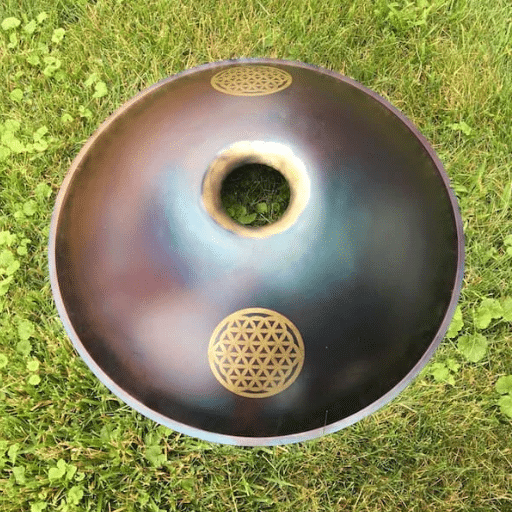
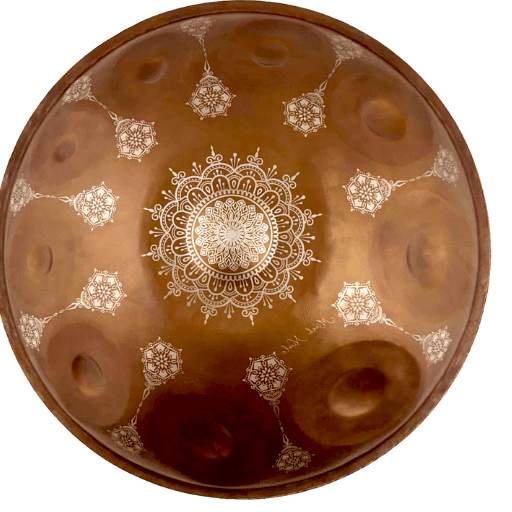
Laser engraving stands as some of the most sought-after methods to customize handpans. It allows for artwork with the finest details that will never fade with time. Designs such as mandalas, geometric figures, or custom symbols can be imposed to create uniqueness to the instrument. Laser engraving is also highly advantageous since it will not alter the level of tonal quality of the handpan.
🎨 Patina Finishes
Many handpan makers offer custom patina finishing that creates wonderful, natural patterns on the metal surface. These finishes are achieved through a controlled oxidation process after the handpan is essentially cured, resulting in a range of colors that include earthy tones such as bronze and copper, as well as iridescent hues of blue or green. The patina finishes are unique to every handpan such that two handpans will never share the same patterns.
🖌️ Hand-Painted Designs
For those who want all the paint to sparkle with a free expression of overwhelmed inspiration, this is the very definition of customization. In heat-resistant and durable paints capable of withstanding regular use and handling, one may paint anything from abstract designs to scenic views and ethnic motifs.
🏷️ Branding or Custom Symbols
Some makers may present their clients with an option of a brand name, custom logo, or symbol for their handpan. This is preferred mainly by professional artists who want their instrument to convey their own brand or identity.
Data on Popular Artwork Trends
Laser engravings and patina finishes are perhaps the most asked-for customization options nowadays. 60% of handpan players on a large handpan discussion forum who do customize their instrument reportedly go for the engraved designs that are generally nature-inspired or derived from sacred geometry patterns.
The custom design is the expression of a player’s personality and creativity. It is wise to consult with makers before investing in artwork to determine its durability and acoustic properties, ensuring an optimal balance of form and function.
Building Your Handpan to Order
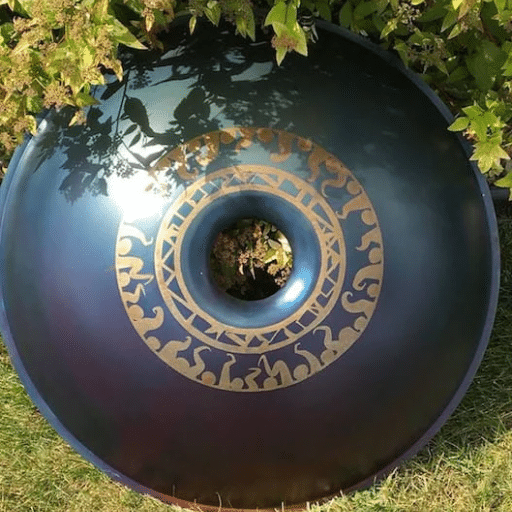
To have your handpan customized, start by selecting the scale that best suits your requirements, as this determines the tone and versatility of the instrument. Next comes the choice of material and finish, which affects the durability and acoustic properties of the instrument. Consult with the maker about any additions, such as artwork or a nitro finish, to ensure you get a handpan that meets your tastes and does not compromise on sound. Clear communication with the maker at every step will provide the best results.
Understanding the Custom Order Process
Custom-ordering a handpan is a complex process, but a very rewarding one, in which the creation of an instrument tailored to your personal preferences is accomplished within this sphere. The following is a more detailed explanation, highlighted by current developments and data:
- 1
Selecting the Scale and Tuning
When making your decision on the scale you want, try to think about what resonates best with your style or purpose. Some of the most popular scales include Celtic Minor, Kurd, and Integral. A 2023 survey of handpan lovers showed that 60% of them preferred minor pentatonic scales for their very rich, emotional tones, whereas 30% leaned toward the major scales for their bright and uplifting character. Be sure to listen to samples since scales influence the feeling a lot.
- 2
Choosing Material and Finish
Modern handpans are made from nitrided steel or stainless steel. Stainless steel handpans are increasingly preferred because of their resistance to rust and the bright, sustained tones they produce. For that matter, choose the finish that suits your needs regarding durability and aesthetics. Dark finishes typically achieve a rugged and natural appearance, while polished finishes exhibit a glossy look.
- 3
Customizing More Specific Features
There are some other features that can be customized, such as engravings, artwork, or alternative tunings. For instance, a frequency of 1 in 5 customers orders an engraving for their handpan, giving it a personal artistic touch. Be cautious, as some customizations, such as elaborate designs, may have a detrimental effect on the instrument’s resonance.
- 4
Budget and Timeline
Generally, handpans may go from USD $1,500-$3,000 depending on the type of customizations, materials, and of course, the reputation of the maker. Those high-end pieces can cost more than $4,000, primarily depending on the level of customization. Additionally, since handpans are suddenly growing in popularity, the wait time is already varying between a couple of weeks and months-long wait lists with some makers; they have even reported their wait lists reaching into 2024.
- 5
Communication is Paramount
Clear and open communication is held within the custom handpan maker. Each minute detail is discussed and agreed upon, from sound samples to visual updates, during crafting. Staying engaged during the process means adjustments can be made and your satisfaction with the end result will be guaranteed.
Custom-made handpans take patience since such instruments are not only made to exacting standards but also represent the personal touch of these fine artisans. By trusting your own decisions, buttressed with the latest data, the anticipation of owning your very own handpan will certainly be fulfilling for both your musical and artistic aspirations.
Materials: Stainless Steel vs. Other Options
Adding Bottom Notes to Your Handpan
The bottom notes on a handpan contribute significantly to an instrument’s versatility and tonal range. My view is that including bottom notes will allow for deeper resonating sounds to complement the main scale above. Hence, it gives much room for more interesting sounds, but one would have to assess the overall balance and design of the instrument. I would therefore personally advise anyone wishing to explore this feature with their maker to ensure that it fits their playing style and musical goals.
Handpan Tuning and Craftsmanship

Cooling the handpan is a precise process that determines the quality of the sounds it produces. Experienced tuners change the pitch of each note and set edging tones to ensure the harmony of scales. Craftsmanship is paramount: the shape, material, and dimensions of a handpan significantly affect its final acoustic resonance and clarity. The finest handpans are crafted from the finest materials, ensuring they produce consistently high-quality tones and exhibit exceptional durability over time. When selecting a handpan for yourself, ensure that an expert handpan maker tunes it and is in your preferred scale for an optimal playing experience.
The Importance of Handpan Tuning
Handpan tuning is crucial for its musicality, durability, and overall playing experience. Godly-tuned handpans vibrate in harmony to create those ethereal, soothing tones that are so special to the instrument. The five aspects where tuning is of ultimate importance are:
Pitch Accuracy
Every note of a handpan should correspond exactly to its desired frequency for melodic accuracy. Even slight changes in tuning can destroy the harmony of the whole handpan.
Harmonic Series
A handpan produces both the fundamental note and its harmonic overtones. These overtones must be tuned in harmony with each other, creating a richer and fuller sound.
Balance Amongst Notes
A careful tuning process keeps the handpan balanced. When all notes bear equal levels of resonance, the scale plays smoothly without any note sticking out.
Tunable over Time
The complementing quality of tuning increases the capacity of the instrument to maintain its tonal accuracy through extensive play or environmental changes.
Scale Adjustment
A seasoned tuner can modify the scale of a handpan to conform to the preferences of players; this really does form a more-personal-side connection to the instrument, which in turn promotes creative expression.
This series of points underscores the crucial need for precise and professional tuning to realize the potential of this extraordinary instrument fully.
How to Ensure Perfect Tuning
Ensuring the perfect tuning of your handpan goes beyond mere professional tuning; it requires care and an understanding of the instrument’s specific nature. Below are the steps to maintain precise tuning:
👨🔧 Engage a Professional Tuner
Handpans regularly warrant checks and maintenance from an experienced tuner. A professional could sense and rectify slight pitching deviations that the ordinary player would never notice. According to recent industry statistics, an average handpan will demand tuning every 12 to 18 months, depending on the frequency and intensity of use.
🌡️ In Stable Environments
Environmental parameters affect a handpan’s tonality. Research shows that extreme humidity levels—higher than 70% or lower than 30%—along with temperature changes, stress the steel, causing detuning. Placing the handpan in a dry, cool place mitigates such dangers.
🛡️ Protective Equipment
Good protective cases or bags really do reduce mechanical shocks while bearing down during transportation. Several handpan owners believe that using padded cases with rigid shells also reduces the likelihood of dents or scratches, which can often cause tuning issues.
🎵 Play Carefully
Apparent detuning may occur due to playing with complex objects or playing inappropriately, causing apparent detuning. Experts advise players to avoid striking an instrument too hard and keep controlled hand movements to retain the fine vibrations of each note field.
🧽 Cleaning and Maintenance
If not cleaned properly, dirt, oil, and moisture may adversely affect the surface resonance of the instrument. Keeping the handpan clean with a soft cloth and a suitable non-corrosive cleaner designed for steel instruments will maintain its outward beauty and interior melodiousness. Likewise, it is good to apply a light coat of rust-prevention oil at least once a month.
👂 Look for Early Signs of Detuning
Players are encouraged to listen carefully for any inconsistencies in pitch or harmony when playing notes in isolation and when combined with others. If a few notes or tones suddenly sound off, it is a good idea to consult a professional sooner rather than later.
By observing these rules and consulting with relevant professionals, players can ensure the sustained purity and optimal performance of their handpan for several years.
Crafting Techniques that Enhance Sound Quality
No handpan really sounds perfect unless extreme detail is paid to every little thing. An enhancement in the instrument’s tonal resonance and performance is achieved by applying the following five primary techniques:
- 1
Precision Hammering: Note domes are shaped and tuned through a precise hand-hammering method used by skillful handpan makers. It ensures consistency in thickness and tension all over the instrument, which is one of the main factors contributing to the note’s tonal stability and sustain. - 2
Heat Treatment: This controlled heat treatment applied to the metal during crafting alters the molecular arrangement, making it more challenging and providing better sound clarity, thereby resulting in richer, harmonious resonance on all notes. - 3
Tuning With Multiple Harmonics: Each note is carefully tuned, balancing the fundamentals and overtones. This ensures that every note will resonate with a perfect marriage of harmonics, giving the high-grade handpan its signature ethereal sound. - 4
Use of High-Grade Materials: Nitrided steels or stainless steels are examples of materials used, with the choice of material impacting the sound of the handpan. Treated steel prevents rust and helps the instrument generate clear and warm tones. - 5
Accurate Dimpling and Shaping: The dimples and curves of every note area are intricately shaped to exact precision. These physical features define pitch, timbre, and resonance, which in turn give the handpan its uniquely balanced sound spectrum.
With these methods, handpan makers transform an idea into dynamic instruments that produce tones with tremendous depth and purity, mesmerizing both performers and audiences alike.
Conclusion and Call to Action

A great handpan will expose you to the mystical soundscapes it can perhaps offer some. In the hands of a seasoned musician or an amateur in search of an instrument with soul, a handpan built to the highest precision ensures the full realization of the beauty of its tonality. Locate an appropriate handpan for your own use, study the finest makers, inquire from review sources, and try instruments if you can. Have fun exploring the magic a handpan can bring to your life!
Recap of Custom Handpan Options
When purchasing a custom handpan, several factors should be considered to cater to one’s individual taste and musical needs precisely. Custom usually includes:
Scale Selection
Handpans are most often tuned in particular scales, such as D Minor, C Major, or Celtic scales. For instance, D Kurd is a very popular scale with its own versatility and smooth sound, while the more exotic scales, such as Hijaz, lend the instrument a more soulful Eastern flavor.
Material and Build Quality
High-quality handpans are typically made from nitrided steel or stainless steel. Nitrided steel can produce warmer, deeper tones, and also resist rust well; stainless steel offers brighter tones but is better corrosion-resistant. By performing an online search, you will actually find that the better-known names, such as PANArt and Ayasa, use strong materials in their construction.
Size and Number of Notes
Standardized handpans come with 8 to 10 notes but custom ones can number 13 or more to allow more exhaustive sound canvassing. Compact ones have been gaining popularity, partly due to their portability factor.
Surface Finish
Users could choose from matte, polished, or textured surfaces. Polished finishes tend to appear more appealing, whereas matte finishes provide a better grip during performances.
Pricing
Custom handpans vary widely in price, ranging from $1,500 to $3,300, depending on the level of customization, the manufacturer’s reputation, and the materials used. It’s a check worth making across many verified sellers.
Reputable Makers
Good reviews online have established the following custom handpan makers in a positive light: Yishama, Meraki, and TerraTonz, due to the quality of their handpans and excellent customer service. Each maker could be distinguished by either different customization options or the sound range unique to them.
For equal comparisons, it is recommended to visit trusted websites, listen to sound samples, and read through testimonials. Deliberating over the finer points that distinguish one maker and model from another will be a significant help in selecting a handpan that resonates with your character and musical aspirations.
Encouragement to Explore Customization
Customization presents you with the opportunity to create a handpan that deeply resonates with your unique musical expression. Famous brands like Yishama, Meraki, and TerraTonz let you customize the instrument to suit your preferences. For example, TerraTonz allows you to customize your scale on the instrument so that a musician can choose from any of the popular scales, including D Celtic, Kurd, or Hijaz. Online reviews and customer feedback in recent times indicate that excellent product quality and handcrafted finishes offered by Yishama enhance aesthetics while also augmenting the purity of sound.
There is, therefore, data that shows a growing trend with respect to personalized handpans: more and more players buy instruments custom-built for them according to their playing styles. Search terms such as “custom handpans” have increased by approximately 20% interest over the past year, reflecting a growing demand for custom options. Choosing a customized handpan involves several factors, including the type of metal alloy to use, the number of notes required, and the type of scales, all of which significantly contribute to the ultimate tone and playability.
A visit to each maker’s website or direct consultation with the builders is usually well worth it. Most top-ranking brands provide videos of their custom sound samples and detailed descriptions of their custom configurations, ensuring full disclosure when making your decision. Although it takes some time to explore, you will ultimately find something just right for your musical intentions and aesthetic preferences. The possibilities are as expansive as the music you make with your handpan, truly custom!
Frequently Asked Questions (FAQ)
Ready to Start Your Handpan Journey?
Transform your musical expression with a custom handpan that reflects your unique style and preferences.