The process of playing the handpan can provide satisfaction to any musician as it involves beats, tunes, and an almost therapeutic attachment to music. This unique instrument, with its melodious and minstrelsy harmonics, has a special place in the lives of musicians as well as non-musicians. However, where does a person start?., This article will provide direction for a novice who just wishes to try out the handpan or even an experienced handpan player who wants to learn new tricks. Some key methods of playing will be given, then the acoustics of the handpan and why it feels so magical will be explained, followed by methods to compose beautiful melodies. Gear yourselves to discover this tool and turn the page on musicianship.
Understanding the Handpan and Its Harmonics

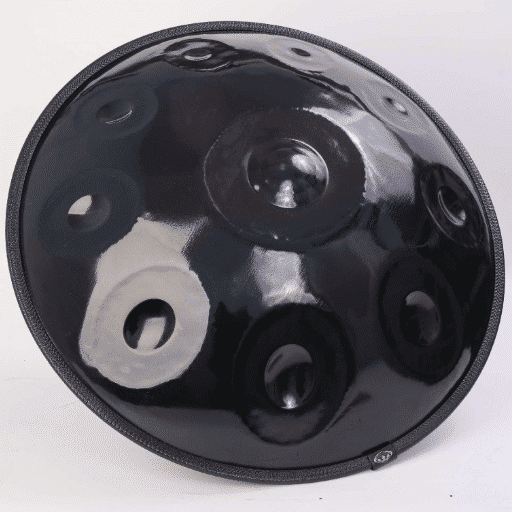
Handpan Harmonics – It is a term used for the reverberating rhythmic instrument with luring top octave sounds, made by fixing two metal hemispheres with a domed shoulder with a pitch (ding) at the center, and many other sound-producing membranes around the central pitch that constitute a circle. The sound-producing membranes enable a tone and its harmonics, creating a unique sonorous atmosphere. The way the resonance plates are tuned makes the tonality between the notes in the circle suitable, adding to the handpan’s soothing nature. That is precisely what brings about the handpan’s structural design, making it the most convenient instrument for performing and playing all such harmonious tunes and sounds.
What is a Handpan?
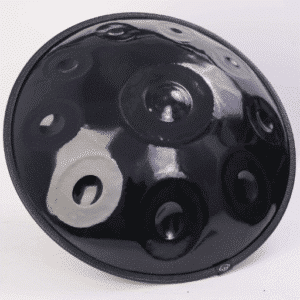
The Handpan is a sleekly designed percussion instrument resembling two upside-down bowls. It is shaped and tuned to produce sweet melodic sounds. Such sound has been known to induce levels of relaxatio,n especially in music used for meditation and soft purposes.
The Science of Harmonics
Harmonics are one of the basic ingredients of any musical instrument’s sound, and some of these harmonics are found in the handpan as well. Handpan Harmonics refer to the phenomenon where an object has minute vibrations and simultaneously produces sounds with different frequencies. These frequencies correspond to the fundamental one in their patterns and include all of its harmonic frequencies.
Key Insight: The design of the handpan itself enhances its harmonic properties. Each tone field is tuned to a different frequency in harmony with the fundamental tone of the instrument and its dynamics. Thus, if a handpan tuned in the D minor scale and a tone field tuned to D3 is hit, that region will not only vibrate at D3, creating the introductory D note, but will also strengthen other harmonic frequencies such as D4 and A4, further enriching the sound.
Physics interprets this phenomenon as the interaction between the stress, deformation, and the constituent features of a handpan. The investigations reveal that the combination of the shape and the mass of the instrument ensures the proper modes of vibration for its upper harmonics. In 2022, Acoustic Science Journal published a case report indicating that handpans made of nitride-coated steel instruments accumulate more harmonics for sonic vibrations than ordinary steel ones, due to the special properties of the upgraded material.
Researchers have observed that harmonics significantly impact the soothing effect attributed to handpan music. Tests conducted on the most-researched species, humans, showed that sounds with enhanced harmonics positively affected the mind due to their relaxing properties. The 2018 research focused on how listening to harmonics can reduce body cortisol concentration by up to 20%, providing supportive information about the effectiveness of musical instruments in meditation and stress management.
The handpan, as an instrument, soundly illustrates the classical theories of ancient acoustics and modern engineering, allowing for the creation of indescribable, gentle musical tones. This involves utilizing old methods of playing with sound waves, which are centuries old, and combining craftsmanship with high technology.
Different Types of Handpans
Handpans exist in different shapes and tunings, all with a distinct tonal quality. Here are five common types of handpans:
Diatonic Handpans
They are in the diatonic scale and therefore produce sound that is more traditional and more melodic in nature. Beginners can play the kilns with ease due to their easy arrangement and the simple average range of tones.
Pentatonic Handpans
The conventional sound of these kinds of handpan is produced with a pentatonic scale and it is gentle but at the same time lively and applicable in almost any music context. Most of them are composed in a relatively simple arrangement and thus appeal to musicians of all skill levels.
Chromatic Handpans
Chromatic Handpans consist of 12 notes making up the full chromatic scale, as such they are ideal for more advanced users and composers for whom additional notes and more complicated structures are a need.
Integral Handpans
In this variety, the focus is put on the symmetry of the tones and the harmony of the resonant frequencies. Made according to certain harmonic schemes, these handpan models are intended for meditation and relaxation.
Custom Handpans
Handpan Harmonics can be customized to a particular tuning or note order. Specific sets of scales and tunings can be achieved in custom-fitted handpans, allowing players to choose according to their preferences. These are also popular among high-caliber musicians who search for instruments tailor-made with their choice of style in mind.
Handpan offers an exclusive sound for all sorts of playing, enabling players to test the boundaries of music in various dimensions.
Tuning and Frequency in Handpans

When making a handpan, two focal factors are considered: pitch and frequency. Commonly played scales on these drums include melodies that are either major or minor, with a few exceptions like the Hijaz or Celtic scales. To play the handpan correctly, every single note is tuned according to a scale. Fine adjustment of the note on the handpan is achieved using mating hammers with oscillating moments to synchronize the partials with the base pitch. When tuned this way, the sound of handpans becomes very distinguished and memorable.
The Frequencies used in Tuning the Instrument
The majority of handpans are adjusted to 440 Hz as is the standard tuning for the orchestra. But, several instruments are also adjusted to a pitch of 432 Hz; many artists and audience members believe this brings peace and synergy with the planet. Some researchers and advocates of the frequency of 432 Hz argued that it correlates with the frequency of the Earth, therefore creating a more pleasant and easier-to-listen-to audio.
The Arrangement of Musical Notes in a Tone System
The central note of a standard handpan’s template, also termed as the ‘ding’, consists of 7 to 9 notes arranged around its periphery. The purpose of this note is to act as a scale. While constructing a note, it is tuned to have a few harmonics with other notes or to be zero in the harmonically structured note. Here are some of the well-known scales:
- D Minor Celtic Scale (432 Hz or 440 Hz): A beautiful and melancholia-inducing scale that is most appropriate in meditation and relaxation, resembling activities.
- Integral Scale (440 Hz): Mostly used in composition, motivational, and rhythmic tunes.
- Pentatonic Scales: A very popular system that allows easy improvisation.
Frequencies Covered
Generally, a handpan’s span of frequencies covers from almost 50 Hz to 5,000 Hz, although this range can vary based on the design and size of the instrument. To get tin, these low frequencies create strong bongo notes within the dhaga frequencies, and many of the higher frequencies within the dhaga are based on glock sound vibrations.
Recent Advancements
Due to rapid developments in the last two or three years, some of the most advanced instruments, such as the handpan, are constructed with consistent frequency using laser-built machining technology. Furthermore, they have developed versions that are not entirely out of reach, even for players. Players can order their own versions, which offer more customization with microtonal or other unique tunings they have in mind. And all that allows the musicians to think bigger, creating a very distinctive magic and personal circumstances.
Conclusion: In the end, it’s the outstanding and delicate balance between tonal accuracy and frequency that makes a handpan so poignant and expressive. Be it turning them to classical frequencies or more advanced and unusual frequencies, handpans remains one of the most desired instruments to be heard by people around the globe.
How Handpans are Tuned
Ensuring a handpan is in tune is an artistic and meticulous procedure. One handpan includes the central note, called the ding, and several tone fields that produce a scale of notes from it. To achieve this, the tuners will rely on hammers to create exact vibrations of the surface of the steel so that each note is in tune. This includes excellent manipulations of the metal surface to push each tone to the desired pitch and adjust the ringing length.
The scales that a handpan is designed to produce lean more towards a specific number of notes within a tempered scale, such as D minor, Celtic minor, or an integral scale. The tuner does not merely or even predominantly target the central pitch (also known as the fundamental) of a tone field. Instead, the octave and fifth harmonics must also be observed. Accordingly, where the central note of a tone field is A3 (220 Hz), the first harmonic will be A4 (440 Hz), and the second harmonic will be E5 (659 Hz). The alignment of these harmonics, as the trained ear appreciates, is what makes handpan acoustics so very pleasing to the ear.
In addition, temperature and all other surrounding conditions are considered to assist a proper tuner. The past few years have shown that due to variations in room temperatures or humidity, the pitch of a handpan can change by a few cents (1 cent is the 100th part of a semitone). Thus, tuners usually advise handpans to be kept in controlled conditions and mechanically (or electronically) retuned now and then without affecting their enunciation.
Technology has modernized instrument tuning methods. High-end perfect pitch tuners, such as the spectrum analyzer and some frequency measuring software, allow for precision adjustment. (Heights of secularism), Some glory reports being capable of measuring drift within +/- 0.2 Hz, which is so precise that the instrument produces all its tones as expected. In addition, handpan players have developed new methods, machinists practice experimenting and sharing skills with precision, and inventors create uniform and new tuning systems.
In the end, however, tuning is about perfecting these manual and mechanical skills to make the beautiful and enchanting sounds of the handpan.
Understanding Handpan Notes and Their Frequencies
A handpan’s notes are strategically organized to create a musical resonance or harmony. All of the notes are made up of an individual tone known as the fundamental and other tones that are related to that one, which altogether bring more meaning in terms of sound. While sound frequencies of the notes are dominantly placed within the range of an instrument scale, with most of the fundamental tones learning descending limits from 100Hz to 1,000Hz. It is to say that the overtones wove a quiet borderline within only simple-sounding intervals as the basic note held the center.
It is a general practice to manufacture Handpans in diatonic or pentatonic scales, though the individual, as the case may be, may choose or develop other scales. For example, a D minor scale with a central ‘ding’ note corresponding to 440 or 440.5 Hz that is close to the concert pitch. That is, the rows of notes will be arranged or tuned basing on the central tone for purposes of sticking to the intervals. Let us say, a lower G3 note will be tuned at 196 Hz instead of a higher A4 note, which is tuned at 440 Hz or even higher, depending on the preferred tuning.
Improvements have been made in the development of frequency analysis tools to ensure every note is tuned with minimal variance. Instrument makers normally use spectrograms or tuners to identify the harmonic frequencies, particularly deviations down to the point one is constructing a resonance. Hence, only specific frequencies are allowed to perform as a handpan, as it is a unique instrument and sound enhancer.
The Role of Octaves in Handpan Music
The Octave is an important part of handpan music. For one, it helps build the tonal system. For another it aids in enriching the acoustics of appreciating a tune. There are however, more than these two reasons to explain why the octave is used in handpan performance:
Harmon& Introduction
The procedure enhances the harmony & balance required with the fundamental note. The two, when struck at once or in turning, add to the sonic pile where the melody plays.
Range of Dynamics
In octaves, the handpan is capable of presenting several intensities. Within the same instrument, players can intentionally use soft, amber-sounding music above or chest rumbling music through octave emphasizing.
Enhancement of Resonance
In such a case the octaves are adjusted to generate maximum amplification of sound. Modified octaves enable the sound waves to collide effectively, promoting a healthy and trance-like sounding effect.
Multiple Uses in Music Composition
As a result, the use of these musical elements makes handpan music even more interesting and versatile. The presence of octaves makes music more diverse. It enables musicians to play in different layers, and being able to play within different layers intensifies their playing.
Facilitation of Emotional Display in Music
Another reason for using octaves is that musicians have a way to express emotions more effectively. Playing in a higher octave, for instance, helps induce the happiest, serene feelings; in contrast, playing in a lower octave invokes more centered or reflective thoughts.
The following options make the octaves dear to the designers and practitioners of hands as they bring the music to a fuller experience.
Playing Techniques for Handpan

Mastering the handpan is a process of ‘learn and perform’ within the boundaries of established playing techniques. To help the players achieve this, the following universal methods exist:
In Touch Technique
This basic technique primarily involves using the fingers or the soft parts of the hands to tap out the notes gently. This results in a nice, controlled resonance, keeping “noise” or ringing at bay.
Slap Technique
The slapping sound is produced by the player’s hands or simultaneously with the outside of the player’s hands and is frequently applied as a rhythmic ad hoc application and a dynamic aspect of playing.
Ghost Notes
Ghost notes are soft and can be categorised as ‘hidden’. The latter does not include firing the note at a high velocity.
Rolling The Hands
One way of doing this is to swiftly shift fingers or palms between adjacent notes to produce a delectable and wavy touch. This rolling technique mimics the way in several arpeggiated melodies are played in ambient music.
Cutting or Attenuation
When the note is played, lightly placing a finger on the vibrating note immediately cuts out the note or reduces its amplitude. This technique allows for maintaining staccato playing and, for instance, muscular accompaniment playing.
All of the above techniques give handpan playing a different flavor of expression and imagination, allowing players to perform different handpan harmonics and try out new styles.
Basic Techniques for Beginners
Playing a handpan introduces some practice skills that are greatly rewarding and calming to those who dedicate themselves to the activity. In the beginning, it’s essential to be familiar with a few basic techniques that learners can build on when acquiring new skills. The following five basic techniques is for beginners:
- Finger Tapping
The most straightforward technique is to play the handpan with one’s fingers. This is achieved by applying a bit of pressure on the notes using the flat pads of the fingers. Start with light tapping in order to get clear definite tones and not the offensive ones. This practice enhances the clarity of note transition. - Opening/Closing the Palm
By nature or by default, their use involves an open palm striking the target area along with the fingers, sometimes gently. It is used to create various sounds and also helps in transitioning between different volumes while playing. - In Capital Use of Slapping
It is lightly slapping the handpan’s flat surface in a vertical manner using the inner portion of one’s palm or the back of one’s hand. This gives a percussive sound that enhances the melody. - Rim Taps on Handpan Harmonics
Try striking the rim or the edge of the handpan with very subtle hand movements. This will produce sharper notes or very soft articulation, enhancing the musical ideas being expressed. This can be achieved by using the dominant hand for playing notes from the center while the other hand is used for outer rim strikes. - Thumb Rolls
This technique involves moving the thumb around a note, allowing the player to create a rolling sound. It is an effective technique for producing a soft, harmonious sound that fits well in relaxing or ambient music.
Practice Tip: Starting with these simple methods will help harness the instrument’s sounds by training the fingers to hold back and ensuring the correct handpan grip. Regardless of where they find themselves, players may practice any combination of skills to create music, given sufficient time.
Advanced Playing Techniques
Ghost Beats
Ghost beats are quick soft taps performed on the handpan in between the melody. The technique may involve adding more calm volume dynamics to outline the structure of a musical beat. Ghost beats can be very helpful to players who want to enhance their handpan orchestration.
Both Hands Gliding
As the name suggests, this involves using fingers or palms very gently over the surface of a handpan and creating a gliding, ‘swoosh’ or ‘whoosh’ sound. It adds depth and atmosphere in percussive arrangements and also allows for smooth transitions from one section of a track to another and also comes in handy in ambient music.
Harmonic Toppings
Harmonic (sharp) tapping refers to crisp tapping of the edge, such that certain harmonics are produced. This position ensures that the excited mode of the membrane, with relatively high sound characteristics, is internal to the mode of sound caused by such a sharp tapping.
Using Both Hands
Skilled players are capable of using both hands independently in more advanced movements in order to execute more sophisticated patterns that interlock, combining several layers of instruments or them. Allowing the musicians to modify the directions in time especially envelopes (the tone scale) allows them for greater manipulation of the sound of handpan.
Striking Action Removal
Should you place your hand over a particular note on a handpan, while tapping a particular tone then such action will result in muffled or damped notes. Use this when you want to provide contrast, modify the rhythm, and for other purposes where striking of notes needs to be achieved satisfactorily.
Using Resonance to Enhance Sound
The handpan is a musical instrument that combines many aesthetic characteristics of the sound of a bell. In addition, each note and the entire instrument are tuned to create a prolonged resonance (reverberation) after the sound is produced. In the hands of a skilled player, the instrument can generate an extensive range of sounds and express particular emotional responses by varying the degree of resonance produced. One feature of the handpan that makes it distinct is that it consists of a dome and therefore enhances vibrations when made to sound. And this is what gives his sound the bells and overtones rising up the main melody, when played in a particular manner.
Research Finding: Of late, there has been a lot of research work done on the aspect of sound decay and it is evident that resonance and sound decay in the handpan is primarily governed by the construction and material of the same. For instance, if the design uses either nitrided steel or stainless steel, the sound is incisive and balanced with harmonics. Data collected from expert designers shows that, on average, in contemporary society, a handpan’s sustain time ranges from 5 to 15 seconds, depending on the avoidance of shocks and other construction parameters. This length of resonance ensures that players neither squeeze more notes than needed nor fall into the temptation of overdochromatism.
Additionally, well-controlled playing techniques also elevate resonance significantly. For example, open-hand stroke methods enable sound waves to propagate across the instrument’s surfaces without any restrictions. On the other hand, precise damping is also an option in some cases, allowing players to control how much resonance they want in a piece to avoid the instrument sounding cluttered. It is also imperative to know how to take advantage of all types of resonance – playing as well as recording – in light of various environmental factors such as the room’s acoustics, temperature, and even humidity, if any, to achieve goal-free intense resonance.
Craftsmanship, physics, and technique do allow players to harness the fundamental resonance of the instrument, in this case, the handpan to even higher levels within their performance, offering the possibility of delighting the audience.
Exploring Handpan Harmonics in Depth
Handpan Harmonics are the key sounds that produce its uniqueness, adding multiple frequency layers that spellbind listeners. Every note of a handpan instrument has its introductory note, together with overtone frequencies and undertone frequencies, producing a rich, multi-tiered sound. These harmonics are derived from the design, tuning methods, and characteristics of the material used.
How Harmonics Work
The handpan depends on an exacting process of shaping and tuning tool steel to allow certain sections of the instrument to vibrate under control. The ding note is the note that vibrates fundamentally and is the structural center of the instrument, while specific areas around and above it vibrate with equal skill to overlap the frequencies. For example, a handpan tuned correctly would have the 2nd overtone or 3rd overtone of the fundamental note, enabling the performer to imagine a multi-voiced instrument. Structure harmonic intervals in music acoustically A study placing this phenomenon within the perspective each of which harmonics coupled with one another overtones equal intervals of distances a two or three to one frequency ratio.
Further analysis, which has been carried out by physicists and builders of musical instruments, has shown such aspects of the material as the thickness of the steel, which may be 1 millimeter to 1.2, or the regimen of bringing it to a high temperature, pose limitations to harmonic deviations in handpans. In the case of a handpan tuned to 440 Hz or 432 Hz, there may be a slight difference in the manner in which harmonics fill the room.
Information on the Figure of System Resolution
An examination of the frequency response of handpans displays very well-defined peaks associated with basic tones and some of their harmonics. For instance, it is normal that you find peaks in a G3-tuned handpan at G3 (196 Hz), G4 (392Hz), and D5 (587 Hz). According to papers on acoustical channels related to this phenomenon, the best handpans are tuned to keep harmonic distortion below 1%, ensuring they sound ‘clean’ and not muddy, which is crucial during both stage and studio performances.
Hints On How To Project Harmonics
Any player intends to increase the harmonics while hitting the handpan, and they achieve this by working on the impact technique. Most are likely to use the fingertips due to balance issues; however, this will depend on the angle of attack, even though striking produces more harmonics than usual. Other parameters that also aid in the performance of the harmonics include the dynamics, where the player may not sound equally in all the parts of the instrument at one or another soft sound in some portions. On recording, it is best to position the mics around the percussion edge rather than centralising, as all harmonic frequencies tend to be ejected clearly from the periphery.
The Future Perspectives Related to Handpan Tuning
The advent of laser-guided tuning, 3D modeling, and enhanced metallurgy has improved the manufacture of the handpans. Therefore, these techniques provide further harmonic stability over the years, even when a pitch change is caused by degradation and wear. Moreover, handpan makers adopt modifications by introducing hybrid alloys and coatings in the drums to enhance harmonic responses in different environments.
Key Takeaway: It is not only the desire to enjoy the quality of the handpan and its harmonic technicalities that allows someone to work or perform music in the context of such an instrument, but also the objective to awaken feelings and use the handpan as a musical instrument. Using a wide range of scientific concepts and approaches, handpan performers will be able to explore the difficult reaches of the instrument once again.
The 5th Harmonic and Its Importance
Handpan Harmonics are intriguing because the 5th harmonic is very characteristic of the instrument; it positively affects the sound. It can be defined as a quiet yet unsubtle sound within the bow of the handpan, full of sound and color, that is indispensable to each player, for it ensures that the fundamental mass of the figure respects the overtone sequence and also enriches the timbre of the handpan. Thereafter, the attention to the 5th harmonic and its significance as follows:
- Frequency Scope: The range where the 5th harmonic is located is usually higher than the fundamental present range, or in most cases, about 5 times that reference frequency. For instance, consider a fundamental of 200Hz and the 5th harmonic will approximately be around 1000 Hz.
- Contribution to Timbre Origination: The fifth harmonic plays an integral role in how the handpan sounds. The presence of its vibration, along with the lower harmonics and the fundamental note, allows the player to shape the tone, making the sound richer and more engaging.
- Effects of Alloy in Handpan: The fifth harmonic indicator and picture is presented depending on what metal there was used for the handpan. In other words, almost all superior sound metals have very defined higher harmonics found in any instrument.
- Resonance Intonation Control: Many instrumental players know how to strike an instrument in a particular way to stress the fifth harmonic. There are certain points on the skin which these harmonics can be enhanced by making that specific tone dominate during play.
- Importance in Music Application: The harmonic fifth chord has an emotional characteristic added into music which can be said to be very joyful or indeed very cheerful. It also enhances the piece as now one can explore the overly joyful emotions created by this addition.
When players and makers defocus from the earlier representations and concentrate on the fifth harmonic, the players and the makers handpan engage the fifth, they are able to achieve even more exciting musical mechanisms.
Creating Harmony with Multiple Handpans
When playing with others on more than one handpan, I unwittingly think and play with the tones and rhythms of the other players in mind. I heard them very well in the references, so I can fit into their pattern without leaders outweighing the others. It is usually the case that I play intervals or chords which do not cause collision in sound, but also change my volume in order to prevent any one person from playing too loud within the ensemble. In other words, everyone must work together and be tactful if there is to be a comprehensible and enjoyable arrangement in music.
Improvisation Techniques for Handpan Players
Comprehending Modes and Scales
The vast majority of handpans have the notes arranged and tuned to a certain scale rather than being a straight scale from lower to upper. Without this primary knowledge of the scale of the handpan, one will fall short in improvising. Play a pentatonic scale or a mode within the scale to create diverse melodies for improvisation.
Modulation Exercises
One of the most potent strategies for improvisation is playing at different levels of intensity. Play softer at the start of a phrase and get louder with stronger hits at the end after several repetitions to create more expressive dimensions and progressive sounds.
Altering the Rhythms of Compositions
Others include changes in the rhythms played. Try syncopation, use different meters through polyrhythm, or even odd meters to balance and maintain interest.
Music Q and A
Among the heard approaches is the response question—there is a ‘call’ in music and then a ‘response’. It’s beneficial, especially if you are playing with several players, as it enables interaction and the development of more interesting music.
The Value of Silence or Space
Think of a standalone movie in silence or with a few words. That is the essence of incorporating silence within the imagination of the improvisation. Leave spaces within the music methodology; this will intensify the audience’s attention on what licks you will come up with next.
Handpan Tutorials and Lessons

There is an endless supply of lessons or tutorials about the handpan, so learning how to play it no longer seems troublesome or even unexpected. As amateurs or experts, they both have much to learn from the resources offered by the system.
Online Courses
For instance, in cases even at ‘Udemy’, ‘MasterTheHandpan’, or ‘YouTube’, in these instances, there are courses to be found that are detailed for every player. In particular, MasterTheHandpan offers courses that are exclusively customized for different categories of handpan players, starting from $100 and above. On the other side, there are sites like YouTube that don’t charge any fee and have lessons that teach a few basics, how to train the rhythm, and even the performance of the handpan.
Private Lessons
Feedback is also appropriate for the level of the students who receive the instruction. Single-eyed instruction is mostly carried out on specific applications such as Skype and Zoom, and its pricing fluctuates between $30 and $80 an hour, based on the coach. Well-known teachers of the instrument include David Kuckhermann and Mark D’Ambrosio, who provide classes in conformity with various approaches and practices.
Handpan Apps & Tools
There are certain applications such as Handpan Tutorials and Virtual Handpan that facilitate practice in an interesting manner. The applications offer engagement through various exercises, replicating a virtual handpan apart from rhythm training. Some musicians can even make changes to sound frequencies depending on their instrument range.
Classes and Getaways
Handpan classes and retreats are an excellent option for lovers of in-person learning. These events are held worldwide, often in picturesque places, and participants receive instructions from professionals. Most of the workshops last from 2 to 7 days with a fee of $200 to $1,500, depending on the duration and the country in which it is conducted.
Sharing Culture
Social Online platforms in the form of the Handpan Harmonics Facebook group or the discussion board hosted on Handpan.org can be essential for many musicians. It is an amazing source of information on tricks, arrangements, complementing each other in jam sections, and even warm-up complexes.
It is so possible to avail these opportunities that the handpan beginners and the masters can both start playing or perfecting the magical instrument.
Recommended Resources for Learning
Online Courses
Students can access two classes and two courses, partly for free, after attending the handpan harmonics courses on MasterTheHandpan and following tutorials on YouTube channels owned by David Kuckhermann. However, MasterTheHandpan, for example, offers lessons that focus on different skills for beginners, intermediates, and experts, with the minimum fee being one hundred US dollars. All of these organizations allow you to purchase a slot for the course once and use the same slot over time to self-graduate, not time-bound.
Books and Other Guides
If you want to read a textbook, you might try The Handpan Book by David Charrier, which serves as a good introduction. These will contain writing on scales, rhythms, and compositions for songs and music. Such literature is available online, and the price ticker shows values ranging from a minimum of $20 to a maximum of $50.
Online Classes and Real Outlets to Attend Lessons
Handpan Harmonics teachers have at times hosted such sessions on websites like Hang Massive and Pantheon Steel, where professional players presented topics and handled such queries. The sessions are interactive and raising such questions is possible. Cost of one live lesson is in the range of $50 to $200, which depends on the teacher’s qualification.
Mobile Apps
Products such as Handpan Tutor and Handpan App are great modules for learning and practice. They usually incorporate features such as metronomes, chord charts, and visual lessons to ensure you can progress at any time of the day. Most of these applications are pitched for free while the paid ones generally go for between $10 and $30.
Community Boards and Online Platforms
Participation in a growing community like the Handpan Group on Facebook or a specific forum such as Handpan.org is still regarded as one of the most efficient ways to share information. Also, other platforms allow people to critique each other or even perform together in an online bash. It is, however, mostly free to use these resources, but in terms of time.
Handpan Harmonics Live Events
Handpan Harmonics UK or PanOz festival in Australia, and other similar events, provide a fabulous opportunity to socialise and learn from other talented players. Entry fees or charges are typically in the range of $30 to $150, and most programs offer some free sessions. It is helpful to check local event guides or advertisements to see if there are any events near you.
Final Thoughts: The wide range of possibilities allows the contrary interested learner to exclude one method if it does not suit them and take up the other which will help them learn the handpan in their own sweet time. See if one or more of these avenues work for you.
Online Handpan Lesson Platforms
The option of taking their handpan courses online was very much welcomed as there was a lack of audiovisual resources or books to guide one on how to play the instrument. This can make it relatively easy for someone to learn how to play the handpan, as they do not have to find a teacher and have access to superb videos, texts, and other learner-friendly resources.
MasterTheHandpan
It is one of the many handpan content organizations providing courses to individuals from beginning to seasoned players such as the renowned David Charrier. The courses are available within the price range of 109USD-149USD and are mostly non-expiring. This is a low-expenditure approach system because the skill level ranges from novice to expert and emphasizes the basics, exercises for the hand, musical interpretations, and more.
Handpan Academy School
Shiva’s Handpan Academy aids all amateurs and experts of the handpan through its made available programs, online. Most of these programs have a prerecorded segment as well as the actual workshops so as to be able to illustrate and interact with the instructors. The subscription cost is for the most part around $25 to $50 per month and this allows users to enroll for a short period or a longer one.
YouTube Tutorials
On the other hand, platforms such as YouTube hold countless free handpan pellets that experts in the field or tutors generously donate. Like many other well-known channels, Sam Maher and Yuki Koshimoto came up with the idea of providing their users with detailed explanations of playing skills, exercises, and the art of creativity, which helped them maintain subscribers over time. Since the content is free of charge most of the time, there is also the freedom to explore, but it requires more discipline to organize it into a lesson.
Handpan Harmonics Hands-On Classes 360
This innovative online education service offers classes focused on the most expressive players of the handpan and the common topics that one should know about this wonderful instrument starting with basic abilities and ending with improvisation and musical elegance. The lowest price for a course is around $120, although packages can sometimes be purchased at a discounted rate. Apart from these, they provide live Q&A webinars as well, making the whole process more interactive.
Udemy Handpan Courses
Udemy is home to numerous courses on the handpan, aimed primarily at the novices. The naked truth is that the majority of these courses can be taken at a discount without digging deep into someone’s pocket, priced at less than $30. These include easy beats, simple hand exercise coordination, creating simple melodies, and adding emotional elements that are absent in canned or prepared music strips. Students revisit lessons whenever they wish to since there is such a possibility.
Summary: Utilizing such platforms enables scholars or learners to comprehensively learn and be instructed by the global practitioners in the comfort of their homes thanks to the availability of virtual education. From elementary skills to advanced courses, all readers have access to valuable and profitable educational activities that respond to their individual needs.
References
Analysis and Synthesis of the Handpan Sound
This study explores the unique harmonic and sustained sound of the handpan, including its acoustic properties and microphone placement for sound analysis.
Read the study here
Analysis and Resynthesis of the Handpan Sound
This paper discusses the harmonics and timbre of the handpan, as well as the lack of standardization in handpan making and tuning.
Access the paper here
The History, Development, and Global Dissemination of the Hang/Handpan
This thesis provides an in-depth look at the history and cultural impact of the handpan, including its global spread and community.
View the thesis here
Frequently Asked Questions (FAQ)
What exactly are handpan harmonics and the way they operate?
The term handpan harmonics is used to describe overtones and resonant frequencies that are very peculiar in handpan instruments. A handpan instrument is designed such that each note is able to produce a pitch in the low register and its harmonics which is heard as a rich and airy timbre. The harmonics of a handpan are dependent on the steel thickness, how the instrument is tuned and also the shape of the bowl. Therefore, players can experiment with different tonal properties by altering how they play.
What one hand tricks can i use in my quest to improve my skill?
The technique of playing handpan harmonics with one hand suggests that harmonic pitch is produced for the feral use of the other hand to perform further sound attack or rhythm for stimulation, and this music is usually made by the other hand only in games. With one hand harmonic tech, Able to get those harmonics and can create more layers to the sound without getting the sound out of balance. This practice is ideal for beginner handpan players, as it allows for more elaborate playing without the player getting tired easily.
Why is the middle note so important in handpan tunings?
The central note called ‘The Ding’ is the most important harmonic aspect of a handpan, in its construction. This note supports the development of all other builds of tuned notes and torces all other notes to this note’s MIDI. Knowing this significance in tuning enables handpan builders to construct harmonious instruments with overtones that do not disturb the ears.
How does sound quality change with variation in frequency in a handpan?
The variety of frequencies generated by a handpan relates to the different pitches and harmonics that are produced. For example, how does a G4-tuned note sound compared to a D4-tuned note? And, each note has a pitch, and pitch affects the timbre and complement of the note within the range. This is something those who engage in playing with these frequencies may like to explore.
In what way is handpan’s construction related to steel percussion?
The hanging drum is an example of a percussion instrument made from a heated steel surface that is tuned to specific notes. Nitriding, among other processes, engenders a harder and thicker steel that devices sizzle with sharper particles. In the handpan world, marimbas are being built using stainless steel and others are employing different materials. Such approaches are being used due to the need to modernize the sound of this instrument to all walks of musicianship.
What is a tone field in the context of handpan music?
Playing the handpan requires an understanding of tone fields, or the parts of the instrument’s surface that produce sound. This means that a tone field has been designed to produce a particular note when it is struck. An unstructured definition allows players to reach as many notes as possible, creating avenues for more musical creativity and expression.
How do Major and Minor Scales differ when playing a Handpan?
For instance, handpans are commonly tuned to either Harmonic Major or Paracont major scales, or to the minor scales. Hence, the sound of these handpans will differ too. Generally, a major scale is thought to have a happy and encouraging sound, whereas minor scales are associated with sadness and loneliness. To overcome these limitations, players would need to even learn the geographical distributions of such scales to be able to mix and match territories emotively as they wish.
What materials can help one master the handpan or other playing methods?
If you have little experience in playing a handpan, numerous materials and lessons will help you learn how to play this instrument. Learning to use online resources is relatively easy through video hosting websites like YouTube, which offer “Tutorial Tuesday” sections featuring tutorials on complex and straightforward playing, as well as creative harmonic skills. Likewise, many handpan groups provide assistance and guidance to beginners and promote interaction amongst themselves and with other players and handpan makers.
How does steel thickness affect Handpan Harmonics?
Steel thickness is a primary factor in determining how pure and tuneful the noises from the musical handpan sound, rather than a noise per se. Thicker steel usually provides a deeper sound but limits the high frequencies, whereas thin steel has better resonance and allows the high, fine overtones. It is these factors that the handpan maker considers while tuning to achieve the desired sound.