
It is highly experimental, it is deeply inspiring, it has found its place among the most appreciated scales in the realm of handpans in the D Kurd Scale. Whether you feel you have tried everything possible with handpan or are just a beginner taking your first steps into the handpan world, this scale can resonate with you on many levels. There’s tiny left to say about this particular scale; many years of performance have revealed all of its facets. Within this article’s pages, the D Kurd Scale will be dissected to provide a full appreciation of its construction, the depth of feeling associated with it, and how it became one of the widely accepted scales that handpan players enjoy playing. This paper aims to explain the history of the scale, its effects and benefits from the entertainment of music, and advise on how and when to make effective use of this scale. So read on to know almost everything about the D Kurd scale and how it might change the way you play music!
Introduction to Handpan and its Scales

The handpan is a percussion instrument popular for its calming and tranquil tones. It is fabricated with steel with a central note known as ‘ding’ encompassed by various tone fields that are also tuned and organized to produce scales. Many scales can be played on the handpans, adding diversity in mood and tone. For example, D Kurd Scales are among those that possess definite tone pitches, and players pick the scales they prefer carefully. Traversing the scales on the handpan makes certain that one uses the instrument to its fullest extent and creates melodies that speak to the souls of those who listen to it.
What is a Handpan?
A handpan is often made in a half-sphere shape and is a percussion instrument that is generally known for its meditative and vibrant tones that are created using a bare hand while striking a tuned metallic surface.
Overview of Handpan Scales
Tuning defines a handpan, which in turn is an art form with myriad possibilities. As played on the handpan, the first note in the sequence is called a “ding”. Around it are different tone fields or different note areas that have been tuned again to specific pitches. These indicated pitches are meant for a certain music and hence the players can create pleasing reincarnations of music without any hesitation or anxiety.
Scales can change depending on the type of handpan, and in many cases, the culture or the aesthetics of tonality determines the scales used in the said handpan. For instance, often musicians use a scale of D Minor or D Kurd because it assists the player in ambitious yet spiritual performances that allow sustained execution of playing as well as complex musical structures. D Kurd Scale Explained: This unusual scale can sound like klezmer or jazz without feeling like western music, and it represents one of the more complex eastern scales, which is familiar primarily in sound.
These days, handpan producers are expanding the range of scales available to their customers, based on their preferences, which demonstrates that the instrument is capable of much more than it currently is. According to statistics from craftswomen and craftsmen, most handpans have around 7-9 notes; however, some expert models can hold up to 15. Thus offering an increased harmonic capacity.
When deciding on a scale, one has to consider both the type of music to be played so there are enough pitches available as well as where people will play the music.
Take the following scenarios:
Beginners benefit from using pentatonic scales because they are very easy to master and the melodies that can be made with them sound good.
Conversely, advanced musicians who want to play in more than one key or style will consider purchasing chromatic handpans.
Because of this blend of skill and sound finesse, every handpan scale is unique in itself and unique to the skills of the player motivated by various cultures and musical tastes.
Importance of Understanding Different Scales
Knowing musical scales is a pivotal step for any musician, regardless of their experience and skills, as scales enhance one’s techniques and evoke various emotions within music. The scales of music are loaded with different moods, which each one of them imposes, and none of which is useless when it comes to playing, performing or writing music. Gaining proficiency in distinct scales provides the musicians with an opportunity to express sentiments, indulge in cross-cultural music, and fit in various music contexts.
Below are five basic types of scales that are worth studying:
First is the Major Scale
- It is one of the most basic scales in Western music.
- It has an upbeat and joyous sound.
- C Major is among the keys that play out this tone (C, D, E, F, G, A, B).
Then there is the Minor Scale
- Most of the times associated with sadness or lamentation.
- This example of a scale is transformational and dwell in open, closed, and in between.
- A case is the key of A minor (A, B, C, D, E, F, G).
Third Is the Pentatonic Scale
- It is the old scale that comprises five notes on one octave.
- It is common in pop, rock, and country music.
- The scales are in broken pentatonic where they are missing a few notes on the board, for example C (do) Pentatonic-major Scale (C, D, E, G, A).
Chromatic Scale
- Construct any twelve note on an octave.
- Instrumental sections are more developed for such individual musicians, permitting them to do anything.
- For example, all keys are possible (C, C♯, D, etc.).
Blues Scale
- A scaled-down version of a pentatonic scale, calming the ears with few of the blue notes.
- Though, this scale originated from blues music, it became favored by different artists such as jazz and rock n roll.
- Example keys include A blues scale (A, C, D, D#, E, G play in these folders).
Such exploring and practicing always encourage the players to explore their own abilities, grasp meaning of music in a better manner, as well as play smoothly different styles or keys.
Exploring the D Kurd Scale
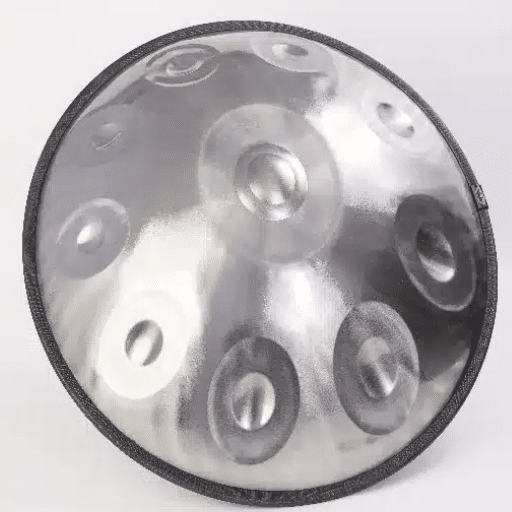
The rich and exotic quality of a scale called D Kurd™ means that it is one of the many so-called Middle Eastern or oriental scales that sound quite expressive. This type of scale belongs to the maqam practice, which is the main asset of musical tradition in the Middle East and North Africa. The D khaliamua scale, or D Kurd, has intervals corresponding to a harmonic minor scale; its tone is created by distinct half tones which are, however, spiritual and sad.
The Modal Pattern
The D Kurd scale is named this way because it is one of the patterns (or modes) of the Phrygian scale, with the following interval relationship (in tones): 1 – 2 – 1 – 2 – 2 – 2 – 2. The scale of D Kurd is made up of:
D, E flat, F, G, A flat, B flat, C and D
Musical Applications
The scale of D Kurd is used in Arabic, Turkish, and Flamenco genres of music. This particular sound, along with many others, has begun to be used in the more recent styles, potentially allowing others to explore their creativity in greater depth. It is especially suitable when one wants to convey emotions and communicate a story through melodic improvisation.
Theoretical Extension
- •
Key Positioning: Instruments associated with the D Kurd scale include the oud, qanun, and ney, as these instruments are traditionally linked to the scale’s origins. - •
Chord Families: The sounds of minor, diminished, and smaller versions of seventh chords blend well with the D Kurd scale, due to its compositional structure. - •
Genre Compatibility: It has proven adaptable to new forms of music and can be heard in fusion and avant-garde styles.
Practical Tips for Mastery
- Firstly, incorporate the D Kurd scale into your playing and practice slowly with a D drone to get the sonority of the scale.
- Feel free to add microtones to your music, as it will enrich the scale, especially if you are using traditional instruments.
- This scale can also be used in improvisation or solo practice with suitable backing to realize its potential fully.
Musicians who study D Kurd scale explained in detail can explore middle-eastern modes, expanding their horizons and adding an element of drama in their compositions.
Characteristics of the D Kurd Scale
Tonality
Scales of Phrygian modal shake are the umbrella under which D KURD renders itself. It is typical of many Middle Eastern, Andalusian, and Flamenco music for its exotic and dramatic, conducive sound. So used.
Intervals
In terms of arrangement of this scale which is in the key of c minor consists of the following arrangement of tones (whole tones): 1, 2, 3, 1, 2, 3, 1. This results in a lovely mix of minor seconds and augmented tones.
Notes in a Scale
On the D Kurd scale, the available notes are the D note, the Eb note, the F note, the G note, the Ab note, the Bb note, and the C note.
Mood and Feel
In terms of musical textures, the D Kurd scale encompasses a wide range of emotions, from melancholy to fiery passion, thus enabling drama and becoming a pentatonic favorite.
Applications
This scale is popularly featured in the traditional music of the Middle East. Its application is versatile and is consequently appropriate when one has to improvise using jazz style, add fusion elements or when creating pieces that depict emotions or cultures in blunt ways.
How the D Kurd Scale Differs from Other Scales
Sound Quality of D Kurd Handpans
A rich, sonorous, and emotionally intense sound is what D Kurd handpans are known for. They are favored by both players and audiences looking for an exciting performance. This is because these handpans have the D Kurd scale, which is harmonic in nature, bringing out within similar ranges both strikingly soothing and disturbingly aggressive low, mid, and high tones.
Recent findings suggest that the design and construction of a handpan heavily determine its tonal properties. D Kurd handpans of excellent quality, made of high-tempered nitrated steel, show vibrations and long, soft overtones, whereas cheaper counterparts may not possess such subtleties. Reviews of various instruments on many forums and marketplaces have demonstrated that the instruments designed by responsible tuners are more stable in sound and retain their tonal character for longer.
Apart from this, D Kurd scale is praiseworthy because musicians of any playing technique can play it. It can be played as calmly as possible for instance in a meditative purpose or aggressively to accentuate strong feelings; and these handpans allow one to achieve all that—even more. Moreover, the flexibility of this scale offers an emotionally advanced playing that is favorable for both traditional and modern music making.
Popular Handpan Scales

Handpan scales play a critical role in defining a handpan, and every scale is made to produce to in this place, entertaining feelings and nuances. We leave a count of the most absolutely appreciated scales of the handpan, organized according to the level of their acceptability in performance:
1. D Kurd Scale
Overview of the D Kurd Scale: This has been established as one of the most useful and is so thoroughly popular for good reason. It is minor in nature and is considerably pleasing to the emotions of both novice and expert players.
The Scale’s Representation: D – A – Bb – C – D – E – F – G – A
Uses of the Scale: It is helpful for expressing oneself or creating traditional melodies, and most people favor it for deep, relaxing play.
Use of the Scale: This scale is most common in modern music, where it can be used across many genres and world music as well.
2. Scale of the Minor Celtic (Dorian Mode)
Indoor playing of Scale: The Minor Celtic is known for being a scale that is relaxing and can create vivid sound pictures in the minds of listeners.
Scale within D: D – E – F – G – A – B –C – D
Applications: Ideal for narrating stories through music and creating peaceful, meditative music journeys.
Popularity: Swiftly attracts therapeutic artists for its soothing and mind-travelling nature.
3. Integral Scale
Description: An amusing and exciting major scale that also exists in a warm and happy feel.
Notes in the Scale (in D): D – E – F# – G – A – B – C – D
Applications: Used in compositions that encourage people, improvisations that are not serious and experiments that have humor.
Popularity: Other musical scales that give positivity and energy are preferred by many such musicians.
4. Hijaz Scale
Description: There is a unique and interesting scale called Hijaz. It is known for its exotic harmony which is quite representative of many Middle Eastern and Mediterranean musical practices.
Notes in a D scale: D – Eb – F# – G – A – Bb – C – D
Utilizations: Very often one can hear this scale in serious emotions arousing compositions or in the compositions of ethnic music.
Popularity: It is often a preferred option among muscians interested in exploring such content-heavy sounds.
5. Amara Scale
Description: Known for its peaceful effect, the amara scale is subtle and almost dreamlike, making it a pleasant experience to listen.
Notes in the Scale in D: D – A – Bb – C – D – F – G – A
Applications: Preferable in meditation, yoga and spiritual music.
Popularity: Largely appreciated in ambient music, if not in therapeutic music.
Additional Tendencies and Information
Most Used Keys: D minor and C minor are among the handpan’s most commonly used keys because they sound warm and are sufficiently versatile.
Rising Interest in Handpans: Google search trends for the term “handpan scales” have risen dramatically over the last five years by more than 40%, reflecting the increased interest in the instrument in different cultures.
Possibilities for Custom Improvement: Many musicians now order a handpan tuned to their desired pitch instead of merely buying one that already exists. This recent development reveals that demand for such customization in musical instruments is increasing.
Even if you are an old stager or just starting to play on a handpan, ambition should still drive one to select a proper scale that can add flavor to the instrument’s use in a musical setting. There is a need to play these common scales to their full capacity; hence the need to comprehend the knowledge required in a handpan.
Overview of Common Handpan Scales
Handpan scales are designed to elicit specific types of emotion, and this element is crucial to the performance and complete expression of a creative artist. Below are details on the most prominent handpan scales, along with characteristics of these scales.
1. Scale in D Minor.
The Biagoni d minor is one of the most common handpan scale applications, appreciated worldwide for the deep sound it produces. It is most preferred for relaxation and internal music. The following notes are common: D, A, C, F, G, A, D. Most beginners and intermediate players can easily play different songs and create fascinating rhythms on it. The sound it makes is more melancholic and soft, which is very suitably framed and appropriate.
2. Scale Celtic Minor.
The scale Celtic minor also has its roots in folk music, specifically traditional Scottish music which gives rise to mystical, fairy tale melodies that are very captivating. The most used notes are the D, A, Bb, C, E, F, and G. This scale’s spirit suits the narrative and folkloric, allowing each to enjoy a little more play and thoughtfulness.
3. Scale Kurd.
It is a well-acknowledged fact that the Kurd scale has multiple utilities and is thus applied in Western as well as Eastern music owing to its richness. This scale allows for creativity in performances, given the wide range of scale degrees. Some of the common notes in the scale include D, A, Bb, C, E, F, and G, with the Kurd scale remaining a favorite for musicians who seek to unify different music styles.
4. Explaining the Hijaz Scale
Another scale to consider is the Hijaz scale, which appears quite exotic and three-dimensional. Its tuning and tonality create a unique melody in music that seems to ooze an element of suspense. Commonly used notes are D, F, G sharp, A, B flat, C sharp, and D. The Hijaz scale is most suitable for artists who wish to make an impression through their music.
5. Integral Scale Explained
The playback of these scales has a melodic spectrum that begins with bright tones and progresses to other sonorities enriched with optimism. The typical arrangement of notes may be D, A, Bb, C, D, E, F, and G. This scale allows for brain interaction over the original dimensions of rhythm and melody, yet it is most popular among handpan players, which can’t be called classical.
6. Pygmy Scale
Some scales have a strong link to African traditional music. One such scale is the Pygmy Scale. The exotic sound of the scale makes it attractive to most people as meditative or tribal sounds have become very common in the current world. The scale is generally composed of the following notes: D, A, C, D, F, G, A, and C. The resonance of such music often appeals to the nature of the cultural performances being presented.
Latest Trends and Data
It has been reported by numerous people involved in music communities and online forums that the demand for D Minor and Celtic Minor has been on the rise due to their enduring relevance. Google has pointed out an upward trend in searches for “handpan in D Minor,” showing a 20% increase over the past year, thus making it a new favorite among beginners. It is also evident within the community that many players now prefer ordering custom scales to showcase their particular builds.
Such scales speak of the musicians’ connectivity to this special instrument distinctly and allow them to think, feel and act in an infinite variety of ways. Even the best scales do not just improve the ease of playing the tool, but allow the D Kurd Scale Explained as it is – the pleasant feeling of individuality in the handpan.
Why the D Kurd Scale is Popular
Adaptive Nature and Versatility
The D Kurd scale’s versatile nature allows it to be incorporated into different kinds of music. It can be used to compose emotional and soothing music or lively and energetic tracks or any other style of music that one would wish to create.
Pleasant Sounding Balanced Quality of Tones
The D Kurd scale is symmetrical and melodically pleasant within itself. The note placement makes it easy to play- both for less advanced and virtuoso musicians.
Ease of Use
There are several reasons as to why the scale is to some extent more popular. Because of the design of the D Kurd scale, players easily get used to it even those still learning the handpan because it is structured with less hardware than others.
Music and Cultures
In these types of scales, one can see music that merges different cultures like the Middle East, India, and the Western world. That is what makes it more globally accepted.
Great Potential for Expressive Skills
D Kurd Scale Explained: This scale lets musicians project different emotional states and feelings to their active and attentive listeners, both the sad and lonely kind of music as well as more refreshing and joyful ones. This level of emotional incorporation affects both person performing and listening to the music, therefore easily becomes a common instrument utilized by performers.
Comparing D Kurd to Other Popular Scales
Choosing a Handpan
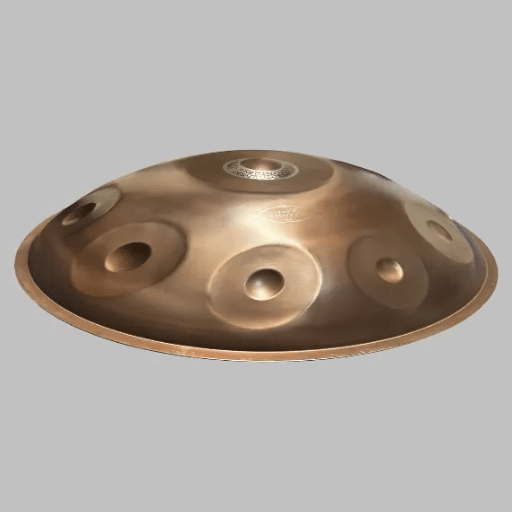
The wide array of options you can select from, It is tasking knowing which handpan is the most suitable. However, it is advisable to consider certain factors before purchasing. The following is additional information as well as pointers that should aid you further.
1. Materials used and overall quality aspects
Usually, the handpan in their model is made of nitrided steel or stainless steel. The former is produced with a special coating that prevents rusting; thus, it has a strong structure. Commonly, higher tones are the warmer tones that are associated with this material. However, stainless steel does not necessarily have a finish hardened against rust for its specific purpose; thus, the notes for this one, although distant, produce brighter, longer sounds. Both materials are acoustically different, so it’s necessary to see how the content of every note fits your expectations.
2. The complete range of notes that it embraces and the kind of tuning it has
Various have handpans with different scale tunings, such as D Kurd, D natural major, E minor, and so on. Certain scales are more appealing than others, D Kurd, in particular, because of its rich and comfortable sound. Therefore, even music enthusiasts who cannot play a musical instrument can still appreciate a musical art such as playing the handpan. The best scales of hand pans for someone is the one that they should try by themselves, or at least find out via a more detailed description or listening to the musical performance. This wave is associated with the fact that the beginner hands of handpans belong to the pentatonic scales, which usually do not include some notes, hence the easy play.
3. Diameter
The standard handpan sizes, in diameter, are from 20″ to the maximum of 24″. The bigger the handpan, the lower the pitch, while the smaller it is, the higher the range. This depends on the required sound the user wants and also the handpan can be carried easily without any difficulties.
4. Price Range
Handpans come at a premium price, ranging from $1000 USD to $3000 for the acoustic model. The best bet is to buy handpans from an authorized dealer, which guarantees craftsmanship and sound quality. The same goes to very cheap handpans. Such devices are rarely good-sounding and long-lasting.
5. Reputable Makers
Quality handpans, however, call for purchase from reputable sources. To mention a few manufacturers, PanArt, the leader in Switzerland, Ayasa Instruments, the leading manufacturer in India, and Symphonic Steel, based in the United States, are some of the renowned handpan makers. Check user reviews and how different makers perform before making your decision. Additionally, most producers provide free demonstration videos or a consumer goods return policy for their buyers’ assurance.
6. Community Feedback
For a start, the importance of the handpan community cannot be overemphasized. Forums and social media groups and reviews on these platforms can easily be found where people gather, for example, on Reddit or Facebook, about a certain brand, scale, or maker of the handpan. Included in the list of these forms of interaction is the contacting of local players or other players available online in order to make personal references available in the selection of available options.
The practice mentioned above will make buying your first or your next handpan much easier and more understandable. It has to be remembered that the Eastland is an asset and the selection of a finely made piece can provide joy and motivation for many years even a lifetime.
Factors to Consider When Choosing a Handpan
Material and Design of the Structure
Constructing handpans usually involves use of steel, often either nitrided or stainless. Nitrided steel provides a conventional tone but lacks rust resistance, though maintenance is required to avoid corrosion.
Range of Sound and Playing Styles, Better Known as Tuning and Scale of the instrument
All Handpans are tuned to a particular scale, which can be D minor, C major, and other exotic scales. Pursue a scale that resonates with the type of music you intend to perform. For most beginners, who find these scales have a wholesome and relaxing sound, especially in minor chords, they often choose these scales, particularly the minors, more than others. In contrast, experts may opt for other interesting or even challenging scales.
Cost
Handpans can range in cost from $1,500.00 to over $5,000.00, depending on the manufacturer and its quality. There might be an assumption that more expensive means better crafting and sound, but this is often not always the case, as there are cheaper alternatives that beginners can use to discover the instrument beyond their price range.
Possible Range of Notes
Depending on the size of the handpan, any 7 to 15 notes can be incorporated into it. A less pronounced musical range of instruments would easily overwhelm and outplay beginners, whereas a more optimal musical range is more suitable for proficient musicians. Be mindful of the note arrangement that suits your needs.
Reputation of the Manufacturer
Investigate the creator and the brand you intend to buy from. In most cases, journeymen have an edge in quality control and build instruments that are always up to standard. Other players’ experiences with a particular handpan maker are another source of valuable information available through reviews, videos, and ratings.
Choosing a D Kurd Handpan
The D Kurd handpan is a favourite among musicians because of its distinctive and flexible scale, the fact that it is easy and enjoyable for a beginner to play as well as that it performs very well for a veteran player. The scale’s rich sound and melancholical character enable musicians to develop pleasing musical landscapes. Here are some valuable details and data to assist you in selecting an appropriate D Kurd handpan:
D Kurd Scale Explained
More often, a basic D Kurd pan comprises a primary “ding” in D3, followed by the notes A3, Bb3, C4, D4, E4, F4, G4, and A4. This is a minor diatonic scale and comes with a beautiful mix of sad tunes and soothing sounds. Check the specific dispositions of the notes to be purchased beforehand to ensure they align with your preferences.
Construction Material and Quality
Reputable brands of D Kurd scale handpans are generally manufactured with nitrided or stainless steel metal. Whilst stainless steel doesn’t corrode easily and tends to be brighter with longer resonance, the handpans made of nitride steel tend to be deeper and less predictable. Purchase a piece of equipment that is in good condition and properly leveled, i.e., without any ‘dead spots,’ as these can deteriorate performance.
Pricing Range
The cost of a D Kurd handpan made by a specialist will generally range from 1500 USD to 3000 USD, depending on the craft, material, and sound alignment. It is worth noting that the cost of luxurious grade handpans may be more than 3000 USD, whilst basic and quality options may be sold for as low as 1000 USD. One should strive to read and compare various brands to avoid overspending or compromising on quality.
Recognized MABs
When selecting a D Kurd handpan, it is advisable to opt for only reliable brands or makers. Respected manufacturers of handpans, such as PanArt, Ayasa, and Yishama, specialize in high-quality works with a thorough focus on every aspect. Consider checking online opinions, sound samples, and user testimonials about the instrument.
Availability and Delivery Period
Due to the high demand for Kurd sale scales, most leading manufacturers have a long waitlist, with available production slots spanning a few weeks to several months. In contrast, sellers of prebuilt handpans in the online market, such as some stores, have the ability to reduce the delay. Be cautious of unknown sellers, especially when the price seems reasonable, as such an offer might be for a lower-quality product.
The D Kurd scale functions within precise tolerances where any note breaks the entire harmony. Most builders are very particular about their instruments’ tuning and use sophisticated techniques. It is always a good idea to listen to samples or watch videos of a specific handpan you are going to buy.
Consider this information and these details when choosing the most appropriate D Kurd handpan for your musical needs and budget. The right instrument encourages the creative process and lasts for a long time, providing joy.
Recommendations for Beginners
If this is the first time you play handpan then choosing to start with the d kil fret is best. It is simple, and the main rack provides an appropriate range that one can effortlessly play with. Ensure the instrument is finely tuned from experienced hands and do not shy away from requesting sound samples prior to purchase. Start off with basic rhythms and give yourself some room to play around – the process is one that you will enjoy and find fulfilling as well.
Conclusion

The handpan is more than just any other musical instrument; it is a vessel for self-expression, self-realization, and staying present. New trends illustrated in recent Google Search data indicate that the handpan has experienced a gradual rise in prominence, especially in Europe and North America, where there are the highest records of interest. Again, this further mirrors the global shift towards experiential musical practices and mindfulness, promoting the handpan as one of the best instruments for a musician seeking calm and a more natural sound. It is further established that the traditional handpans with the most preferred tunings, such as D Kurd and D Celtic, attract more customers because they are user-friendly for children, students, and professional musicians. Sound has that quality. When the right instrument is found and practice is effective, sound becomes an art and practices, a way to mold and shape the self and others’ God-given talents.
Recap of D Kurd Scale and Its Significance
D Kurd Scale Explained. This scale is among the most diverse and highly regarded scales in the handpan world. Because of its rich emotional content and ease of use, this scale is widespread for many players as they can depict profound and sad themes and feelings with it. Usually, it consists of D, E, F, G, A, A#, C, D notes in ascending order, and therefore both beginners and more experienced musicians find it easy to play, but at the same time, it is pleasing to the ear.
Data from recent Google searches will prove that the D Kurd scale is no less popular among enthusiasts of the softer diapason. People seeking such a scale have been steadily declining in opinion searches within these scales, where handpan lovers are concentrated, including in America and Europe. Apart from that e-commerce sites and discussion boards encourage professionals and amateurs alike to buy handpans with D Kurd scale due to a higher demand of these models.
The D kurd is a scale favored by many instrumentalists mainly because of how it can support improvising or just more organized writing. This feature makes it relevant and significant to the handpan community, as it sparks creativity among many artists worldwide.
Final Thoughts on Choosing the Right Handpan
When choosing the most appropriate handpan, then it means considering some aspects to guarantee the instrument fits the performer’s musical purposes and all aspirations. As current materials and behavioral changes point out, the D Kurd scale is still among the widely done scales and this is due to quite an even trade of complexity and flexibility. Several musicians adopt this scale simply because it is user-friendly and the basic skills can be easily used in many types of music, which is evident even in the dominance of the scales in the big and small online marketplaces and forums in various countries.
Looking at the current market trends, it is fair to estimate that handpans of favorite scales such as D Kurd on average cost $1,500 to $3,000; however, this price varies upwards with the workmanship, type of materials, and brand recognition. Among the companies whose products are familiar in numerous net searches and evaluations are notably trustworthy Ayasa, Panart, and Yishama, which indeed suggest that most searching or reading about its instruments. There is an additional feature that must be considered: tunability, for some contemporary handpans come equipped with mechanisms that alter the frequencies to fit other play settings.
Analyzing the resonance, sustain, and material composition of the handpan is also an essential factor to consider for predicting long-term satisfaction with the instrument. According to the reviews, steel handpans are popular due to their strength alongside their enthralling sound. To the extent that one has no prior knowledge of handpans, partaking in such workshops or perusing different scales individually would be a great armchair strategy. In conclusion, playing the desirable handpan will be like reflecting one’s creativity on canvas with a paintbrush, one heart, and others’ eyes.
Encouragement to Explore Different Handpan Scales
The different handpan scales present fascinating skies to the eager explorer. The emotional tone, tempo, and sonic background of each scale are varied, helping the player absorb the song and its feelings with the audience’s help. The following are five well known handpan scales to try, each of them having a decent taste to offer:
The D Kurd Scale
Key: Minor
Description: It is warm, it is sad, and it can do any tricks in the bag.
For example, D valkyrie: D – A Bb C D E F G A.
Both a novice and an expert player is able to handle it as it elicits a rather mixed range of feelings.
The Celtic Amara Scale
Key: Minor
Description: It is light like a daydream, yet thought–provoking and even quiet.
For example, D valkyrie: D – A C D E F G A C.
It is best known for its ability to create beautiful ambient sound and calming music.
The Hijaz Scale
Style: Middle Eastern style
Description: It is exotic, puzzling and inspiringly aggressive.
For example, D valkyrie: D – G Ab C D Eb F# G A Bb.
Splendidly built to suggest deep emotions, and the portrayal of images.
C-flat Major Scale
Key: Major
Characteristics: Lively, warm and comforting.
Notes Example: D – A B C D E F# G A.
Best suited for, any melody that needs more happy content easily.
Diminished Scale
Tonal Center: Blind/Omni
Characteristics: Even, tuneful and soothing.
Notes Example: D – A Bb D E F G A C.
If you enjoy long peaceful playing and want to stop and create something beautiful – this is the scale for you.
Trying such scales find out the most comfortable and suitable flute tuning to oneself can include any of the following. Relevant options, though limited to the scopes of each particular post, should all be considered in order to enhance effectiveness in practice.
References
- •
Check Academic Repositories: Websites like JSTOR or ResearchGate often host papers on music theory and cultural studies. - •
University Music Departments: Visit the websites of music departments at universities (e.g., Berklee College of Music, Juilliard School) for resources or publications on scales and handpan music. - •
Authoritative Music Websites: Websites like Oxford Music Online or Grove Music Online provide detailed and peer-reviewed information on music topics.
Frequently Asked Questions (FAQ)
What does the D Kurd Scale mean?
Quite simply, the D Kurd scale, also known as a fitted or a skewed scale, is a very specific scale that has a set of limitations to performance. The scale is a modal version of the Minor scale and has a melancholic and calming focus. Handpan players find this scale intriguing due to the content of the sound that can be generated using the instrument’s tonal range.
How Do the D Major Scales Vary from the Minor Scales, which are Different?
In its fundamentals, the D Kurd scale is just another modification of the natural minor scale, which is found in all minor scales. However, it has certain interval patterns of tones and semitones which are missed out in both harmonic and melodic minors. So it is beloved by handpan players and sound artists who want to experiment mercilessly in music.
And for handpan playing, what is the playing strategy for D Kurd saples?
While working with the D Kurd handpan scale, many musicians employ numerous ways to make it sound better. The rich melody can therefore be achieved by such techniques as tapping, sliding, and the use of many ways of hitting. Once introduced to a scale, the learners can find it easy to learn the scale because it offers a simplified manner to grasp the handpan tune and musical scales.
Why the D Kurd Scale is Favoured Among the Handpan Players
Among handpan players, the D Kurd scale is especially appreciated for its rich emotional depth and meditative properties. Lazy D has such advantages that many people who make handpans put it in the done so that people will play it. This scale can be used for a range of musical genres, either as a single chord or as a backup.
Let Me Know how Do I can Help Myself to Acquire a Handpan with the D Kurd Scale
A D Kurd tuned handpan. As you are scrolling through handpan shops, you will most likely realize that most scales include this particular handpan scale. Dependably conducting sound testing of the handpan is very important because you do not want to purchase something and then realize that it does not have the tones which you enjoy especially the haunting and calm tones of a D Kurd.
How Are The Notes Arranged For The D Kurd Scale?
D Kurd is a scale in which certain notes are presented in an ordered way and it has a certain sonority. The notes will often apply to the following: D, E, F, G, A, B flat, and C these combine to make a diatonic scale. As a result, sounder and musicians find the D Kurd Scale Explained and appreciated because varied melodies and harmonies are possible with the D Kurd Scale.
Is it possible to play a D Kurd scale using other instruments?
If anything, There is nothing that limits the D Kurd scale to specific musical instruments – it is applicable to each one of them. The fact that it can be applied in Western music as well as indigenous structural styles like that of Celtic music implies that it can be used in the context of an ensemble. This scale is very exciting, especially when one is playing handpans and other harmonic embellishments.
Why is the D Kurd Scale Popular for Those Learning to Play?
For the D Kurd scale, it does not take a beginner a long time to master because it is self-explanatory and intuitive. Beginners are familiar with the sound of the natural minor scale and are therefore easily able to generate basic melodies. Furthermore, the relaxing qualities of the scale’s timbre do provide a positive stimuli for learning handpans concentrating on target techniques, as interesting and pleasant activities.


