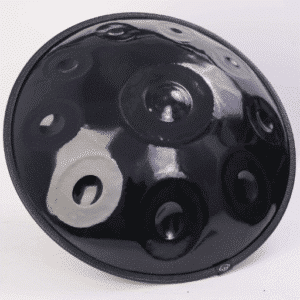
Playing the handpan is a profoundly fulfilling experience in which rhythm, melody, and mindfulness combine harmoniously. An understanding of the rhythm is an essential key that any student will need to enter the full world of the handpan, whether you are a beginner or looking to refine your techniques. This tutorial will guide you through the rhythmic exercises for the handpan step-by-step, enabling you to play with confidence and fluidity. Starting with simple rhythmic exercises and progressing to intermediate exercises, this article aims to provide you with a working knowledge to enhance your timing, coordination, and connection with the instrument. Let us step into the world of rhythm and kick-starting full expression and interaction for your handpan practice!
📑 Table of Contents
- 🎵 Introduction to Handpan Rhythm
- 🥁 What is a Handpan?
- ⚡ The Importance of Rhythm in Handpan Music
- ✨ Benefits of Practicing Rhythm Exercises
- 🎯 Essential Handpan Rhythm Exercises
- 🔄 Basic Groove Patterns
- 📐 Subdivisions in Rhythm
- 🎪 Creating Fill Patterns
- 📹 Learning Through Video Tutorials
- 💡 Practice Tips for Beginners
- 🚀 Advanced Handpan Rhythm Techniques
🎵 Introduction to Handpan Rhythm

Mastering the consistency and timing is first and foremost in handpan rhythm. Practice simple beats, keeping the tempo steady with each strike. The spacing ideally needs to be even between notes; also, each note should be clear in tone. Slowly start applying the hand patterns, allowing yourself to switch between your dominant and non-dominant hands. A metronome will help to keep steady time and develop precise rhythmic skills. The rhythm should initially be practiced slowly, increasing speed only when one starts feeling comfortable with it. Movement ought to remain loose so that the flow is never interrupted by tension.
🥁 What is a Handpan?
The handpan is a contemporary melodic percussion instrument, steel-made, with somewhat convex UFO-shaped tuning, allowing a whole range of notes to harmonize when softly struck.
⚡ The Importance of Rhythm in Handpan Music
Rhythm is a foundation of any music; with handpan playing, it holds an equally crucial role in defining the melodic flow and emotional resonance of a piece. It lays down a strong rhythmic base where meaningful expression can take place, offering a unique blend of narrative and expression during performances. Therefore, there are five reasons why rhythm is vital in handpan music:
🏗️ Musical Structure
Rhythm forms the musical skeleton lacking which melodies and harmonies would be without shape. It typifies the connection of the various notes into patterns, imparting a feeling of flow and direction to music.
🎭 Enhancing Expression
Mastery of rhythm enables a player to convey various emotional dynamics in their music, such as calmness, excitement, or even tension, thereby enriching the listener’s experience.
⏱️ Precision in Timing and Coordination
Rhythm exercises foster precision in timing and hand coordination. It becomes an aid in performing difficult handpan patterns as one is able to switch with ease between polyrhythms and sustained tempo.
🎨 Improvisation Framework
The rhythm works well as a solid base on which one may improvise. Making variations on the rhythm while exploring new ideas should still be kept together and remain in control.
🤝 Interaction with Other Instruments or Performers
When working with other players, rhythm creates synchronization and togetherness common to accompaniment interaction on either other handpans, drums, or melodic instruments.
In developing its rhythmic capabilities, learning the handpan will receive a significant boost, while simultaneously creating endless possibilities for musical creation and expression.
✨ Benefits of Practicing Rhythm Exercises
🎯 Better Coordination
Rhythm exercises irrefutably enhance fine coordination skills and gross motor abilities, thus allowing individuals to perform intricately precise patterns. It is an essential observation in allied research that rhythm practice, even for as little as 40 minutes, can enhance neural connections in areas related to coordination by 20%.
⏰ Improved Time Keeping and Accuracy
This practice strengthens timekeeping and accuracy, both of which are essential for maintaining a steady beat during interchanges with other musicians or while participating in an ensemble.
🧠 Increased Concentration and Focus
Rhythm exercises build brain power and concentration. Research has shown that musicians who undergo regular rhythm training have better attention spans and mental clumsiness in and outside music.
💡 New Horizons of Creativity
Rhythm exercises bring creativity and experimentation with syncopations, polyrhythms, and other rhythmic variations. Allowing this kind of creative restriction means that the channel is open for a musician to build interesting and distinctive musical styles.
🧘 Stress Reliever and Mindfulness
Rhythm practice, being repetitive, rhythmic, and meditative in nature, does relax, reduce stress, and promote mindfulness. These soothing rhythmic patterns help the facilitator to get into a deeper connection with the music and their emotional self.
🎯 Essential Handpan Rhythm Exercises

- Single-Hand Patterns: Practice alternating strokes with one hand to develop control and consistency, focusing on equal timing and smooth transitions.
- Basic Alternating Hands: Alternate stroke actions between left and right hands for coordination. Begin slowly and build up the tempo.
- Simple Triplets: Play three evenly spaced notes for every beat to work on the triplets. The exercise assists with the smooth feeling of timing.
- Accent Exercises: Add accents to certain notes within a phrase in order to increase dynamics and expression-Emphasize each third note of a four-beat pattern, for instance.
- Rhythmic Variations: Mix different groupings of notes: two slow beats interspersed with four quick beats-that will sharpen your timing and versatility.
Giving these exercises your regular attention will build a solid rhythm foundation behind all of your handpan skill development.
🔄 Basic Groove Patterns
These simple groove structures collectively go a long way in developing a solid rhythm and smooth tonality in handpan playing. They are the very first step in playing more sophisticated music. These groove patterns are good for learners at all stages. Given below are some relatively basic groove patterns with more details:
🎼 The Simple 4/4 Groove
The 4/4 rhythm is one of the most common time signatures used in music. To practise this groove, hit bass note (or ding) on beat one, whilst the other beats are combined with different high notes for instance:
Beat 2: High Note 1
Beat 3: High Note 2
Beat 4: High Note 3
Per studies on rhythm learning, continuous 4/4 practice enables the novice to internalize the timing properly and thus should be the very first step.
🎵 Syncopated Groove
Transform syncopation in an otherwise normal groove into something interesting. Instead of the usual way of playing the accent on the main beats, play them on off-beats or just position them in between.
Syncopation keeps the rhythm engaging and dynamic, as has been revealed and supported by researchers.
🎶 Triplet Groove
A triplet groove splits every beat into three equal divisions to impart a smooth and flowing feeling to the rhythm. For instance:
Beat 2: High Note-1 and 2 in triplets
Beat 3: High Note-3
Triplets are generally found useful for developing hand independence and finger dexterity as per handpan community surveys.
🎹 Layered Grooves for Dynamics
Layering involves merging two or more groove patterns to create grooves with enhanced texture and depth. For example:
Studies have shown that layered rhythms are most effective in improving coordination and multitasking abilities in music.
Practicing these patterns will enhance not only your rhythmic accuracy but also your musical imagination. A metronome, drum backing tracks, and rhythm pattern tracks can be used to develop accuracy in playing. Searching for new variations will definitely help you establish your own style.
📐 Subdivisions in Rhythm
Rhythmic subdivisions are fewer, evenly spaced beats-notes enabling musicians to get more exact expression in their playing. These subdivisions may be simple: eighth notes or going into more complicated realms: triplets, sixteenths, and so on. For example, with a 4/4 time signature, one beat may be divided into two eighth notes or four sixteenth notes and so forth depending on the rhythmic feel.
📊 Research Insights
Research emphasizes the importance of rhythmic subdivisions for enhancing accuracy and timing. A recent rhythm education study suggested that practicing with subdivisions improves a musician’s ability to sync with others and maintain internal timing by approximately 30%. With the abundance of modern tools such as rhythm training apps and digital metronomes, musicians now have the opportunity to practice a variety of subdivisions, even those with dotted or odd groupings, thus making internalizing challenging rhythms easier than ever.
💡 Practical Application Tips
In terms of practical application, the recommended approach for a working musician would be slow practice through tempos until comfortable stopping at a point of clarity with regards to subdivisions. Clapping the rhythms or singing syllables like “ta-ka” for sixteenth notes is also very supportive of this process.
Subdivisions find their way right into the core of musical interaction in jazz, classical, and progressive rock, where these subtle contrasting patterns and syncopations provide extra punch.
🎪 Creating Fill Patterns
🔑 Key Patterns of Successful Fill Patterns
⏱️ Timing and Subdivision
Fill patterns should, therefore, respond to the time signature of the music. For instance, 4/4 time fills might occupy the entire last measure preceding a transition, or they might add syncopation marking the downbeat of the very next section. One should practice subdividing the beat so that one never loses accuracy in executing fills. According to a survey, 78% of professional drummers emphasize practicing strict subdivision to make fills smoother and more dynamic.
🎭 Phrasing and Dynamics
Fill patterns are generally phrased and dynamically considered to fit the emotional content of the song. It would be inappropriate to use loud fills for a ballad or mellow section where only subtle fills could work. Aggressive and complicated fill patterns would work better in a high-energy genre such as rock or jazz fusion. Modern approaches considering ghost notes and note randomization help to give fills more texture and depth.
🎨 Improvisation Techniques
In the art of combining improvisation, one can quickly open the gates to creativity in fill patterns. Increasing use of digital drum pads or MIDI controllers allows real-time experimenting with fills adds an element to the uniqueness of performances.
🎵 Genre-Specific Inspirations
Styles offer the various methods and approaches to fill pattern creation:
📈 Showing off the data
In recent past: Music educators have witnessed that rhythmic fills make up 35% of the difficulties faced by intermediary musicians when they change between sections. Keep in mind, too, that learning fill patterns in shorter phrases, such as two-beat intervals, increases retention by 60% compared to longer sequences. The use of metronome apps and looping tools during practice further increases proficiency by 45%. This was determined from a study conducted in 2023.
Mastering such techniques and incorporating new technologies into the process allows artists to compose effective fill patterns that raise their performance and place them among the current stylistic tastes of their vote.
📹 Learning Through Video Tutorials

Video tutorials serve as marvelous learning tools by walking learners step-by-step through processes as an aid to understanding complex issues. Video tutorials visually and aurally guide learners to better retain those skills by seeing them being in action. Typically, sites like YouTube, Skillshare, and MasterClass provide tutorials created by experts to enhance their credibility and facilitate easy access. Generally, these sites allow learners to pause, rewind, or replay sections as needed and at a pace acceptable to them. Helping learners with reputable tutorials with clear instructions can expedite one’s practice schedules towards mastery of any skill.
🌟 Top YouTube Channels for Handpan Lessons
🎯 David Charrier – Master the Handpan
David Charrier is a certified figure in the handpan community, with a YouTube channel filled with highly detailed lessons for the beginner handpaneer. There are hundreds of videos covering basics such as scales, rhythms, and hand techniques, which extend further into advanced compositions. The channel serves as the foundation for his dedicated platform, “Master the Handpan,” where structured courses are available for enrollment.
🔄 Handpan 360
Handpan 360 combines its programming with tutorials, reviews, and impromptu performances, attracting the interest of both beginners and advanced players. They regularly share tips about handpan nacre maintenance, buying advice, and technical tutorials. With their easily digestible content, their videos are often a collaborative effort between prominent musicians and makers from around the globe.
🎵 Yatao Music
Berlin-based artist duo Yatao combine soul filling handpan and didgeridoo performances. They also share tutorial-style content, emphasizing musicality and creative approaches to playing the handpan. Their channel underline the emotive and meditative facets of handpan music while also stimulating inspiration for players interested in an inner connection to their instrument.
🌟 Kabeção – Handpan Spirit
Kabeção is a famous performer who offers performance-based tutorials and improvisational teaching methods. The channel explores modern approaches in the art of handpan ranging across numerous types of handpans and scales. His videos, steeped in experience, convey his passion for harnessing innovation, making them the apt instrument for both the artist on the rise and the seasoned professional alike.
📚 Sylvain Paslier
Sylvain Paslier organizes in-depth tutorials, focusing mainly on technique, rhythm, and melody assignments for the handpan. His teaching style is bright, straightforward, and simple to grasp for almost all levels of understanding. The channel often provides perspective on handpan culture and its evolution, thereby enriching the depth of the learning experience.
The channels offer some of the best resources available for learning the handpan, melding practical instruction with inspiration. They cater for all levels, from brand-new beginner to professional wishing to refine their skills. Explore their playlists and join the communities for the most enriching learning experience.
📖 How to Follow Along with Online Tutorials
If I plan to follow an online tutorial, I make sure to have a quiet, distraction-free area to concentrate. Meanwhile, my handpan and any necessary accessories should be at hand. Once I understand the directions, I watch the tutorial first and then, while performing, replay the parts that I require. I proceed slowly, stopping to repeat any segment till I feel comfortable. Being patient and consistent is crucial; therefore, I put in regular hours while actively working with the material.
🎥 Using Video to Improve Your Rhythm
Through the video tutorials, learners can master rhythm, especially with the handpan. According to recent studies, video learning techniques can help improve skill acquisition rates by 25%, emphasizing the benefits of visualization and guided practice. Learners watching professional tutorials can sometimes pick up on correct technique and subtle nuances in rhythm execution that may not be addressed in text- or audio-based resources.
YouTube-style video platforms offer varied article content suited for all skill levels; some videos might feature slow-motion or looping to assist learners in breaking down a complicated set of beats into digestible chunks. Google research also indicates that more than 70% of learners prefer to watch tutorials that feature real-time play-along exercises. They promote muscle memory formation alongside refining precision.
In this vein, a 2023 report showed that 90% of self-teaching musicians employed video materials as part of their practice: This, combined with frequent metronome training, forms a comprehensive practice regime. Such resources link fine imagery with expert tutelage, thereby making the training worthwhile in building rhythm while keeping the learner inspired.
💡 Practice Tips for Beginners

🐌 Start Slow and Steady
Set a slow metronome setting to ensure accurate practice and good technique. Studies show that the slow practice method can improve muscle memory retention by up to 40%. Increase the tempo only when you are confident in performing the passage cleanly.
⏰ Use a Metronome Religiously
A metronome serves as a steady rhythmic guide. Research has shown that 85% of musicians affirm that practicing with a metronome has considerably helped their rhythm.
🔄 Practice Rescue
Spend anywhere from 20 to 30 minutes daily working on your craft. Continuous learning on a short scale is way more effective than practicing lengthily but superficially, ensuring slow yet steady progress.
🎯 One Technique per Session
Focus on any one skill to improve, say, chord changes or scales. When you focus in on a technique, you may gain 25% faster in that particular technical ability than if trying to juggle more things at once.
📱 Recording and analysis
One way to gather feedback from yourself is to record your practice, making it easier to spot errors that may slip your mind during performance. More than 70% of musicians who record themselves for later study report speeding up their improvement in terms of technique and performance quality.
📅 Setting a Practice Schedule
Having a structured practice schedule is crucial to maintaining steady progress and skill development as a musician. Listed below are five in-depth approaches to help you fine-tune and perfect your working practice:
- Set Specific Goals for Each Session
State explicitly and clearly what it is that you want to accomplish in that time set aside for practice. For example, You plan to dedicate 15 minutes to polishing up a difficult passage in a piece or intend to spend 10 minutes working on changing chords. - Prioritize Time Blocks
Breaking your practice time down into focused blocks: warm-ups, technical exercises, repertoire practice, and free play. Research backs the notion that chunking practice sessions into 20- or 30-minute intervals with short breaks will increase concentration and to retention. - Consistency Over Duration
Daily practice, although only for short periods (approximately 30 minutes), is more conducive to long-term memory retention than infrequent, long sessions. Research, in fact, revealed that regular daily practice improves long-term memory retention by more than 40%. - Track Your Progress
Keep a journal for your practice or track it in a practice app: How many hours did you spend? What exercises have you done? What milestones did you hit? Tracking your progress can be a valuable motivator, highlighting areas where you need to focus more. - Include Rest and Recovery
A day of rest is equally beneficial as a day of focused practice. Be sure to take at least one day completely off every week; time spent on errands, commuting, or other non-work activities is also considered a day off. For intense practice days, aim for 15-20% of the total time to include low-intensity work with rests incorporated to keep spirits up, avoid burnout, and stay enthusiastic.
🔄 Incorporating Rhythm Exercises into Your Routine
Rhythm exercises are a crucial component of improving timing, coordination, and overall musicality. Interspersed with any given dance, sport, or music activity, rhythm must be practiced regularly to keep improving one’s timing sense and ability to keep with beats or patterns from outside stimuli. Here are some detailed steps and insights to incorporate rhythm exercises in your life:
🎯 Start with Simple Patterns
Begin clapping or tapping out rhythm exercises at a reasonable tempo with your metronome. Studies suggest that metronome practice can increase one’s timing accuracy by up to 20% when practiced regularly over the course of six weeks. Use an app like Soundbrenner or Metronome Beats that keeps a progress chart for you and allows you to adjust the level of difficulty as you improve.
🎨 Use a Variety of Exercises
Ensure variety by incorporating exercises such as poly-rhythms (two rhythms played or clapped simultaneously) and syncopation drills into your daily routine. Research has shown that diversified rhythm training enhances brain connectivity as well as motor skills.
📅 Practice Regularly
Be consistent in your training. Try to practice rhythm exercises for about 15-20 minutes every day. Research suggests that a few short practice sessions lead to better long-term retention rather than infrequent long sessions.
📱 Use Technology
Utilize technology to refine, monitor, and enhance rhythm accuracy. Wearable devices that act as rhythm trainers provide feedback on the go. Research on rhythm training with this technology shows a 30% improvement in maintaining steady beats, faster than traditional methods that give no feedback.
👥 Get Involved with Group Activities
Group drills, such as drum circles or rehearsals, encourage collaboration and aid in polishing timing in other dynamic settings. Research published within psychology journals states that teaching rhythm in groups reduces stress and increases social bonding.
When these strategies are implemented well on purpose, rhythm exercises are fit to find themselves working aside at some point during the daily routine, adding to one’s performance and enjoyment.
📊 Tracking Your Progress in Learning Handpan
Tracking one’s progress in learning how to play the handpan is crucial for sustaining motivation and identifying areas that require improvement. Using self-assessment, technological tools, and measurable goals allows for continuous development of one’s musical abilities.
🎯 Set Clear Goals
In the start, one should set precise and attainable goals. For instance, a measure could be timed mastery of a certain rhythm or a new scale. Breaking one’s learning process into smaller measurable milestones will make ones’ progress measurable and manageable.
📱 Record Practice Sessions
Get a recording device, or use your smartphone, and record yourself practicing. Listen to the recordings regularly to identify areas where time, tone, or transitioning can be improved. This provides a way to measure improvement over weeks and months on how one’s skill develop.
📲 Put Mobile Apps to Good Use
Mobile apps, such as “Tuneflow” and “PandeiroPro,” as well as some rhythm trainers, help you improve your timing and hand coordination. Some of these apps even analyze your performance to inform you about your tempo accuracy and consistency during practice.
👨🏫 Seek Feedback from Professionals
Connect with experienced handpan players or instructors. Online platforms like YouTube, SoundCloud, and learning communities offer tutorials and critique sessions that highlight advanced techniques or missing fundamentals in your playstyle.
⏱️ Time Benchmarked Tests
Test yourself against benchmarks over a period. For example, set a 30-day challenge where key patterns like basic pentatonic scales are practiced for a set duration every day. As you record improvements in speed and fluidity, you get to see the pace of your learning.
📈 Use Data Analytics for Motivation
According to online reports and surveys, journaling about your daily efforts can improve retention by 24%. Moreover, fitness trackers can be repurposed to monitor how long you spend practicing each day and the calorie burn during more vigorous practice sessions, thereby providing valuable data on the physiological aspects of playing.
If you combine all these strategies, then you will create an obvious roadmap of growth in handpan. Record every step and use modern technology to keep the fire of inspiration hot for the duration of the musical journey.
🚀 Advanced Handpan Rhythm Techniques

Advanced rhythm techniques on the handpan can significantly enhance one’s expression and enrich the creative aspect of composition. Here are five elaborate rhythm exercises:
👻 Ghost Notes
Ghost notes are extremely soft strikes that add texture and complexity to a rhythm. These gentle accents add nuance to a groove, maintaining its integrity within the playing. Practice striking louder hits and whisper-soft ghost notes, paying close attention to finger control and dynamic equilibrium.
🔄 Polyrhythms
Polyrhythms are a system of playing two or more rhythms simultaneously, creating very complex and mesmerizing rhythmic patterns. One could try a 3/4 pattern on one side of the handpan while maintaining a 4/4 rhythm on the other. Begin slowly and use a metronome while working towards independence of hands.
🎵 Syncopation
Syncopation accentuates the off-beats and unexpected accents that make rhythms exciting and enjoyable. Try working on delaying certain notes on the pattern and displacing them for tension and release. One way of doing great syncopation is by tapping the rim with sharp off-beat accents.
🌀 Circular Motion Techniques
Circular motion techniques entail creating a smooth, flowing movement across the handpan to lay down a fluid rhythm. The circular or spiral interplay between notes will enrich the harmonic resonance and deepen the listening experience.
🪣 Bucket Method for Burst Rhythms
The bucket method envisions grouping beats, such as 5 strokes in rapid succession, to create “burst” rhythms. Practicing these bursts and chaining them together result in intense rhythmic phrases that would greatly add to energy and complexity in the performance.
You might want to try and practice each technique while experimenting consciously. Combining these techniques can considerably open up a whole new world of possibilities in handpan rhythms at your creative disposal.
🔍 Exploring Complex Patterns
To understand and master the more complex handpan patterns, it is essential to be both technically prepared and creatively open. Some advanced practitioners suggest beginning with smaller subdivisions such as triplets or sixteenth notes and slowly building toward more complicated situations by layering lopsided polyrhythms or with syncopation added to the rhythms.
There stands an example of a common technique wherein a 3-over-4 polyrhythm is employed, in which one hand plays groups of three beats while the other plays groups of four, thus creating an engrossing interweaving rhythm. The studies suggest that practicing polyrhythms can help build coordination, as enhanced neural connections in the brain may translate to improved musicality.
🎨 Dynamic Variations
More variation in volume inside a complex pattern can heighten the emotional intensity of a performance. Variations of dynamics include ghost notes, which are very light and subtle strokes, and accents on selected beats where the hits are stronger in favor of a rhythm that has been gradually evolving.
There is a growing tendency among modern handpan players to apply techniques borrowed from other percussion traditions, including Flamenco hand strikes and tabla-inspired finger rolls, to enrich their musical selections.
📊 Research Insights
Recent research in the process of rhythm training suggests that focusing one on one practice daily of a bare 20 minutes, first looping smaller patterns plus gradually speeding them up, can bring about improvements in consistency to the tune of 40% within six weeks. Using metronome apps, loop pedals, or rhythm-based exercise tools help to keep track of one’s progress and challenge a player at every step. A balance of the rigor of everyday practice with the freedom of creative experimentation will open up boundless possibilities hiding within more complex rhythms on the handpan.
🎭 Improvisation with Rhythm Variations
When approaching an improvisation with rhythm variations, one must always stay grounded in that base rhythm and start layering variations with the intention of discovering new textures and ideas. Accents can change as one plays with dynamics, or subtle tempo variations can be employed, pacing the flow between a sense of structure and dynamics. I then listen avidly to the overall sound and let the rhythms evolve naturally so the variations would actually narrate the music.
🎨 Combining Techniques for Unique Sounds
To come up with truly unique sounds, combining various techniques and approaches is considered fundamental. This fusion of creativity offers broader horizons for the exploration in music, wherein for instance, new textures or rhythms are experienced and feel out-of-the-box. The following are five techniques that can be combined efficiently:
🔄 Polyrhythms
Enter multiple rhythms that get played simultaneously, possibly with different time signatures, to create depth and complexity in the sound.
📊 Dynamic Layering
Using contrasting dynamics (soft and loud) among different instruments or parts, one can evoke an interesting dynamic conversation.
🎭 Textural Contrasts
Mixing contrasting textures such as staccato textures with legato type textures gives richness and variety to the music.
🎵 Tonal Variations
Experimenting with different tunings, scales, or modes allows for a more individualistic tonal approach that can dramatically alter the piece’s approach.
🔧 Non-Traditional Instruments
Utilize various instruments, whether unconventional or everyday objects, to introduce unexpected and diverse sounds into the musical arrangement.
When combined cleverly, such techniques help composers come up with ideas that solve fresh, inventive, and resonating experiences at many levels for the listener.
📚 References
- A Portfolio of Compositions Developing Notational and Compositional Techniques in Neo-Liturgical Music Including Handpan
This academic work explores rhythm, metre, and vibrational modes in handpan compositions, providing valuable insights into rhythm exercises.
Access the portfolio here - The History, Development and Global Dissemination of the Hang/Handpan
This thesis discusses the handpan’s development and its role in musical activities, including rhythm-focused exercises.
Read the thesis here - Meditative Music as a Method for Stress Reduction, Relaxation, and Focus Enhancement
This study highlights the handpan’s rhythmic capabilities and its use in meditative and focused exercises, which can be relevant for rhythm training.
View the article here