
This enchanting sound of a handpan has cast a plethora of charms on music lovers and composers. Truly deserving to be called a much sought-after instrument that attaches ethereal notes to meditation arts for an unprecedented experience. Choosing the right handpan can become quite a Herculean task with so many makers and brands now able to offer the choice, especially for a seasoned musician or a budding enthusiast, or one who simply desires to enjoy the sublime melodies of the instrument.
The guide is like a sturdy arm to hold through the labyrinth of handpan makers, top brands, and many others. In doing so, it discusses the making, materials used, sound profiles, and innovations. You will, therefore, have an easier time identifying which would be the perfect handpan for your individual needs, along with a little bit of insight about this unusual instrument! Stay put as we explore the world of handpans and their artisans!
Understanding Handpans

Handpans belong to a percussion family crafted of metal, possessing a unique calming sound and the ability to work melodically. They are manufactured by pressing two metal shells together and tuning them to some harmonious scale, with each note located at the instrument’s surface. Being an interpretive mallet-hand instrument, the resultant sound of this handpan is typically deep and associated with relaxation or meditative processes. The popularity of handpans has spread all over the world as they are small, lustrous, and can be coaxed into so many kinds of musical forms.
What is a Handpan?
An alluring percussion instrument blessed with otherworldly, mystical sounds- Drums from a steel structure, the handpan consists of a dome-like structure with carefully tuned tone fields around its surface. The tone fields produce different notes that, when struck, create mesmerizing melodies that float around and arrest the listener. Evolving handpans have a larger variety in designs and tunings catered to different music styles and tastes, being born from the Hang drum in the early 2000s.
Many are precious handpans, whose sound production is enriched with calming charms. The uses are vast: meditation, sound healing, various genres of world music, and even contemporary improvisational styles. Said to possess between eight and ten notes placed around a high-tuned central bass note called enter: ding. Splendid tuning of each note guarantees clarity and resonance that can take a few days to weeks to be achieved, often requiring much skill.
The slow process of making a handpan just talks about the instrument, and many of them are handcrafted by a series of expert artisans. It is this painstaking creation of excellence, coupled with the still very limited availability of the instrument and its ever-increasing popularity, that makes owning a fine handpan genuinely fulfilling and rewarding to an enthusiast and musician.
History and Evolution of the Handpan Drum
The handpan is a rather recent invention, steeping the art in both innovation and tradition. A decade ago, the Hang was born in Switzerland when Felix Rohner and Sabina Schärer of PANArt designed an instrument. By looking at the steelpan from Trinidad as a source of inspiration, as well as at gongs and other percussive instruments, the makers wanted to have a balanced interplay of sounds emanating from their instrument, consisting of convex, tuned steel surfaces.
Since the commercial production of the instrument has spread in the 21st century, there have been marked innovations in its design and craftsmanship. Early fellowship-types had a basic design with fewer sound palettes, more so for those who sought an acoustic experience that differed from the norm. Since then, artisans have delved into much more complex designs, and the tuning process itself was opened to further possibilities, allowing more musical scales to be used, the practical range of tones to be formed, and some resonance degrees. Nowadays, handpans are mostly made with quality nitrided steel or stainless steel to ensure durability and provide sound projection for a deeper and stable sound.
With the worldwide popularity of the handpan, different adaptations and innovations came along. Today, manufacturers use top production technologies like hydroforming, precision laser cutting, etc. And thus, that moment of blacktop concrete finishing became a brief dream for modern engineers who increasingly were to artistic hands and artisanal music with those ethereal tones of handpan, translating traditional acoustic language into contemporary sound expressions.
Despite the advancement in production, the ways of its roots in a sustainable artisanal tradition have not been forgotten in recent days. This implies that the semi-manual handpan-making process guarantees qualitative workmanship worthy of appreciation by the employees and hobbyists. Mastering this symbol of once almost-black craft in the world-able to tame that very soft solemnness and meditative tones of handpan from almost any culture, is actually the hallmark of this grateful craft onto the international map.
Disparities Between Handpan and Steel Tongue Drum
Each instrument finds its place quite nicely, though. Among professional applications, the handpan is highly Option-Selected, whereas the steel tongue drum is usually used for personal relaxation and mindfulness or in small gatherings due to its ease of use. Thus, these factors contribute to an entirely different dimension the player can set off on, depending on his/her feelings, skill level, or the ambience to be created.
Choosing the Right Handpan
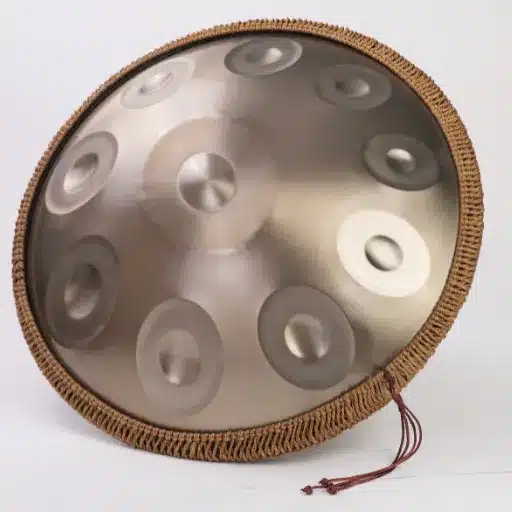
There are always three aspects to consider when choosing a handpan:
- Sound: Clear, strong tone with well-balanced harmonics. To taste one yourself or listen by way of recorded sounds of the scales, and go with the one that sounds right to your ears.
- Material: Good handpans are usually made of steel or nitrided steel to preserve the sound and ensure durability. Top consideration is given to smooth finishing and correctness of tuning.
- Scale Options: Pick one that fits the track you want to lay down, for example, major for happy tunes, and minor for sad tunes.
Trying out different models and talking to the inspired players or reputable makers will help you ascertain which is best suited to your needs.
What to Consider When Choosing a Handpan
Here are considerations when selecting the handpan most suited to an individual’s requirements. The major consideration includes the scale of exceptions. The atmosphere and emotional undertone differ among the many handpan scales: D minor, C major, or Celtic, for example. Certain major scales would obviously be preferred by beginners because of their happy and consonant nature, whereas the more advanced will lean toward the minor or exotic, capable of weaving more involved and introspective soundscapes.
Behind the design, consider artfulness and materials. Handpans with a good reputation are handmade by master artisans in solid nitrier steels that grant the best resonance and durability. Next, verify the fine-tuning quality so that all notes blend in harmony, please.
And size and weight are a few more technical aspects to be taken into consideration. These things may come into consideration should these musicians find any traveling involved, or if it is really intended for use on a particular spot. Smaller handpans are light to carry, but they have fewer notes compared to the bigger ones. Larger handpans have more tones, which is rather tempting for more mature players looking for colors.
Price is another factor, and the handpans vary heavily there. The best vulcanizers injected by a famous vulcanizer are very loud and last forever. Yet, there are cheaper ones that should optimally sound okay to an amateur or beginner. With all these factors taken into account, the final judgment will be made very confidently and objectively so that the player may be able to really come to terms with the musical facet of the handpan and his life.
Beginner’s Guide: How to Choose a Handpan
The understanding of a handpan’s actual scale and tuning is essential when considering the purchase for beginners. Generally, these instruments are tuned to specific diatonic or pentatonic scales, each yielding its own coloristic emotional reaction; thus, a D minor handpan might sound very meditative or melancholy, whereas a C major handpan, in turn, would be uplifting and joyful. Since the D Kurd scale is one of the most intuitive and deep-hybrid yet simple scales, beginners are generally recommended to start on it.
Another important factor to look at is the material and craftsmanship of the handpan. A superior-quality handpan is put together from nitrided steel with a tough yet resonant surface that resists rusting too well and thus keeps its tone for a very long time. Some of the current handpans incorporate stainless steel, which is lighter, yielding a bright tone, is low on maintenance, and is relatively fashionable nowadays. But in all cases, the choice of an instrument should be based on who makes it, along with their tuning skills, to avoid inconsistencies.
At first glance, thirdly, portability and size are typically dismissed by many first-time buyers. Standard handpans weigh in at about 20-22 inches in diameter with a just-right mix of playability and portability. But compact models with equivalent sound quality are making their appearance nowadays for anyone who needs portability, like travelers and small-town musicians.
With these basic criteria in place, beginners may make wiser choices toward a rewarding experience as they embark on their handpan journey.
Notes and Scales: The Basics of Handpan Tunings
Handpan tunings are made on purpose for atmosphere and mood, the hardest attribute to give this instrument. A handpan is built around one note, the ding, and other notes form a scale. The common scales are major, minor, and pentatonic, each of which has different tones; major sounds usually happy, minor, internal, and a little sad; and pentatonic, very flexible and quite harmonious, especially for a beginner.
The scales were taught without any dissonance, so the players feel it’s very easy to produce good melodies. The usual handpan goes somewhere into 7-9 notes or so around the ding, all tuned to one another. Some advanced models might be equipped with a few more notes for some more options.
If you know about scales while buying a handpan, then you will be able to choose an instrument to suit your style of playing. For anyone slightly interested in performing jointly, this would surely be very important because the choice of scale also affects the whole mood of the music and into which other instruments it will fit.
Top Handpan Makers
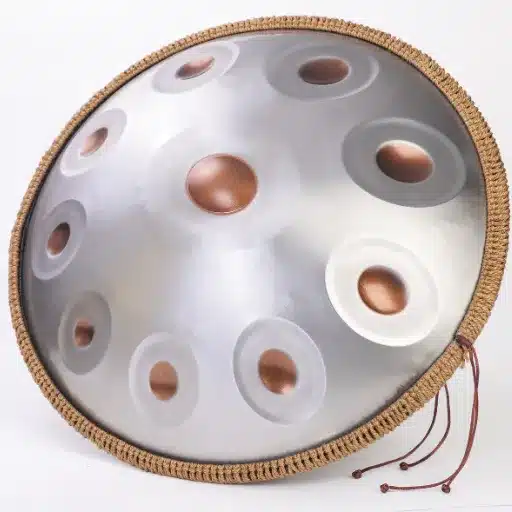
PANArt
Building on their decades of mastery and innovation, PANArt is credited with being the founder of the handpan art. The exquisite sounds of their instruments are highly sought after.
Halo Pantheon Steel
The handpans constitute one of the professionals’ favorites as they were acclaimed for durability, richness in tone, and consistency.
Handpan Sound Sculpture (HANS)
This maker is known for making instruments with great resonance and with many different scales to fit different playing styles.
Yishama Pantam
These handpans are extremely precise and artistic, so they are revered for their deep tones and brilliance of construction.
Ayasa Handpans
Known for very comfortable prices and sounds, Ayasa is very attractive to musicians at all levels.
These makers represent some of the favorite nooks of integral sound and craft quality. Included are PANArt, Handpan Sound Sculptures (HANS), and the Yishama Pantam brand.
Overview of the Best Handpan Makers
When it comes to choosing a handpan, understanding the reputation and craftsmanship of various makers comes first. The best handpan makers are known for their fine attention to detail, the use of fine materials, and their excellent skills in tuning. First among the top names in the industry is PANArt, the original creator of the Hang, from which modern handpans have taken inspiration. Instruments made by PANArt are famous for timeless precision, durability, and an arguably elusive tonal quality, also difficult to reach because of scarce production.
Yishama is another outstanding name for handpans, a brand acclaimed for its handmade instruments with emphasis on harmonic resonance and warmth, in a balanced manner. Yishama handpans are mostly adored by those who want a rich, meditative tone, and hence are good for solo or therapy performances. In a similar vein, Ayasa Instruments has gained good popularity for their more universal scales and fairly robust construction that are favorable for both new arrivals and seasoned professionals. Each Ayasa handpan is meticulously tuned to be consistent and musical, while many options are served to the needs of those who feature different music styles.
Also, Mag Instruments is often recommended for its innovative design concepts while keeping the prices on the affordable side and still maintaining an excellent standard of sound quality. Their handpans have thus become famous for their clear and vibrant resonance and are always ready to welcome players of all levels into their life-changing music. Whatever your status is: a handed-down player or an absolute novice, these manufacturers are surely worthy of your consideration in your journey into the enigma of handpans, so you end up with an instrument befitting your personality and aspirations.
Artisanship and Quality in Handpan Making
Making handpans is a craft that demands complete precision and patience, coupled with thorough knowledge of the materials used and the acoustic science involved. These talented craftsmen mold and temper steel of the finest quality to engrain life and character in that one-of-a-kind instrument with resonance. Traditionally, the steel would be hammered manually to yield a sort of convex shape; the tone fields would then be very finely tuned so they would emit slightly differing audible notes with each note blinking their pure single tone and thereby resonating in these very beautiful harmonies with one another.
With modern materials science, a host of options are now available for selection as per the craft’s requirement: A nitrided steel might be preferred because of its durability and retention of tone. Stainless steel is also sometimes chosen for a similar reason. The highest-grade handpans go through an intense quality control stage involving resonance tests and master craftsmen putting them through their paces to ensure ongoing quality and consistency. These are so that any player will always have an instrument crafted to the highest quality and therefore enrich their playing experience.
Spotlight on Notable Handpan Brands
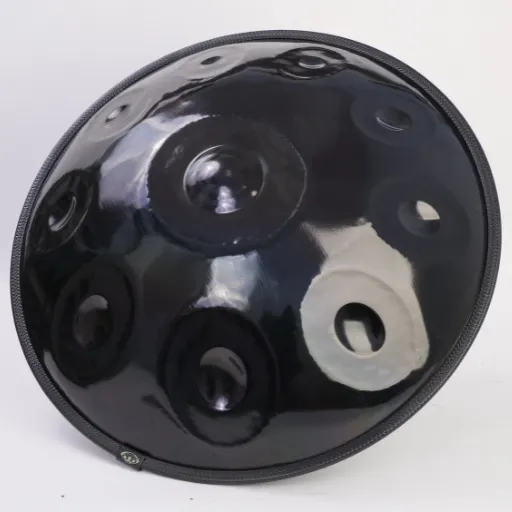
Some makers occupy the very pinnacle of the handpan world as leaders with a reputation for craftsmanship, innovation, and quality in their instruments. Some noteworthy names are:
1PANArt Hang®
Often considered the original creatives of the handpan, PANArt brought the first generation of Hang® into existence during the early 2000s. The instruments, made in Switzerland, were manufactured with great care with a special patented material named Pang®. There has always been a very high demand for them because of their cultural importance and innate rarity, making PANArt Hangs treasures for collectors and musicians alike, embodying both musical and artistic paradigms.
2Yishama Handpans
Yishama Handpans is based in Israel and enjoys a fine reputation for sonic exactitude and highly intricate tuning procedures. Every instrument is handcrafted and blessed with deep, rich tones with great sustain. Working often with artists, Yishama is one of the top choices for professionals who need customized soundscapes.
3Ayasa Instruments
Headquartered in India, Ayasa Instruments is popular for balancing affordability with performance. Their handpans are tuned in a variety of scales that address various musical genres. Considering their emphasis on affordable pricing with unwavering quality, Ayasa has become a byword for beginners and amateurs worldwide.
4OCTAVE Steel
From the United States, OCTAVE Steel fuses high technology with classic handpan-making methods. Considered to be the most rugged build-wise among all handpans, the OCTAVE Steel designs survive well tonally in adverse weather conditions. Their offerings include custom scales and finishes, allowing musicians to tailor their instruments to their preferences.
5Echo Sound Sculpture
Made in Germany, the Echo Sound Sculpture is the maker of the handpans with complex harmonic overtones and resonant bass tones. These instruments are much appreciated for their excellent tuning stability and innovative constructs that include experimental scales challenging the limits of traditional handpan music.
6Meraki Handpans
Focusing on warm-sounding instruments with melodic, bright, polished finishes, Meraki Handpans in Greece pride themselves on the attention to detail in their handpans. Each handpan is mentally put to the test through quality assurance to secure the consistent and captivating voice. The ambitious organic approach to its sustainability also appeals to the green-minded musician.
Choosing the Handpan Brand
Choosing the right handpan usually comes down to budget, scale wanted, craftsmanship, and tone preference. While established brands will rarely let you down, the upstarts will disrupt the industry by offering new perspectives on design and sound. Whatever brand it may be, investing in a quality handpan ensures a satisfying musical experience, tailored to the musician’s own needs.
Handpan Music and Its Impact

The most profound impact is brought by handpan music upon the player and the listener. The calming and melodic tone assists in calming and reducing stress, so that it creates an ambiance for meditation and is thus a favorite in yoga and sound-healing circles. The instrument’s singular soundscape stirs emotional utterances and deep concentration, giving way to creativity and mindfulness. Handpan performances also wonderfully draw in the audience, building an experience that brings the people closer.
The Influence of Handpan Music on Relaxation and Meditation
For me, the calming music of a handpan has always served therapeutic ends in my practices of relaxation and meditation. The sparse resonant tones of this handpan create quite an unreal space that somehow permits me to disengage from mundane distractions and give importance to my inner self. These calming vibrations are unique to my inhalation and heartbeat in carrying me toward calmness. The sound textures of the handpan nurture in me the present-moment awareness from which tension and stress dissolve.
Many times, those unusual tones from the handpan act as my anchor as my fleeting thoughts try to sail across during meditation. Every single note of mine has to be a loving gesture, gradually escorting me into a deeper realization of self. These flowing melodies harbor the pulse of life along the reflective patterns and breath work. The handpan grounds and elevates any walk, be it guided meditation or when it is simply my intention to calm my heart.
On days when the air is filled with chills of regeneration, I hand over everything and just let go to it; on others, it lifts my spirits and refreshes my mind. To the soul, the handpan is a deep trance worthy of nurturing clarity of thought and well-being of hearts.
Exploring Popular Handpan Music Genres
Ambient/Atmospheric
Slow and long, with bouncing tones meant to take the mind to some state of calm contemplation. Used during yoga, sound healing, and meditative practices.
Fusion Handpan
Converses with other soundscapes such as electrobeats, world percussion, or orchestral ensembles, proving handpan’s ability to mold into mainstream contemporary music.
Percussion-Based
Emphasizes strict rhythms and patterns, treating the handpan as both melody and percussion instrument. Appeals to jazz and traditional drumming enthusiasts.
Ethnic/Cultural
Celebrates handpan integration with traditional sounds like tabla, didgeridoo, or oud. Keeps culture alive while experimenting with handpan sounds.
They collectively give the audience a way to appreciate a facet of handpan music and give the audience ways to relate, either through relaxation, expression, or narration of sound.
Frequently Asked Questions (FAQs)
Which are the finest handpan brands for beginners?
Speaking of the best handpan brands for beginners, one should always mention such giants as RAV Vast and Amara. They provide good quality instruments that are very easy to play and produce beautiful resonance. The RAV Vast, for example, has several scales, including the famous Kurd and Celtic Minor. The buyer may also want to consider stainless steel handpans, as they have a longer lifespan and also better sound quality. A great number of handpan makers also make special beginner series instruments meant for new players.
How does one choose the right handpan for their style of music?
Choosing the right handpan depends on the style of music one prefers and one wants to explore notes and scales on a handpan. For melodic improvisations, it is best to consider handpans with more than 10 notes to improvise freely. Then, just also look at the workmanship, materials, such as nitrided steel or stainless steel, which can either make it last longer or enhance sound quality. It is also wise to listen to all sorts of handpan sounds from different manufacturers and brands to find some that resonate with you as far as style is concerned.
What is the quality behind a handpan, and why does it matter?
This question is worth asking because quality truly does impact both sound and the playability of a handpan. The best-quality handpans are produced with precise craftsmanship and with materials chosen for maximum resonance and timbre, amplifying the candidate’s best qualities on a single instrument. A handpan of good quality should be clear in its overtones and able to sustain its notes so that the instrument is pleasurable to both play on and to listen to. In this regard, Panart and RAV Vast are other names associated with very fine craftsmanship, which guarantees the instrument has the best possible sound quality to communicate with and inspire a musician. Investing money in a quality handpan could turn the whole act of making music into an enjoyable moment. This would be a much better experience for the musician and would fill their lifetime with joy.
Are there any stand-out handpan makers?
Yes, indeed! Several handpan makers have been recognized for their craftsmanship and exclusive sound. Among the top-handmaking firms are RAV Vast, Panart, and Aura Handpan, reputed for their design ingenuity and efficiency in material usage. These manufacturers enjoy a considerable loyal player base among handpan musicians who value the care and durability of their instruments. Typically, each maker provides several models to enable musicians to select based on preferences of scale, number of notes, and overall sound. One, however, is forced to embark upon journeys with various handpan manufacturers in search of the best instrument for his/her career.
What should one look for in buying a handpan online?
Some factors come into play when buying a handpan online, including whether the vendor has a good reputation, the quality of work of the particular handpan, and the ratings attached by the customers. Make sure to establish the kind of material used first, e.g., stainless steel, nitrided steel, etc., for this has a bearing on durability and sound. Moreover, check for the sound of the handpan, either through audio clips or video scenes showing the handpan already performing. Then, pay attention to the number of notes it has and the scales it can offer; this will indeed affect the way you play. Lastly, make sure there is a favorable return policy should it disappoint.
Are second-hand handpans for sale, and what should I know?
Yes, there are second-hand handpans for sale and would be an excellent option for buyers on a tight budget. When considering second-hand instruments, find out the condition of the instrument; look for signs of damage and/or wear that can affect viability. Inquire about the history of the handpan through how it was cared for and maintained, and whether it has ever been retuned. Also, it is worth comparing its prices with new models to be certain of the deal you’re getting. Many handpan players have found their quality handpans for less through second-hand markets.
Reference Sources
- The Handpan Mastery: A very detailed and precise directory of handpan makers the world over, including scales, materials, prices, and the all-important delivery options.
- Saraz Handpans: A guide to international handpan styles and makers, plus the construction and artistry behind them.
- Cosmos Handpan Blog: Best handpans for captivating music that also possess rare designs and paradoxically resonate with tones.
- Sylvain Paslier Music: A historical background on famous handpans: the original Hang by PANArt and others of interest.
- The Handpan Community: The forums on Reddit’s r/handpan provide opportunities for user reviews, discussion, and recommendations on handpan makers and brands.


