Choosing the right handpan scale can be a tough task, especially for newbies venturing into this hypersensitive world. The handpan, with its intoxicating magic of ethereal tones and perfect resonance, offers scales in plenty, each representing contrasting emotional territories and approaches to playing. So how could or should one find the most suitable scale for oneself? From scales of happy tunes to meditative soundscapes to the dynamic interplay of harmony, knowing the options gives one the leverage and keys to working wonders with the handpan. In this chapter, we will go over the most popular handpan scales among beginners, contrasting their features, moods, and preferred use cases. By this time, you will be able to walk out of there with the right scale choice that complements your musical intention and thereby uplifts your personal expression.
Understanding Handpan Scales
Handpan scales are collections of notes put together to produce a specific mood or ambiance. For the beginners, the most generally recommended scales are:
Minor (D Minor, Amara):
These are soft and introspective in sound and are perfect for meditative or emotional pieces.
Major (C Major, Kurd):
These scales add a radiant ambiance to uplift and create joyful and energetic music.
Integral (Celtic Minor):
These combine their major and minor counterparts and stand for equilibrium and suitability for different musical styles.
In selecting a scale, take into consideration the feelings you want to express or the reason behind the music. Ease of play is also important when at the beginner level. Most of the scales that suit beginners tend to be quite intuitive and forgiving, allowing for somewhat of a natural progression with your handpan play.
What is a Handpan Scale?
Basically, a handpan scale is an arrangement of notes tuned into the handpan instrument, presented in a given musical order. The scale becomes a language in the music through which emotional characteristics can be expressed, offering a different experience for the listener based on its design. Most handpans come tuned in just one scale, presenting some seven to nine notes carefully laid out around the radius of the instrument.
For example, the more common, well-liked scales such as D Minor instill the ambience of calmness and introspective feeling, while the more vibrant Celtic scale reminds one of energy and joy.
With knowledge of these musical frameworks, the player can immediately access a diversity of moods and themes, rendering the handpan highly versatile as a medium of artistic expression and mode of storytelling. And with a careful choice of the scale best suited for your individual preferences, you open a new window for untapped creative avenues and gain an edge in musical performance itself.
Features of Handpan Scales
Handpan scales are made to stir certain feelings and create ambience; this is what directs a player’s creativity for expression. Each scale has its peculiar tone set that may employ diatonic, pentatonic, or exotic tones suitable for diverse musics: the Kurd scale, for example, is famously flexible and is used by players who want to perform both sorrowful and uplifting pieces. On the other hand, the Pygmy scale is calm and meditative, which fits perfectly with an introspective composition.
The basic frequency of the note at the centre of the handpan, usually called the ding, serves as an anchor for the scale and, thus, determines the pitch of the instrument. Following this, harmonic tuning of the notes around the ding creates the unique resonance of a handpan. With ever-developing handpan-building techniques, the precision of handpan tuning has improved too, so that nowadays one may talk about very consistent overtones and harmonics.
Also, some builders create hybrid or custom scales, combining traditional elements with modern ones to suit a player’s idiosyncratic style. These bespoke designs may even have extra notes or altered tunings for greater musical flexibility. By selecting a scale that fits their own taste, players may, therefore, feel every emotional spectrum from soothing meditations to high-energy grooves, ensuring that every concert is heartfelt and original.
Popular Handpan Scales Overview
Handpan scales create various contours in the sound and emotional universe of this instrument. Each provides a varying mood and affordances for application in different situations, be they meditative practices, performances, or the sheer joy of musical experimentation.
1. D Kurd
The D Kurd scale is widely favored due to its versatility and neutral tone. Being rich and melodious in character, the D Kurd scale can comfortably fit into soft improvisations and relatively dynamic composing settings. The notes usually include D, A, Bb, C, D, E, F, and G, rendering an emphatic beauty and sonic harmony.
2. Celtic Minor (or Amara)
With an acute soulfulness and reflective melancholia, Celtic Minor (or Amara) has become a favorite for artists wishing to stimulate contemplation. This is mostly made up of the following notes: D, A, C, D, E, F, and G, producing an archaic, earthy tone that paints black-and-white histories and symphonic pieces.
3. Integral
Established between uplifting and contemplative vibes, the Integral scale finds itself in the midway balance of the two moods. You may find this scale carrying notes such as D, A, Bb, C, D, E, F, and G, giving it ample room for wide and open improvisations focusing on ease and expression.
4. Hijaz
The scale of Hijaz goes about with the exotic and mysterious tones fit for Middle Eastern-style music. It carries vibrant, sharp tones while providing dramatic and intricate auditory experiences with notes such as D, C, Db, F, G, Ab, and Bb.
5. Pygmy
The Pygmy scale would call for deep meditation as it is highly calm and soothing, fitting well with tranquil settings. Its simplicity and depth come from a structure such as D, A, C, D, E, G, A, and C. It is excellent for mindfulness-related concepts and peaceful adjoining scores between the hands.
6. Aeolian
Its resonance is seen among players looking beyond modern minor sounds. With melodic A, C, D, E, G, and A, Aeolian expresses a contrary thought that moves smoothly, well-suited for present and experimental styles.
To understand and choose the right handpan scale, a musician can really sell their connection with the target audience emotionally. With such a vast variety of available scales, the creative possibilities are infinite. It is encouraged for musicians to engage with these scales to find their own voice and unleash the far-reaching power of this remarkable instrument.
Minor Handpan Scales
The minor handpan scales are indeed the more soulful and versatile ones. It sometimes induces inner thought, mystery, or calmness in one’s state of mind, perfectly suited for expressive or meditative music. Some common ones are D Minor, Amara, and Kurd, all of them well-loved because of their richness: embryonic sounds of these scales serve to channel the yearning of the soul in a pair of melodies that are both simple and very moving.
Delving Into Minor Handpan Scales
Minor handpan scales are known for deep emotional resonance and are usually melancholic and introspective. They are more suitable for genres or compositions that demand some sort of expressiveness or atmosphere of reflection. Popular minor scales in the handpan world include Kurd, Amara, Hijaz, and Celtic Minor, all with different musical traits and possibilities.
- Kurd Scale: The very nature of the Kurd scale makes it a good complement to compositions that may want to take on a more positive or darker tonality.
- Amara Scale: The Amara scale, on the other hand, represents peaceful and calm, serene tones that have gained acceptance in relaxation and meditative music.
- Hijaz Scale: Hijaz scale, however, is a great Middle-Eastern tone master with exotic intervals that allure one.
- Celtic Minor: Meanwhile, the Celtic Minor style is considered rich in storytelling qualities that evoke wonder and timelessness.
Handpan players who use minor scales commonly find that these tonalities are apt to impart some degree of emotional depth and to create a deep connection between the artist and the audience. Experimenting in the dynamics and the nuances inherent in these minor scales can help artists sustain these influences while creating truly memorable performances.
The D-Minor Scale and Its Atypical Characteristics
The D-minor scale is said to be one of the most poignant and soul-stirring keys, its expressiveness being the reason frequently mentioned. The very intervals of the scale produce a distinctively hauntingly beautiful progression, enough to stir introspective thoughts and intense heartfelt feelings. It has continued to be such a versatile scale through time for the very reason that many artists in different genres use it in creating classical pieces as well as modern cinematic soundtracks.
Modern tools and techniques may be used in a deeper exploration into the peculiarities of D-minor, including advanced music analysis and even AI-assisted compositional software that could provide an artist with a fertile ground to experiment further in harmonic layering, rhythmic variation, and dynamic phrase shaping, all contributing to the evocative possibilities of the scale. The scale calls in deep investing in listening, regardless of whether an artist decides to swim down the path of a sorrowful melody or a cheerful counterpoint.
Benefits of Playing Minor Handpan Scales
1. Draws Deep Emotional Response
Minor handpan scales—the D minor, especially—are said to evoke deep emotional responses in the listener. Their melancholic and introspective tones can dip into anything: meditation, relaxing, or just telling a story through music.
2. Improves Mental Disposition
Practicing these minor handpan scales brings about a sense of present meditation and the release of stress. Stimulating calming atmospheres from their fairly soothing sounds of nature works against any form of anxiety and helps maintain mental clarity.
3. Versatile Musical Expression
Through their different tonal characters, minor scales present the player with the opportunity of trying out different musical expressions. They can try to build up ominous, fascinating melodies or just work on layer harmonies, both tapping into the creative energy that these scales give.
4. Aids in Versatility Across Genres
Minor handpan scales are considered flexible, as they do well in various settings: world music, fusion, ambient, and cinematic compositions. This flexibility makes their choice attractive to musicians from all genres.
5. Aids in the Skill Development of Players
Playing with the minor scales aids the agency of a player in the comprehension of harmony, rhythm, and improvisation techniques. These scales are attractive to musicians of all levels of proficiency since they give an easily grasped structure for a novice while presenting greater challenges in layering to an expert.
6. Helps Build Interaction with the Audience
The essence of the minor scale is enough to build interaction with listeners and leave them with an unforgettable aural experience. From grand, huge soundscapes to delicate, touching phrases, they draw the audience with all their might to the live show or recordings.
7. Cultural-Spiritual Connection
Minor scales trace and have their origins in cultural musical traditions; this offers the doorway for linking contemporary creative expression with these traditions. Furthermore, the meditative nature of these scales stands to support ritual workings, yoga sessions, and healing methods.
8. Open Channel to the Desire for Collaborations
They are suitable candidates for ensemble rendering because they are universal in appeal and harmonically compatible. They join forces with other instruments and invite cooperation toward a fuller, richer texture.
9. Foundations for the Design of Fresh Sounds
Minor handpan scales allow composers and sound designers to design a unique ambience for film, gaming, and other creative outlets. The whole range of tonality encourages innovation in the domain of acoustic and digital music production.
10. Power of Nearness to Listeners
There is something about minor key music that creators and audiences alike feel an emotional bond toward. They want to convey a musical narrative with handpan players able to help flesh out that story and carry the weight of the emotions toward containing memories strongly resonating with their audience.
Choosing the Right Scale for Beginners
A beginner would want to select a handpan scale that is relatively simple, yet very versatile. The D Minor or Kurd scale is a favorite choice among beginning handpan players because it is almost equally halfway between uplifting and blue tones. It is easy to play these scales; therefore, anyone can find harmony in melodies, even those not much into music. This versatility will spill over into many different styles of music, making the learning experience rather fun, and clinching the freshness of confidence in the students.
Identifying Beginner-Handpan Scales
When it comes to identifying beginner-friendly handpan scales, I would begin with the ones that are simple, harmonious, and forgiving for the player. For a newcomer to the handpan, major or minor keys such as D minor, C major, or Amara are options that are often good options. A lot of the time, these scales just require very little work to intuitively come up with pleasant accidental melodies, allowing the beginner to create sound without feeling too constrained by more complex note configurations.
D Minor Scale: For example, the D Minor scale is a powerful mechanism as it carries a soothing tone in its intent, yet is melodic, with which there is extensive diversity in meaning. Another reason it works well for meditative or soulful music is that it is an ideal scale to describe the intent of practicing emotion in the language of sound.
C Major Scale: The C major, on the other hand, brings bright and uplifting tones and is an easy scale for practitioners interested in experimenting with lighter and happier tune types.
Beginning players should select a scale that enables them to develop skills in the common areas of rhythm, hand coordination, and dynamics instead of facing the difficulty of dissonance. Scales friendly to the beginner will harmonize regardless of how the notes are arranged. These scales serve very well to nurture confidence in the player who might begin thinking out of his/her style.
How to Choose a Handpan That Suits Your Style
The exact choice of handpan depends on recognizing your musical taste and status, along with the features and qualities of the instrument itself. The scale of a handpan should be a consideration, as it determines the feel and atmosphere of your music. It could be thought that the D minor scale and Celtic scales are well-loved among beginners for their universally harmonious tones, hence suitability for meditative and atmospheric types of music. In contrast, the professional player is in a better position to use lingual complexity, whether it be Hijaz or Integral, to form intricate soundscapes.
Another important consideration is that of handpan materials and craftsmanship. The high-quality handpans are either made of nitrided or stainless steel, giving higher durability and build quality for precise tuning. Then comes the number of tone fields (notes) which should match your ambitions- more tone fields indeed means more possibilities but this may feel ever so overwhelming for the beginner who has just started exploring the realm of sound. Portability and size must also be factored in when the choice of an instrument is entrusted to one who loves to move about or has to fit into their constricted studio space.
So, brand reputation through customer and professional reviews could work wonders in indicating the actual fine craftsmanship and quality sound of a given handpan brand. You should look into the issue of sustain, how the instrument responds to touch, and its resonance. In a perfect world, an instrument’s demo and hands-on testing should assure the purchaser that the handpan, in any way, echoes his style of play and creative objectives. Whether the pursuit is for mellow tunes or a complex play of rhythmic noises-instrument inspiration is really the key to unlock your artistic potential.
Practical Tips for Beginners
1. Start Simple
Played simply at first, scales and rhythmic patterns build familiarity with the instrument in terms of layout and sound. Many handpans are tuned in specific scales, thus making it possible for people to produce harmonious notes without any formal musical training.
2. Practice Consistently
Try to create habits for practice sessions; even if you manage only 10–15 minutes a day, it will suffice. Regularity builds muscle memory that refines handpan-playing skills over a period.
3. Basic Techniques
Master rusty techniques for handpan playing relative to the handpan: with fingertips, thumb, and palm in combinations of soft, guided movements. There has to be a proper hand posture to deliver clear, resonating tones.
4. Learn from Tutorials and Classes Online
Learn and practice through high-quality tutorials and virtual classes from experts. Such resources can allow guided practice and often offer beginner-oriented learning paths that can be followed.
5. Combine Rhythms and Dynamics for Greater Effect
Try varying your rhythm, expirations, and dynamics. Go slow at first. As your confidence grows, speed up a little along with increasing tempo complexities.
6. Invest in the Right Accessories
Put your handpan through the safeguards, including a padded carry case and stand. Not only will these ensure it stays safe, but they will also make your practice more comfortable.
7. Active Listening
Spend time getting to hear great handpan players on record. This will allow you to get an idea about the quality of their tone, the development of the idea through phrases, and innovations in playing techniques that one can apply in their style.
8. Communities
Connect with handpan communities through forums or social media. Connection with fellow enthusiasts doubles learning, offers support, and keeps motivation going.
9. Upgrade Your Environment
Choose environments that foster the full resonance of the handpan’s sound. A room with good acoustics or open spaces does wonders in emphasizing the richness of the tones from an instrument itself.
10. Expand Later
Once you become confident with the basics, explore advanced scales, advanced techniques, and different models of the handpan. Working on another variant of an instrument or something tuned to a different scale can encourage new creative expressions.
By following these tips, beginners find strong foundations to grow upon, while having a great time learning and enjoy every session along the way.
Comparing Popular Handpan Scales
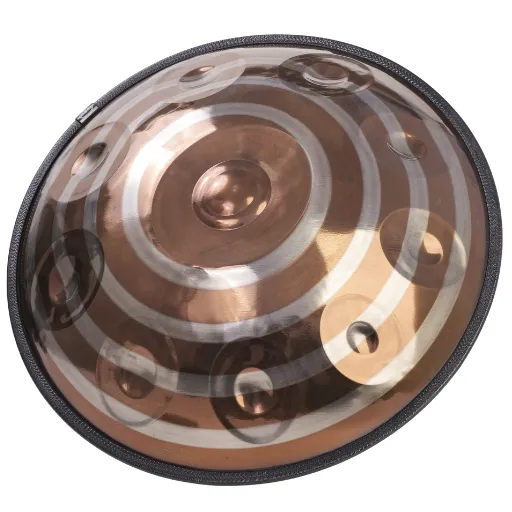
Being able to appreciate different musical moods and feelings is critical to understanding handpan scales. Whereas some scales remain very common, others remain very rare:
1. D Minor (Celtic Minor)
The D Minor scale is versatile, capable of conveying equally soothing and uplifting melodies. This scale or tuning is favored by almost all beginning learning handpan the reason being accessibility.
2. Kurd
By nature, this scale is deeply expressive-the feeling is of some sort of reflection and thought. The scale, in itself, is very versatile; hence, the performers can use it to express anything from cheerful to somber tones.
3. Integral
The Integral, with pleasantly warm, harmonious tones, sounds very calming and relaxing; the noises are suitable for meditation and healing.
4. Hijaz
As a trend, it has an exciting, dramatic voice, which would be nice for Middle East-styled melodies. Its individual state of tone gives it great charm.
Each of these scales can provide a totally different musical experience-a player can choose a scale that fits a personal style or use. Trying out different scales can help free one’s creativity in new directions.
Scale Comparison: Kurd vs. D-Minor
The Kurd scale is more versatile and meditative, while the D-Minor scale is darker, melancholic, and introspective.
Both scales offer unique soundscapes, and the choice ultimately depends on personal preference and the desired emotional tone of the music.
Comparing Popular Handpan Scales
In a truly kaleidoscopic array of handpan scales, the musician is provided with various options by which to establish ambience and emotive energy. Each scale has a specific atmosphere: pitch and connotation-players must have a working knowledge of it to be able to characterize and use it. Five are presented here with the basic characteristics and usages of each:
D Kurd Scale
- Mood: Warm and introspective, and harmonious
- Tone: Balanced, resonant, soulful
- Emotion: Induces a feeling of calm, slightly tinged with introspection
- Playability: Easy; most students love the scale
- Versatility: Actually very versatile with nearly all genres of music
- Common Usage: Meditation settings, film scoring, improvisations
- Popularity: Probably among the most commonly known scales for both beginners and professionals
Celtic Minor Scale
- Mood: Mysterious, flowing, atmospheric
- Tone: Ethereal, mournful tone, soothing
- Feelings: Accentuates a combination of deep introspection and soft melancholy
- Playability: Easy to medium, appropriate for intermediate beginners
- Versatility: Very versatile, very good for folk/world genres
- Common Usage: Ambient-type concerts, storytelling, relaxation music
- Popularity: Very common in folk-leaning compositions
Hijaz Scale
- Mood: Exotic, dramatic, emotional
- Tone: Complex, energetic, distinctive
- Emotion: Passionate and highly intense with a fairly heavy Middle Eastern flavor
- Playability: Intermediate; the artist has to maintain utmost precision and control
- Versatility: Moderate; higher efficacy with ethnic and traditional styles
- Common Usage: Middle Eastern theatres, cultural shows
- Popularity: Very selective, yet highly esteemed for its uniqueness
The Pygmy Scale
- Mood: Calm, relaxing, soothing, meditational
- Tone: Minimalistic, soft, laid-back
- Emotion: Calm, uplifting, peaceful ambiance
- Playability: Beginner’s level; tonality is symphonic
- Versatility: Highly versatile; perfect for solo meditation music
- Common Usage: Meditation, yoga, mindfulness classes
- Popularity: Therapeutic and spiritual use
Equinox Scale
- Mood: Reflective, warm, balanced
- Tone: Lyrical, harmonious, expressive
- Emotion: Creates an essence of curiosity and tranquility
- Playability: Suitable for intermediate players willing to explore diverse tones
- Versatility: Versatile, adaptable across various genres and styles
- Common Usage: Put to its best use as cinematic scores, improvisations, and spiritual performances
- Popularity: That which is now gaining momentum among the creative artists and storytellers
Each scale brings forth its charm and dynamism on any stage, and the player is thus able to articulate emotional tone and purpose as intended. Musicians, by knowing the qualities their scales possess, may further plunge deep into their scales and decide upon the one whose qualities best suit their creative vision.
Tonal Range and Sound Profiles of Different Scales
Each scale exudes a particular tonal range and sound to shape the mood and expression of an instrument. For example, there is an association of the major scale with cheerful, bright, and uplifting tones. Hence, the worlds of pop music, classical music, and folk, it cuts a soufflé now and then, for its scale intervals give a conscience to harmonious melodies, and all of us can literally hum with it.
In contrast, melancholy and dark shades envelop the minor scale while sorrow, cut into many feelings, stands in the limelight with cinematography and deeply felt music, not forgetting tension. The chromatic-generated possibilities climb until they nearly touch limitless dramatic functions, usually signaling suspense in transitions.
In its discrete way, the blues scale provides a unique combination of the minor pentatonic type with a “blue note”-a.k.a. diminished fifth-for a soulful and even raw emotion. This scale forms the very heartbeat that blues, jazz, and rock pulse on. Articles referred to as exotic modes, for example, Phrygian dominant, offer a Middle Eastern or Spanish tint, and they are frequently used to add intrigue or even depth in world music and experimental genres.
Exploring the different tonal characteristics and essential flexibility of various scales enables musicians to build soundscapes that nicely weave into one narrative: seriously captivating and especially connecting with the audience. Before that, the choice of a scale greatly defines the feelings that a piece will affect on the listener; thus, any composer or improviser will happily cherish the skill to give a serious emotional character to any piece. Studies show that the usage of diverse scales in compositions encourages creativity while keeping the listeners entertained.
Cultural Backgrounds behind Handpan Scales
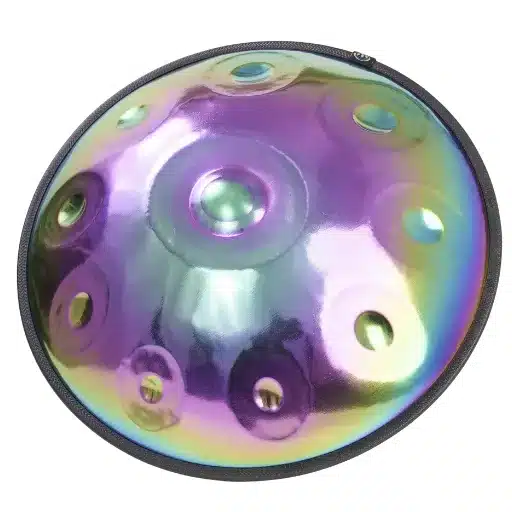
Handpan scales draw inspiration from various cultural backgrounds and musical systems of the world. Many of the popular scales used in handpan music are based on some old musical ideas, such as the maqam system from the Middle East, raga from India, or rhythmic formations from West Africa. Thus, the instrument reveals a strong ability to vividly illustrate different emotional tableaux: the Celtic or Dorian scale, for instance, leans toward the folk kinda music of Europe, whereas pentatonic scales have strong roots in Africa and Asia. This mixture of cultural elements stands for the much-celebrated acceptance of the handpan, thus becoming a union of cross-cultural artistic expressions.
Societal Influence on Handpan Scales
Cultural backgrounds account for the development and use of handpan scales; that is, such a scale gets odd tonality as exported through association with the musical heritage of a certain geographical location. To put it in simple terms, the Akebono sits properly in the pentatonic scale system so prevalent among Japanese traditional musics and blew Aurelia from Japan. Conversely, Hijaz centres and is deeply placed in Middle Eastern and Arabic musical traditions, distilling alchemic exotic flavours through its peculiar intervals.
In addition to the Western tradition of contemporary and classical music becoming prominent in handpan design through further studies, integrating diatonic and chromatic scales was considered an excellent way to appeal to those musicians versed in Western contemporary harmony, and so acting as a bridge between the traditional handpan music and modern Western compositions. Following what the communities in music would subscribe to, this broad amalgamation of diverse influences makes for inclusiveness, which allows artists from various cultures to dive into the art of handpans.
Among other cultural identities is the Celtic scale, popularly believed to be associated with Irish and Scottish folk music traditions. This scale is ethereal and melodious, reflecting the Celtic traditions of mystical landscapes and storytelling. Furthermore, major and minor counterparts derived from Indian classical music, such as those found in the Raga system, bring deep emotional tones and improvisational possibilities to the handpan.
According to recent research from various music platforms, high scales with cultural balance have more audience appeal; thus, this form of enlightenment encourages participation in handpan music from all over the world. Mixing scales from several backgrounds serves to make artistry out of the handpan and lead them into innovatory works that radiate across cultures.
The cultural skills affecting the handpan scales, in the long run, extend beyond just the musical outlook; they constitute the one meeting place within world art that keeps evolving and extending through shared praxis and modern technological realization.
How Cultural Backgrounds Shape Sound and Style
With the impact of cultural background, the sound and style of music worldwide vary. For instance, traditional Middle Eastern maqams guide complex and highly expressive melodies, whereas West African rhythmic structures emphasize dynamic interplay and affluence in energy. These peculiarities, just as a way they charm audiences, go on to influence handpan musicians and artists in their creations and instrument designs, the tunings of which are regularly influenced by regional ones. Importantly, with cultural exchanges, there grew new stylistic amalgamations, such as one that fuses traditional Indian ragas with Western harmonic structures.
Data from the broader trend in music points out that audiences go on to embrace these hybrid styles since they open up a new level of depth that resonates with different audience groups. Furthermore, the soundscape’s evolution is being further motivated by new technologies; accordingly, digital music working tools allow artists to instigate experimentation with scales and tones grounded in heritage while modernizing offensive tones. These adaptations show how culture can influence forms of uniquely defined music with a rich context that transcends scales of promiscuity, deepening the engagement on the global listening front.
Case Studies of Popular Scales and Their Origins
1. Pentatonic Scale: The Most Ubiquitous Scale Around the World
The five-note scale produced per octave is the most popular scale throughout various cultures. This scale, relating to some ancient practices, corresponds to East Asian folk music, African tribal rhythms, and even Western genres, such as blues and jazz. Very basically, its universality relies on its simplicity and flexibility; these characteristics are useful in improvisational and cross-cultural musical fusion. For instance, in traditional Chinese music, the pentatonic scales assist in melody construction, with connotations of harmony and balance. Likewise, this scale features glibly in Delta Blues via its direct influence on soulful storytelling through music.
2. The Heart of Indian Classical Music
Ragas are manifested as complex melodic structures used in Indian classical music, where each tries to produce different emotions at a particular time. A raga is made up of certain notes, the order of notes, and accentuation on the notes, but with the freedom of casual interpretation through improvisation. For example, Raga Yaman sets the mood and is uplifted while carrying the glory down from many centuries. As ragas remain inseparable in making music, they are embedded deeply into cultural and spiritual activities that hold everything together, from festivals to meditation practices across India.
3. Arabic Maqam-System: Expressive and Nuanced
Maqam gives a foundation to Arabic music and comprises numerous varieties of scales that display its perception according to its uniqueness and organization; for instance, Maqam Rast lays down a serene, majestic atmosphere and is often taught as the orientation for learners. What makes the Maqam system unique is the presence of microtones; that is, microtones are notes between semitones used in the Western scale, which creates a deep emotive effect when applied. These microtonal intervals convey so much emotion in Arabic music that they allow the artist to express subtle changes in their feelings.
4. Western Major and Minor Scales: Foundations of Contemporary Composition
A major heresy against Western classical and contemporary music. In the tonal system, the so-called C should give a bright feeling with its major nature, but A in minor should be reduced or felt with a touch of melancholy. Composers like Beethoven and Mozart attained harmonic splendor and hence the oomph to make symphonies that would become classics. Swan and Chen, in this era, are keeping their skills in the succession of pop, rock, and film music with these scales, with reference to versatility and ease of adaptation.
5. The African Ngoma Tunings
The Ngoma tunings of traditional African telling and drumming rely on the interplay of rhythm and scale. The unique suiting style of cyclic repetitions, polyrhythms, and intervallic tunings resonates with community gatherings and is extremely important for procession and ceremonial purposes. The intricate and dynamic layering of sound offers pemba and pluralism simultaneously, emphasizing the African cultural significance, accommodating unity in traditions.
These cases serve to show that scales are not merely technical constructs but are essential cultural tools whose dynamic character absorbs the creativity of their origin and continues to stir contemporary creativity. Through knowledge of the origin and evolution of scales, both musicians and producers can be encouraged from a great pool of inspiration to create a meeting point for connecting divorce and collaborations on the international scene.
Reference Sources
- The Sound Artist Blog: A detailed exploration of three common and beginner-friendly handpan scales, along with tips on mastering them.
- Master the Handpan Blog: A comprehensive guide on how to choose the scale of your first handpan, including popular beginner scales like AmaRa, Kurd, and Magic Voyage.
- Handpan Shop EU: Recommendations for beginners, focusing on minor scale handpans for their neutral and versatile atmosphere.
- Handpan Canada Beginner Guide: Insights into selecting the right scale and number of notes for a beginner handpan player.
- Isthmus Instruments Blog: A comparison of D minor handpan scales, offering insights into scale variations and their suitability for different players.
Frequently Asked Questions (FAQs)
Ready to Begin Your Handpan Journey?
Understanding these scales is just the beginning. Each handpan scale offers a unique pathway to musical expression, cultural exploration, and emotional connection. Whether you’re drawn to the introspective D Kurd, the mystical Celtic Minor, or the exotic Hijaz, there’s a scale waiting to resonate with your musical soul.