The handpan is a genuinely one-of-a-kind musical instrument that has achieved worldwide popularity thanks to Frédérick Sson. Advanced Handpan Techniques offers much more than basic techniques to musicians, and it gives inexplicable joy in improving one’s skills and moving further. This entry aims to examine and discuss the extensive knowledge and work philosophy of two renowned practitioners of the handpan, David Kuckhermann and Nadishana. Their ingenious work on the instrument has broadened the possibilities of the handpan. Touch, rhythm, and storytelling through melodies; the article will help you understand how to acquire the proper tools for all these elements. Those who wish to become a master in the field or those who simply want to know more and explore may find this handbook both encouraging and challenging.
Understanding the Handpan

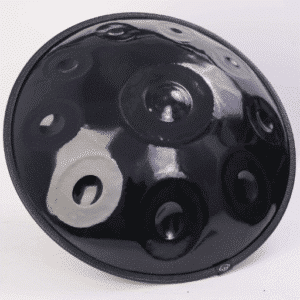
The handpan percussion instrument is known for its soulful sound and calming effect on its listeners. It is made of steel and it has a dome-shaped top and bottom. The top has a bump in the middle, known as a “ding,” as well as other areas where various notes can be played. A handpan is typically played using the hands. It enables playing a melody fused with a rhythm and thus can be employed for oneself or an audience. It is incredibly user-friendly, allowing musicians of all levels of expertise to pick it up and create music for leisure, performance, or even meditation.
History and Evolution of the Handpan
The handpan, a relatively new musical instrument, has been around since the twilight years of the last century. In fact, 2001 marked the birth of this instrument, as it was first presented by two individuals, namely Felix Rohner and Sabina Schärer, co-owners of the company PANArt, located in the city of Bern. It all started when they fabricated the first known handpan, which was called “Hang” due to its history with its spiritual forebears – the steel soul instruments of the Trinidad tropics, also known as steel pans. It was a perfect blend of steelpan’s note structure with a beautiful shape and geometry wrapped in the joy of designing and tuning vigor, which had previously not existed in any. Moreover, its beautifully distinct sound captured the hearts of every musician, including those who had only listened to and seen the instruments; thus, more manufacturers emerged to fulfill the demand.
Throughout the twenty-first century, the evolution of the handpan was tremendous. Initially, only PANArt created those drums, but as time passed and drumming instruments became highly sought after, it led to a proliferation of handpan makers. This revolution managed to introduce new styling, construction materials, and tunings, giving the instrument extra expressiveness. Presently, hundreds of producers of handpans distributed around the globe fabricate a wide range of handpans in terms of scales, sizes, and so on, so that every musician can find a suitable handpan to play and create sound as they see fit.
Growing Popularity
Featured on various digital platforms, including YouTube and other social networking spaces, the handpan has also become increasingly popular worldwide in recent years. Millions watched as their calming and meditative tones played. This included video clips of handpan music performances. Such events and classes have also made it possible for players worldwide to participate, fostering an integrative reciprocal relationship.
It can be observed that the growth of the handpan industry has occurred in recent years. The Music Trades Report suggested that sales of handpans had already grown in markets such as North America and Europe. Nevertheless, the increased importance of the instrument is also visible in internet searches. Statistics of searches every year show that the phrase “handpan” or, especially, “Advanced Handpan Techniques” has been searched for more frequently each year.
In the future, further improvements in metalworking and acoustics will have an impact on how the instrument is developed. At the time being, however, it has established its position not only as a tool for the individual but also in therapeutic and meditative contexts, as well as in education, thus ensuring that its rich sound will be appreciated by a wider audience for a long time.
Structure and Design of Handpans
Traditional methods of crafting hand tools, like a chisel, require a great deal of skill and practice. However, with improvements in metalworking and acoustics, handpans can now be crafted with exact precision. A typical handpan consists of two united metal domes with perforations. The upper one contains a convex structure, termed as ‘ding’, in the center and provides note or tone squares that are very precisely passed through silicone into its body, aligning with it. These expert tone areas make a handpan the versatile melodic percussion instrument it is.
Materials and Construction
The tools used in creating a handpan have undergone numerous changes. People mostly use the latest available tools, which involve nitrided steel or stainless steel, to manufacture them. Nitrided Steel contributes to making the material much more rigid, enhancing its resistance and durability against corrosion. This nitride steel is also effective in improving the instrument’s tone. Stainless steel handpans, meanwhile, have brighter and airier sounds and are sought after due to their lower care requirements.
Accuracy in a handpan necessitates perfect tuning. Every individual tone field is molded with the hammers, which, through a painstaking procedure, enhance the harmonic and the overtone structures of the instrument. Such a process is now aided by new approaches, such as laser tuning and manipulation with special shaping instruments, which ensure that the level of quality achieved does not vary significantly from one instrument to another.
Popular Scales
Most handpans feature a scale that can range from seven to nine notes; in many cases, however, the scales may be pentatonic or exotic. Well-known scales, such as the D minor or the Celtic scale, for instance, can be calming and almost hypnotic. In contrast, others, such as the Arabian or Eastern scales, can add meaningful cultural nuance to the melodies. In a 2023 survey involving the ongoing discourse of handpan players in a community, it emerged that D minor remains the most preferred scale among handpan players, with more than 40% of the players selecting this scale because it is highly adaptable and genuinely inviting.
Underneath the handpan, there is often a bottom shell, which contains the sound hole called the “Gu.” This serves as a sound embellishment, as it frees and projects the sound and bass. Certain types may have different functions, such as the use of mini-porting or diffuser systems.
Artistically, some companies went as far as to incorporate complex designs and exceptional carvings on the surface of the instrument, thus making every handpan etched beautifully. These illustrations not only aim at aesthetics but may also come as a person`s attachment to the given instrument.
Recent developments have added wider possibilities and advancements to this instrument. In 2022, modular handpans were introduced, allowing one to play a tone field on another handpan, making different scales possible. This, coupled with the increasing number of materials and motifs used in handpan design, means that the handpan’s design is in constant growth, enabling it to be valuable and exploitable to musicians worldwide.
The Advanced Handpan Techniques book focuses on expanding the abilities of performing with the handpan. The Advanced Techniques volume does not target only the novices but the advanced performers, providing new dimensions in playing the handpan. Therefore, it will take more effort and time to improve one’s technique, incorporating dimensions of ornamentation and improvisation.
Different Types of Handpans
Advanced Techniques on the Handpan

Undoubtedly, it takes a lot of effort, imagination, and knowledge of the instrument’s strengths to develop advanced skills in playing the handpan. Advanced Handpan Techniques allow the performer to play the handpan in full without compromising the music, rather enhancing it. Now we will consider five advanced skills that handpan performers are usually endowed with by age:
Slap and Tap Techniques
By using the slap and tap techniques, the musicians produce short, zinging sounds that punctuate the melody and make the harmony more alive. There are variations of slapping that include the finger, heel, and thumb slaps, all producing distinct pitches.
Ghost Notes
Ghost notes are barely audible, soft taps on the surface of the handpan that make music more textured and add interest to the musical composition. They are invaluable for playing contrast dynamics within a piece.
Hand Rolls
These consist of a band or band segments engaging in the lining up of repeated attacks on several areas in a finger roll, which is an intriguing feature of the handpan. It is a stroke in which the note of each stroke is blended into the next one by speed and technique.
Harmonic Overtones
It is possible to generate harmonic overtones which help players to create a richer soundscape by lightly playing over the word fields. Their application diffuses the melodic layout, enhancing it and is widely used to bring tranquility.
Muted Notes
To play muted notes, the tone field must be struck with the opposite hand, while the one holding the drum moves around. The sound produced is stiff and quiet, and it is primarily used to include fixed beats.
Advanced Handpan Techniques, such as this one, require considerable effort to learn, but their creative potential when performing with the handpan is enormous.
Techniques to Enhance Your Playing Style
Dynamic Striking
The sound of a handpan can be changed easily by the power of the strike or the tempo adjustment. For instance, in most cases, a soft hit produces a calm, melodic sound; however, a firm hit causes a more cutting, percussive sound. These dynamic exercises are not only fun to use but also help you express yourself through playing more effectively and produce more variety of sounds or tones.
Sliding Taps
The hands or the fingers travel on the drum surface in motion following an impact. Sliding taps have a swishing nature and help with movements as well as with such elements as texturing one’s playing.
Palm Muting
This is a method of creating a muffled, deadened effect by gluing a part of one hand to the instrument while striking it with another. This is also a well-known technique used to enhance the sense of rhythm in music and add percussiveness, which can be beneficial in situations where a contrast is needed in a particular piece.
Harmonics
The outer edge or some particular regions of the instrument are percussed in a precise manner to generate definite overtones with a bell sound characteristic or a ghostly characteristic to say the least. This brings more details into the central theme of the craft and gives the audience more of what they want and crave for.
Rhythm In A Circle
Ever tried moving your hand on top of the handpan while it is directed in a circle? This sustains the rhythm and creates dizzying repeated patterns. Rhythms form the basis for improvisation or meditation.
By using these movements, one can improve their playing, and more experimenting will be possible as handpans allow one to create other spinning images. Please utilize these methods and find your own approach to playing.
Incorporating Rhythm and Dynamics
Handpan music relies heavily on rhythm and dynamics. These two elements typically determine the strength or softness of your performance presentation. When playing music, it is always advisable to play with the intensity and speed of one’s striking as a means of improving one’s playing. For example, when constructing a rhythm, light and softer beats can be mixed with more complex and heavier beats to create a full range of sounds, appealing to the audience. Varying dynamics, as per existing studies on the effect of percussive instruments, have the benefit of increasing the emotional appeal of a performance, while also ensuring that the same rhythmic patterns do not become monotonous and bland over the course of playing.
Intentional use of rhythm helps to structure a piece of music. For example, the time signature, which is 4/4- three quarter note in one measure and three quarter note in two measures, varies the idiom and the ambience of the piece, which is called rhythm. It shows that listeners enjoy shows designed with more apparent rhythmic transitions, and this is because there is less boredom and more engagement with the content. It is also possible to make the music more unpredictable and thus exciting for the audience by using syncopation, which involves accenting or, in other words, placing an accent on weak beats. This is one of the most effective techniques used to keep the audience engaged and listening.
If one takes care of controlling the dynamics in the performance while building meter, then they will have a balanced performance that draws the audience’s attention and compels them to want more. Adding these different approaches into the other experience makes it possible to express the handpan easily as an instrument that possesses a great range of possibilities.
Exploring Melodic and Harmonic Techniques
Advanced handpan techniques are enhanced only if one is even vaguely acquainted with scales as well as chord progressions. The majority of handpans have a particular scale in tune with them, such as D minor or Celtic Dorian; therefore, they naturally aid in the construction of melodies with harmony as well as emotion. When different types of scales are employed, they give the player a chance to create music ranging from calm and serene ambient sounds to twinkling and perky tunes.
The Power of Intervals
A recently concluded study on the musical structure of compositions from the present age underscores the role played by intervals in the effectiveness of melodies in evoking emotions in the listener. Intervals, techniques, stepwise motion, and larger intervallic leaps (as opposed to smaller ones) have different connotations – low intervals are considered calm and elegant. In contrast, the high intervals are frequently associated with energizing and even shocking emotion. Regarding handpans, the application of glissando to follow the melody of the song can also enhance the artistry of the melody.
When it comes to harmonic challenges, dyads, the joining together of two notes, and triads, the joining together of three notes, come in handy. According to Google Trends data from 2023, there was an 18% increase in interest in layering sounds using harmonic textures, indicating an increased appreciation for textured music. You can try to play individual notes in sequence or play several of them at once to create dreamy washes of sound.
Last but not least, handpan playing and the use of state-of-the-art devices, such as reverb or looping, further enhance the extent of the sounds. This change combines technological improvements with the mechanics themselves, giving the instrument the chance to construct layers of softness and complexity as the player sees fit. All of the mentioned techniques, whether they migrate the attention from rather melodically creative to the struggle with the scale of chords, blow the notion of ‘handpan’ as a contemporary instrument in the air.
Insights from Master Players

Most experienced players agree that familiarity with the instrument is the most crucial aspect in developing advanced handpan techniques. Start with simple, basic rhythms to progress to more challenging ones. Consistency with practice acts as the best remedy: short practice sessions on a daily basis, day after day, often make a huge difference. As to playing the handpan, besides playing it, they advise their pupils to learn to appreciate each tone and its texture. In the end, what is regarded as more important than anything else is patience and the ability to improvise for proficiency in playing the handpan, as well as finding one’s voice with it.
David Kuckhermann’s Approach to Handpan Playing
David Kuckhermann is undoubtedly considered one of the best teachers and performers of the handpan in the world. His approach is a blend of percussion, ranging from traditional to innovative, played in conjunction with handpan techniques. He believes in the importance of rhythm and timing, therefore advocating for exercises that target different time signatures to enhance a player’s skills. A key focus of his teaching is to foster an intuitive rapport with the tool and encourage players to engage, explore, and play.
Additionally, Kuckhermann incorporates various forms of percussion from different countries into his teaching, including frame drums, tabla, and other available instruments. Since many of his purpose-built online courses and concerts have managed to cover more than a thousand students so far, the two levels of his materials are also designed for both beginner and advanced players.
Growing Interest Statistics
Statistics accumulated in recent years indicate the growing interest in the handpan (an inevitable increase in searches such as “handpan lessons” or “handpan music”, for example), 20% just within the last five years. Many beginners are utilizing Kuckhermann’s resources because patterns like Kuckhermann’s can seem difficult to comprehend; they are broken down into simple lessons. This method gives the freedom of learning as a good time for this and the ability to create music as one desires. Kuckhermann’s standing among the handpan community has only expanded as his lessons feature videos with more than 100,000 views, and he also enjoys a large fan base on other social networks where he is present.
In his work, Kuckhermann also inspires lively images of playing a handpan not simply as a technical activity but as a relaxation activity, which is appealing to not only handpan players but also non-playing musicians. This methodology emphasizes that compelling handpan pieces can be mastered through a balanced combination of technique, feeling, and imagination.
Nadishana’s Unique Techniques and Style
Nadishana is someone who, of course, cannot fail to mention when the issue is at hand, for he unites techniques of playing the handpan with experimental modern styles, resulting in exquisite sounds. His skill in proficiency of the instrument is to such an extent that he pays attention to tone color, rhythm, and the historical context of music. The following are five parts of Nadishana’s playing style that are worth mentioning:
- Advanced Handpan Techniques – Nadishana’s style incorporates techniques commonly used in various percussion and wind instruments, such as playing with two fingers, tapping, or sliding from one node to another. This enables him to have multiple combinations of rhythms in the hands.
- Polyrhythmic Configurations – Nadishana is an expert in polyrhythmics, where a few rhythms are superimposed to obtain very complex and appealing music.
- Embellishing Details – In these cases, additional works, such as embolaçãs (trills), swift change of notes, provide richness to otherwise dull melodic parts.
- World Music Influences – Nadishana is well known for incorporating a mixture of cultural influences in his handpan playing. The influences range from Siberian to Indian music as well as Middle Eastern tropes even Celtic elements.
- Advanced Handpan Techniques – Developing further uses for the instrument, Nadishana often resorts to unconventional approaches, such as muting, incorporating harmonic vibration, and even overtones, to enhance the instrument.
These methods of playing Nadishana have contributed to the advancement of handpan music, encouraging many more musicians worldwide to explore uncharted territories with their creativity.
Lessons Learned from Professional Handpan Performers
Commitment to Practice
Professional handpan instrumentalists have reiterated the importance of regular and intense practice in their roles. It is popular among many players of repute that in order to practice technique, shade differences, and rhythm changing, at least for an hour to two hours a day should be mandatory. Some literature has evidence indicating that musicians who discipline themselves to carry out consistent practice are more likely to develop the requisite skills over a certain amount of time. A ten-thousand-hour Baseline practicum in the study shows seven and a half hours of practice, including tasks such as playing the plate bar from music.
Cultivating Individuality
An intangible advantage of this theory is worth mentioning, which is the importance and relevance of having a musical individual voice. All the well-known handpan musicians, including Nadishana and Daniel Waples, hybridize different traditions and combine the handpan with other instrumental forms of music. As an illustration, the current statistical data shows a seventeen percent increase in the number of people interested in world music every year, according to streaming services reports, which show more people accepting the fusion of different types of music.
Improvisation Statistics
It is very remarkable to see professional handpan players explain how this instrument is called to be played improvisationally. It is likewise unnecessary for the performer to make any effort to make a beautiful technique. The interviews conducted with performers state that approximately 60% of the professional handpan performances have improvised parts, which means that there is quite a high percentage of musicians who feel excited and challenged in each performance.
Advanced Composition Skills
There has been a call for artists to rediscover their frontiers by collaborating on works. This could, for example, be achieved by playing with other musicians, singing, or even composing for the electronic media. Based on recent survey data, most musicians who collaborated with others experienced a 30% uplift in overall creative results. Not being confined to any single form of art and sharing eclectic artistic endeavors is what renders more than an average scale of audience attendance.
Incorporation of Advanced Technologies
A large number of handpan players are now embracing technology, including the use of effect pedals, loop stations, and sound recording kits, to underscore their live performances. According to established market research data from 2023, the sale of looping pedals also increased by 25%, demonstrating the growing importance of digital equipment, including handpan players, as a key element in modern musicians’ sound structures.
If such wise natures are taken into account by the learners, they will be able not only to advance with the help of lecturers but to push further than ever before the limits of this peculiar instrument.
Handpan Dojo: A Resource for Mastery

Handpan Dojo is thoughtfully created to aid every handpan player in understanding the skill and expertise of playing this musical instrument. It includes educational videos, competent servers, and assists other peers in serving as change agents for progress and development. Some of the materials include beginner lessons and easy concepts, while other lessons target more challenging tasks, allowing students to work and learn at their own pace. Beyond offering instruction, the Dojo encompasses a wealth of knowledge, understanding, and routine practice in the performance of the instrument, which is why it is almost obligatory for all enthusiasts wishing to perfect their art and practice all facets of the handpan. With additional such advanced handpan techniques and ideas also provided, it is no wonder that this device is indispensable for anyone who wants to hone their craft and maximize the benefits of this musical instrument.
Online Tutorials and Workshops
Since the introduction of the handpan, the learning process has become more manageable for both beginners and advanced players. As a result, some people have to look for handpan tutorials and even more for handpan workshops, as the availability of these online resources has increased significantly. There are numerous websites where a person can easily obtain information concerning an instrument. For example, Masterthehandpan.com and YouTube offer different content concerning every instrument, including free guides, paid lessons, and facilitated lessons; therefore, it becomes possible to understand the instrument in question without any difficulty. However, according to recent Google search data, searches for beginner handpan tutorials and handpan techniques collectively reach about a thousand per month, indicating high motivation among users to use the tools above.
Popular Online Platforms
Other learner-guided workshops are handpan-specific, and this trend is becoming increasingly popular, with some being streamed live or recorded depending on convenience. Furthermore, even platforms such as Skillshare and Udemy offer courses on handpan playing, providing users with an introductory lesson on how to create rhythms, scales, and melodies when playing specific instruments. A case in point is the Udemy Handpan Complete Guide Course, which has amassed more than 1,500 students by 2023, proving the extent of its demand.
Several online workshops also employ feedback-oriented learning tools, which enable learners to submit their recordings for expert review. This design, in turn, is imperative as it facilitates students’ practice of new skills and boosts their self-esteem. Because the form of instruction, online tutorials and workshops, is accessible and available, it has opened up new avenues for education and inspired people from different parts of the globe to interact, exchange knowledge, and experience Advanced Handpan Techniques with ease.
Community and Collaboration in Learning
In my opinion, a collaborative approach and working as part of society is of utmost importance while learning, as it enhances the feasibility of argumentation, analyzing weaknesses, and fostering as well as sharpening the strengths of one another. Engaging with others enables one to view situations from their predecessors’ standpoint, to improve skills, and to support oneself in advancing through one’s course of learning. While engaging with others, I help myself reach out to those who share my interests and network, all while becoming a better person.
This includes icebreakers, experiential learning such as body movement and laughter expressions, Advanced Handpan Techniques, speech presentations, and social dancing within public ceremonies.
Feedback and Progress Tracking
Efficient means of getting insights and monitoring for progress are paramount to ensure any education system works for advancement and development. The following are five guiding principles and tools that provide structure for tracking progress as well as providing feedback in the most helpful manner:
- Peer Evaluations – Collaborating with others to provide constructive criticism facilitates the identification of both strengths and weaknesses from multiple perspectives.
- Regular Self-Assessments – Taking stock of one’s success and failure is a means toward better self-understanding and setting realistic goals.
- Progress Reports – Utilizing comprehensive milestone monitoring and reporting systems is an effective way to track milestones achieved and those that require additional attention.
- Mentor Feedback – Support and in-depth contributions from mentors offer the additional bonus of expert input, which may help develop skills in learning.
- Analytics and Metrics Tools – With the availability of instruments such as learning management systems or applications, performance indicators can be collected, and learning programs can be optimized.
Creating Your Own Style

Strengths, preferences, and goals are three things that should be within your understanding before you can go about developing your own style. Embrace your passion and exploit the individuality within yourself. Try various ways of performing, identify what is effective, and discard or improve what is not. Ask for the opinion of your respected teachers or colleagues, as it is very constructive. Finally, and most importantly, be consistent with your style, ensuring that it is true to yourself.
Combining Techniques for Unique Sound
Blending a range of techniques and processes is crucial to creating an engaging and enduring sound. Adding more characteristics to the sound can help create a unique sound that sets it apart from others. The following 5 methods will help in the case of creating something unique:
-
Do it in the Layers
It is better to employ multiple layers when producing sound to enhance its complexity. Blend the natural-sounding instruments with the electronic sound structure, and layer different vocal elements over one another for added enhancement.
-
Changes in the Volume
Manipulate sound by using loud or soft parts, and adjust the speed or slow down the rhythm to create intrigue. A shift from a tranquil environment to a violent one is one of such techniques for fulfilling the audience’s curiosity.
-
Application of Different Genres
The use of this approach will enable the restructuring of ready-made elements that are restrained within other substyles. In this scenario, it can involve twisting drumming patterns, melodies, and possibly existing sound ambiance, as well as illumination in different, known ways, to create an entirely new sound.
-
Nonstandard Instruments
Unusual or even extraordinary instruments should also be used in different contexts because they produce unique sounds. Playing being the key, it therefore implies that the use of the word ‘cello’ and a synthesizer together creates an interesting combination.
-
Advanced Handpan Techniques
More advanced women’s palpation techniques include using reverb, delay, distortion, or even pitch shifts to enhance the sounds. Although effects offer possibilities, one must ensure maximum utilization of them.
Incorporation of such means permits the development of exclusive, yet entirely purely creative ideas.
Improvisation and Composition on the Handpan
The unique resonant tone and percussion qualities of the handpan make it an exceptional instrument with limitless potential for creativity in both improvisation and composition. With its history rooted in the steel drum and its influences reflecting different cultures from around the globe, it remains a contemporary instrument that promotes free cultural expression.
Techniques of Improv
Improvisation on the handpan involves exploring the scale layouts and tonal ranges of the instrument’s design. Most handpans are keyed in either a diatonic or pentatonic scale, which helps players create melodious compositions without fear of dissonance. Taps, slaps, and licking on the fingers are among the techniques employed by the players, who mainly use rhythm-infused methods. A conventional method is to begin with a basic pattern or idea and progressively introduce more elements in the structure to allow feelings to dictate the music.
Insights into Composition
A disproportionate amount of the handpan repertoire features ambient and meditative music, combined with exotic sounds, which further enhances the artistic performance. This is enabled by the fact that the instrument can support extended notes and overtones, which include naturally sounding frequencies used to produce a composition that evolves seamlessly over time. Current working composers who use the handpan have also been incorporating electronic music into their work, which involves adding additional sounds or rhythms, such as beats, to the pattern. A striking aspect of the spread of handpans is that, within a short span of time, they have become responsible for a significant leap in creative output, with a 47% growth rate reported by Spotify, along with statistics on the number of playlists containing such compositions available in 2023.
Growing Consumer Interest
Recent statistics highlight the growing popularity of the handpan. Google Trends data indicates that in the last year, there was a 35 percent increase in the number of searches for ‘handpan music’ therein reflecting an increase in this unique instrument public consciousness and interest. Moreover, there are millions of views on handpan videos on YouTube and other available platforms, while some leading trainers and practitioners already have impressive statistics on social networks. More and more workshops and neighborhood meetings around the world have also taken place, attempting to demonstrate how to develop and improvise using the handpan techniques.
Sequencing activities that help to inculcate rhythmic and harmonic structures do not limit the ease of play that the handpan encourages, since it allows limitless possibilities for creative and collective experiences. Its distinct sound, coupled with such enhanced appreciation, provides great insight into the development of the instrument in various musical styles.
Recording and Performing Your Handpan Music
Advanced Handpan Techniques, such as composing, performing, and recording music, enhance the skills of a musician who can reach a larger audience by creating a work that is uniquely their own, in the form of a song. Recording, for instance, is based on some well-disciplined techniques, and one of them is selecting the right microphone. This is because the microphone should accurately capture the various tones produced by the instrument. Among the most viable options are condenser microphones, such as the Neumann KM184 or the Rode NT5, as they are sensitive enough to capture the nuances of a handpan’s sound. However, it is advisable to utilize a spaced stereo microphone technology to record the instrument properly, including all the notes and harmonics, to enable proper resonance of the instrument in the playback.
Performance Statistics
In terms of user engagement, handpans have been increasingly used in performances ranging from strictly acoustic concerts to those held at major music festivals. According to a source, the number of searches for the phrase “handpan festivals” in 2022 increased by more than 35%, which can be attributed to the growing importance of the instrument in the music industry. For most performances, it is common for handpans to be played alongside the didgeridoo and violin, enhancing the concert experience. Besides the conventional many YouTube videos featuring several thousand handpan players, the possibility of online performances is also well catered for, with several videos that have millions of views.
Regardless of the setting – whether in a studio or on stage – modern technology has made it easier for artists to enhance their handpan performances. A loop station or a MIDI controller are examples of tools that can be employed in playing the handpan to add layers of music, ultimately making the composition rich and complex. Due to the characteristic smooth tone and flexibility of the handpan, musicians from various musical styles have utilized it, making it relevant in both traditional and fusion genres.
References
- Oregon State University Blog: Discusses advanced techniques for mastering the 12-note handpan, including intricate rhythmic patterns and percussive methods. Handpan 12 Notes: Versatility for Advanced Musicians
- Oregon State University Blog: Covers various handpan playing techniques, including striking, damping, rolling, and utilizing accents. All About Handpan: Playing Techniques and Care
- University of Southern California (USC) Scalar Project: Explores advanced techniques for expressive handpan play, such as harmonics and dynamics. Handpan with 15 Notes: Broad and Dynamic Scales
Frequently Asked Questions (FAQ)
Which techniques are suited to enhance handpan expert-level skills?
Handpan expert skill techniques include techniques such as ghoing notes, finger rolls, or split-hand styles. These techniques enable a diverse range of playing and improved execution of the piece with the instrument. As the player’s health has been well taken care of, their music complexity, including rhythm and even harmony mechanisms unique to their style, can be effectively played out using these techniques.
How to effectively seek tutorials on leveraging handpan skills beyond the basics?
To purposefully and effectively seek advanced handpan skills tutorials, it is recommended to search for online resources from well-known handpan musicians and/or percussionists. Most online resources are available in the form of videos, sheets, and guides on how to use programs for advanced digital audio editing and sound microsurgery with the instrument.
Advanced Handpan Techniques: How Important Is Notation?
Advanced Handpan Techniques are heavily dependent on a proper understanding of notation. This is because players can comprehend complex rhythms and recognize how many notes fall outside the intervals. A notation booklet, on the other hand, can offer a comprehensive learning path and help one to learn new techniques and compositions with ease. This is especially true for free slow compositions and composing contemporary ethnic music.
On what basis do multi-instrumentalists practice handpan techniques?
Most multi-instrumentalists incorporate handpan techniques into their playing of other instruments, such as the tongue drum or percussion. To achieve a specific sound, they create licks in different scales and use the center note as a starting point. How do they achieve success in so many other art and music spheres?
Who are the most famous handpan players in the world, and what are their advanced techniques?
It is generally known that the most intensive and technical improvements in handpan sound production came from players such as Nadishana and other pioneers. Their techniques frequently comprise non-symmetric metrical units and daring sound patterns, prompting a large number of handpan enthusiasts to seek out new skills and expand their musical perspectives.
What is the importance of hidden drumming ghost-catching tricks in handpan musicals?
Drumming ghost-catching attempts are based on quiet but elaborate loudness changes, which are very effective in handpan musical activities. Due to the presence of ghosting and other subtle techniques, the music becomes more immersive as it appeals to the audience’s emotions. In terms of modern ethnic music, being able to do this is very useful because including feelings is key to this type of music.
Is There Any Way To Perform Sound Microsurgery To Improve Advanced Handpan Techniques?
Refining one’s skill set through sound microsurgery follows playing the handpan. Therefore, enhancing your ability to phrase within a sound surgery framework and develop in precisely these ways can help increase the musical sound. Such achievement cannot be possible without understanding the proper placement of the fingers on the instrument, how to curl them, and try various range scales. Once these measures are learned and applied in practice, they help improve one’s sound better as well as enhance the music created.
Are there any real instruments comparable to the handpan that also require the professional execution of techniques?
Absolutely, there are several instruments, including the handpan, that require the development and execution of techniques similar to those used on the tongue drum and other finger melodic percussion instruments. They are inlet in such way that they enable the player to enjoy the sounds while working on the techniques or compositions in different styles due a range of instruments.
What are the unique and Advanced Handpan Techniques of the playlist from the handpan-jojo?
The handpan player’s dojo offers a wide range of methods to improve one’s abilities in playing the instrument. Participants can gain a deeper understanding and appreciation of new finger percussion techniques, modern compositional methods, and even perform these under the guidance of competent performers and composers, leading to improved musicianship.